

Why Your Spinning Reel Keeps Tangling Line (And How to Fix It)
Does your spinning reel keep tangling line for no obvious reason? You're not alone. Line twist, overfilled spools, reeling in slack, and poor spooling technique are the usual culprits. The good news is that most tangles are preventable and fixable. This guide walks you through the common mistakes that cause spinning reel line twist, step-by-step fixes for when things go wrong, and simple habit changes to keep your casts smooth and knot-free. Whether you're using mono, fluoro, or braid, getting your setup and technique right means fewer tangles and more time fishing.
Few things ruin a good day on the water faster than a spinning reel that keeps tangling line. One cast feels fine, the next gives us a wind knot, a loop jumps off the spool, or the bail grabs a twist that turns into a full-blown mess. It's frustrating, and very common.
The good news is that line problems usually aren't random. When a spinning reel keeps tangling line, there's almost always a mechanical reason, a setup issue, or a habit that's quietly creating spinning reel line twist over time. In other words, this is fixable.
In this guide, we'll break down why does fishing line keep tangling, the most common mistakes that cause trouble, how to fix line twist on a spinning reel step by step, and what setup changes help prevent it from happening again. If we get the reel, line, and technique working together, fishing line tangling becomes a lot less frequent, and casting gets a lot smoother.
What Causes Line Tangling in Spinning Reels?
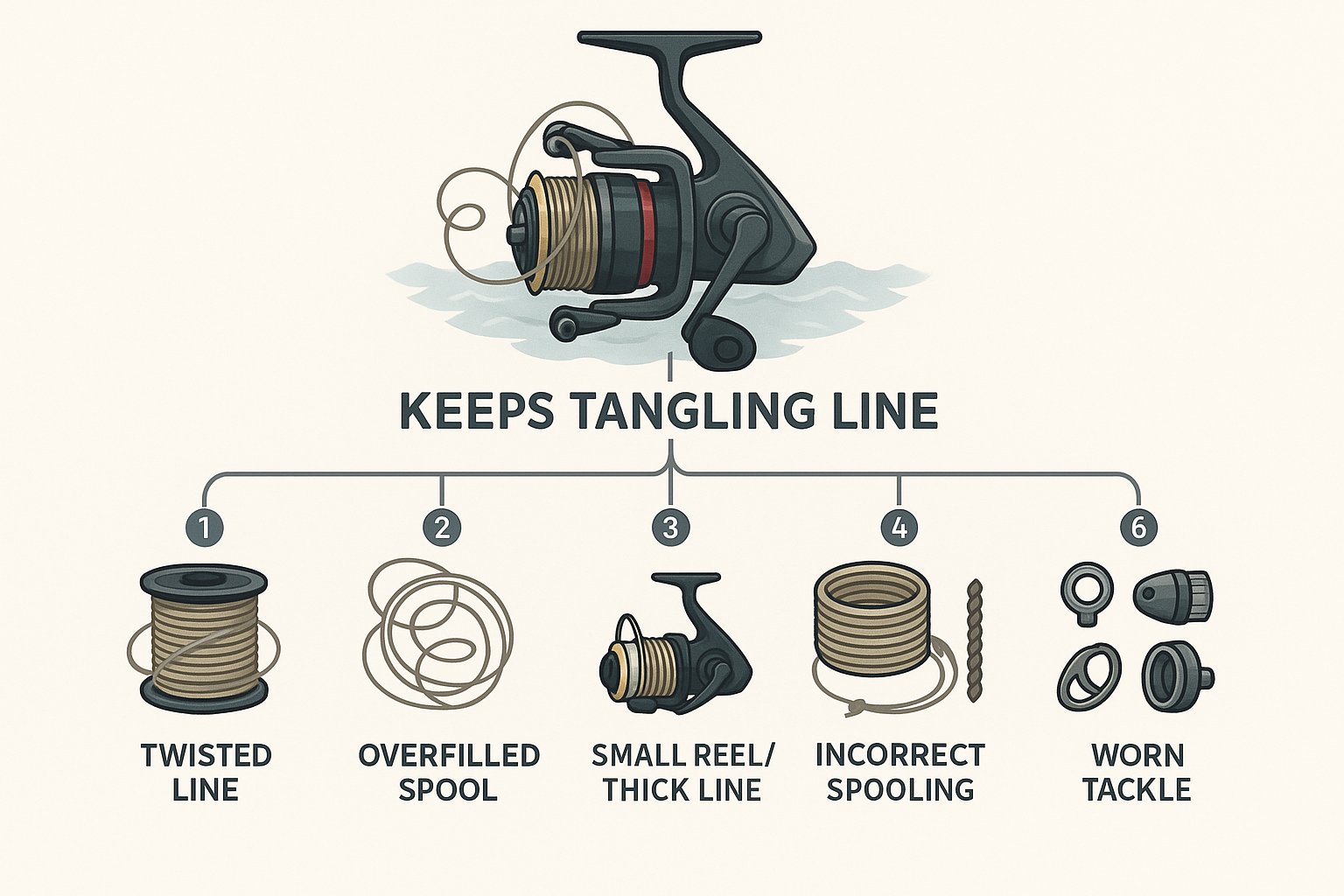
There are several causes, and they often pile on each other.
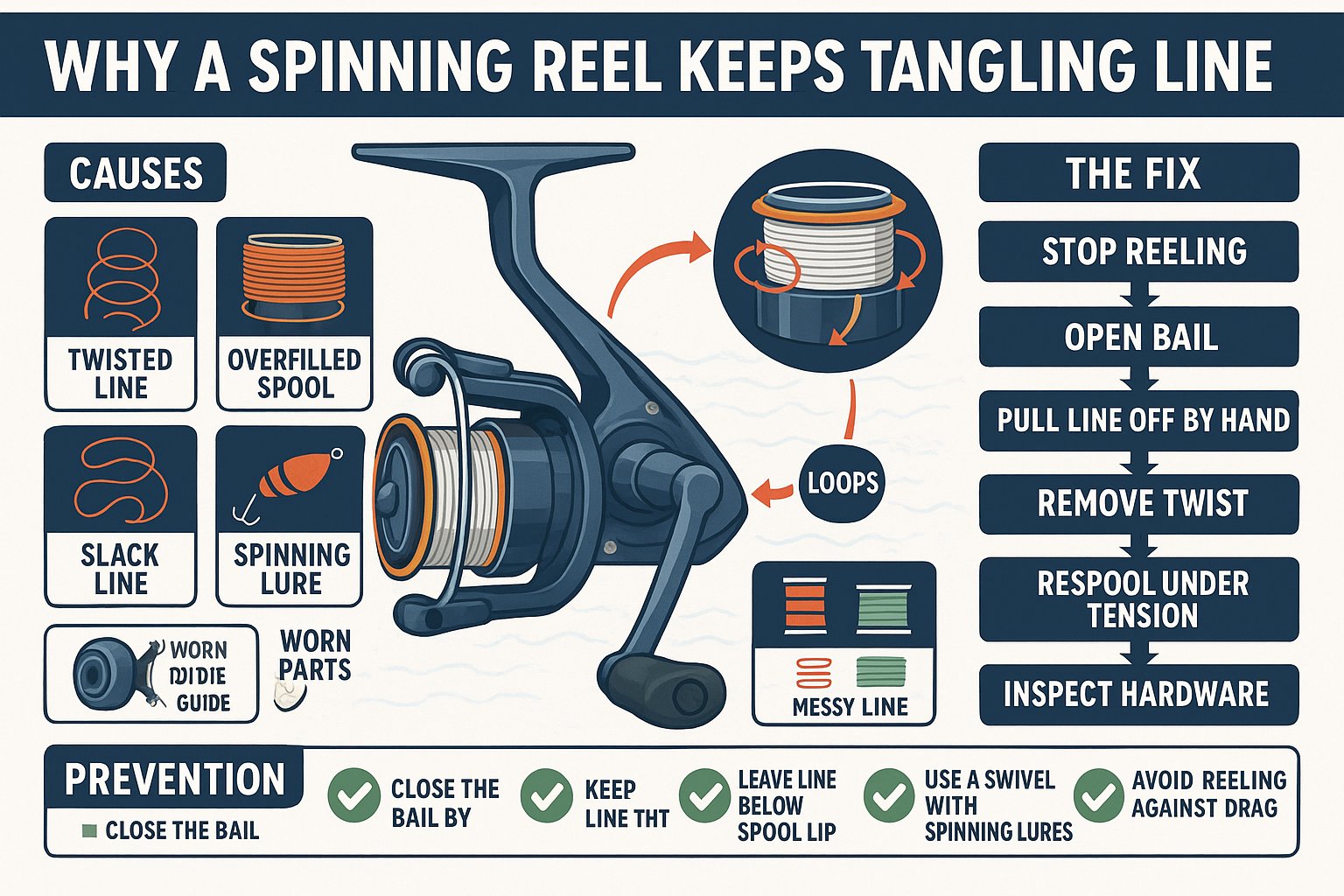
First is line twist. This is the biggest offender in most spinning reel line twist problems. Twist gets introduced when line goes onto the reel spool in the wrong orientation, when we reel while a fish is pulling drag, or when certain lures spin during the retrieve. Inline spinners, improperly rigged soft plastics, and spoons can all contribute.
Second is overfilling the spool. Spinning reels need a little space below the spool lip. If we pack line all the way to the edge, coils can peel off too easily during the cast. That often looks like the reel "exploding" line for no obvious reason.
Third is reeling slack line. This one sneaks up on people. After a cast, if we start reeling with a big belly of slack in the line, the reel wraps those loose loops onto the spool. On the next cast, those loops become knots.
Fourth is wrong line size or type for the reel. Heavy mono on a small spool can hold a lot of memory, which means it wants to spring back into coils. Braid can behave better in some ways, but it can also dig in or wrap awkwardly if it's too light or poorly managed.
Fifth is poor spooling technique. If the filler spool is facing the wrong way or the line isn't going on under steady pressure, we're basically loading problems in advance.
Finally, sometimes the issue is worn tackle. A rough line roller, bent bail wire, chipped rod guide, or sticky drag can make a normal amount of twist turn into repeated tangles. So if we've fixed our habits and the issue keeps coming back, it's worth inspecting the hardware, not just blaming the line.
Common Mistakes That Lead to Line Twist
Most line twist isn't caused by one dramatic mistake. It comes from a handful of small habits repeated over time.
Closing the bail with the reel handle
This is probably the most common one. When we crank the handle to snap the bail shut, the reel can trap slack line before it's under tension. That little loop gets wound onto the spool and becomes the starting point for a tangle. Closing the bail by hand gives us more control and helps the line seat tightly.
Reeling while the drag is slipping
If a fish is pulling line and the drag is clicking, we generally don't want to keep cranking. That can add twist fast. Better to lift, gain line when we can, and let the drag do its job.
Using spinning lures without a swivel
Some lures naturally rotate. If we're throwing inline spinners, spoons, or soft plastics that helicopter on the retrieve, twist builds up whether we notice it or not. A quality swivel a short distance up the line often helps a lot.
Spooling line too loosely
Loose line on the reel is asking for trouble. Whether we use mono, fluoro, or braid, the line should go on under firm, even tension. If not, it settles unevenly and forms coils or buried spots.
Overfilling the spool
Anglers hate "wasting space," but cramming on extra line is one of the fastest ways to create fishing line tangling. Leaving roughly 1/8 inch below the spool lip is usually a safe benchmark.
Ignoring line memory
Monofilament and fluorocarbon can develop memory, especially if they've sat on the reel for a while or are too heavy for the spool size. If the line comes off in tight slinky-like loops, memory is part of the problem.
If we're wondering how to fix line twist on a spinning reel long term, the answer starts here: correct the habits that keep reintroducing it.
How to Fix a Tangled Spinning Reel (Step-by-Step)
If the reel is already tangled, we want to fix it methodically, not by yanking on random loops until the knot gets tighter.
Step 1: Stop reeling immediately
The second we feel resistance or see a loop jump off the spool, stop. Reeling through a tangle just packs it in deeper.
Step 2: Find the main loop
Look for the largest loose loop or the point where line has crossed over itself. In many cases, the knot starts from one bad loop that got trapped during the previous cast or retrieve.
Step 3: Open the bail and pull line off by hand
With the bail open, gently strip line from the spool. Don't jerk it. If there's a wind knot, easing pressure often reveals where the crossover is. Pulling a few yards off usually helps relax the mess.
Step 4: Untangle, or cut if necessary
Small tangles can often be loosened with fingers or a hook point. But if the knot is cinched tight and damaging the line, cut it out. Saving five feet of line isn't worth losing a fish later.
Step 5: Remove built-up twist
If we suspect spinning reel line twist, let out a longer section of line behind a moving boat or while walking it across current with nothing tied on except maybe a small swivel. Then reel it back in under light tension. If we're bank fishing, we can strip out a long section across grass and reel it in with fingers pinching the line lightly.
Step 6: Re-spool if the problem is severe
When tangles keep repeating, the reel may need a full reset. Strip the line and respool it correctly under tension. Check that the filler spool orientation reduces twist as the line goes on.
Step 7: Inspect the reel and guides
Run fingers over the line roller, bail wire, and rod guides. If something feels rough or damaged, it can keep creating problems no matter how carefully we spool.
That's really the heart of how to fix line twist spinning reel issues: remove the bad loops, get rid of stored twist, and then correct the setup that caused it.
How to Prevent Line Tangling in the Future
Prevention is easier than surgery on the water.
The first rule is to close the bail by hand after each cast. Then give the line a light tug before starting the retrieve. That seats the line on the roller and removes slack before it wraps onto the spool.
Second, keep tension on the line when reeling. After a cast, especially in wind or current, pick up slack first. We want the line snug, not loose, when it goes back on the reel.
Third, match the line to the reel size. Light spinning reels generally behave better with manageable mono or braid diameters rather than oversized, memory-heavy line. If line keeps coiling, dropping down in diameter often helps.
Fourth, use a swivel when the lure calls for it. Not for every setup, obviously. But when a lure spins, we need something in the system to absorb that twist before it reaches the spool.
Fifth, don't reel against a slipping drag. This one prevents a surprising amount of twist.
Sixth, watch spool fill level. If we're near the lip, strip some line off. A slightly underfilled spool casts better than an overfilled spool that constantly throws loops.
Seventh, replace old line before it becomes a problem. Mono and fluoro age. Sun, heat, and use make them stiffer and more prone to memory. Fresh line often solves "mystery" tangles.
And finally, check line after snags or hard fights. Sometimes a twist starts when a fish spins, a lure helicopters in, or we pull free from cover. A quick inspection then can prevent a blow-up on the next cast.
If we build these habits, why does fishing line keep tangling stops being a constant question and becomes an occasional maintenance issue instead.
Best Spinning Reel Setup for Smooth Casting
A good setup won't eliminate every tangle, but it makes them far less likely.
Start with a properly sized reel. A reel that's too small for the line diameter tends to exaggerate memory and coil formation. For many finesse applications, a 2000 or 2500-size spinning reel is a practical middle ground. It handles light line well without making the spool too tight.
Pair it with the right line:
-
Braid main line with a leader is often the easiest setup for reducing memory-related coils.
-
Monofilament is forgiving and user-friendly, but it should be matched carefully to spool size.
-
Fluorocarbon can work well, though on spinning gear it tends to behave best in lighter diameters.
A very dependable all-around setup is 10–15 lb braid with an 6–10 lb fluorocarbon or mono leader for many freshwater uses. It casts cleanly, has low memory, and reduces some of the classic line coil issues associated with straight mono.
The rod matters too. A rod with guides suited to spinning gear helps line flow smoothly. If a guide insert is cracked, tangles and abrasion show up fast.
Then there's spooling technique. Fill the reel to about 1/8 inch below the lip. Apply steady pressure. After spooling, make a few long casts and check whether the line is laying evenly.
If we're using lures that spin, add a quality ball-bearing swivel where appropriate. Not everywhere, just where it earns its keep.
And one final truth: the "best" setup is the one we maintain. Even a premium spinning combo will misbehave if the line roller is dirty, the line is old, or slack is reeled carelessly.
When a spinning reel keeps tangling line, the fix is usually not magic. It's good pairing, good spooling, and a few disciplined habits. Get those right, and smooth casting starts to feel normal again.
Instead of fighting loops every trip, we can focus on what actually matters, making solid casts, feeling bites, and landing fish with confidence.
FAQ
Why does my spinning reel keep tangling line?
Spinning reel line tangling usually happens due to line twist from improper spooling, overfilling the spool, slack during retrieves, or using the wrong line type or size. Mechanical issues like worn line rollers can also contribute.
How can I fix line twist on my spinning reel?
To fix line twist, stop reeling immediately when tangles appear, gently pull off line with the bail open, untangle or cut knots if needed, strip out built-up twist by letting out and reeling in line under tension, and respool correctly with proper tension.
What common mistakes cause fishing line tangling on spinning reels?
Common mistakes include closing the bail by cranking the handle, reeling while drag is slipping, using spinning lures without a swivel, spooling line too loosely, overfilling the spool, and ignoring line memory effects.
How do I prevent my spinning reel from tangling line in the future?
Prevent tangles by closing the bail by hand, keeping tension on the line while reeling, matching line size to the reel, using swivels with spinning lures, avoiding reeling against drag slip, not overfilling the spool, and replacing old line regularly.
What is the best spinning reel setup to reduce line tangling?
A good setup pairs a 2000 or 2500-size reel with 10–15 lb braided main line and a 6–10 lb fluorocarbon or monofilament leader. Proper spooling with steady pressure, leaving 1/8 inch below the spool lip, and using quality rod guides help ensure smooth casting and fewer tangles.
 Featured

