

Vertical Jigging Sensitivity With A Rigid CNC Machined Frame: How To Feel More Bites And Land More Walleye In 2026
Vertical jigging for walleye demands more than simply dropping a bait—it requires detecting subtle bites, bottom contact, and current influence. A rigid CNC machined reel frame reduces flex and improves energy transfer, delivering cleaner feedback and sharper bite detection. For pure vertical presentations, a CNC conventional reel offers mechanical directness, precise depth control, and consistent gear alignment under pressure. However, sensitivity depends on the entire system: thin braid, a balanced rod, proper drag, and disciplined boat control. On demanding fisheries like Rainy Lake, MN, eliminating mush and staying connected transforms subtle signals into more fish in the net. Walleye mastery comes from refined feedback, not just expensive gear.
Vertical jigging looks simple from a distance: hover over fish, drop a jig, watch the graph, and lift when a mark meets the bait. But anyone who's spent real time chasing walleye knows the hard part isn't dropping the jig. It's feeling what actually happens next.
A soft inhale, a fish that just "weights up" the line, the faint tick of a jig brushing rock instead of a bite, those tiny signals decide whether we miss fish or boat them. That's where reel construction starts to matter more than many anglers realize. A rigid CNC machined frame doesn't just look premium. It can sharpen feedback, improve gear stability, and help us stay connected when fishing straight below the boat.
In this guide, we'll break down why sensitivity matters in vertical presentations, how a CNC conventional reel changes what we feel, and how to apply that edge to places like Rainy Lake, MN walleye water in 2026.
Why Sensitivity Matters In Vertical Jigging

Vertical jigging is a contact game. When the presentation is nearly straight up and down, we don't have the forgiveness that comes with long casts, sweeping hooksets, or fish that smash a moving bait. We're often dealing with subtle pressure changes, brief taps, or a line that suddenly goes slack because a walleye rose and ate the jig on the lift.
Sensitivity matters because it helps us separate three things that feel frustratingly similar to inexperienced hands: bottom contact, current influence, and actual bites. On a tough day, especially in cold fronts or post-front conditions, walleyes may not crack the bait. They pin it. They mouth it. They drift upward with it. If we can't detect that change quickly, we're late.
This is even more important when we're fishing deep structure, river seams, or windy basin edges where line angle and boat movement can muddy the signal. Every point where vibration and pressure travel, from jig to knot to line to rod to reel, affects what reaches our hand.
Good electronics help us see fish. Sensitivity helps us convert them. And for anglers focused on consistency rather than lucky windows, that difference adds up over a full season.
How A Rigid CNC Machined Frame Changes What You Feel
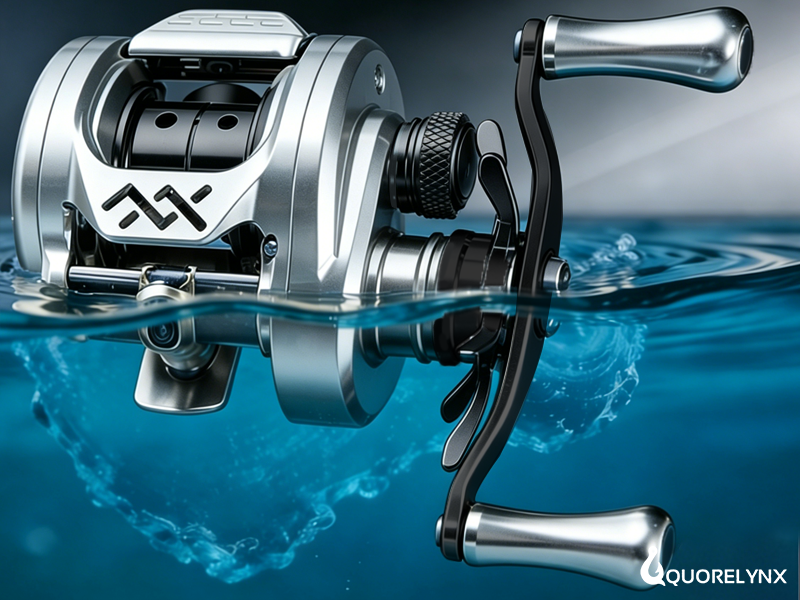
A reel frame doesn't get talked about as much as rod action or line diameter, but it plays a bigger role in vertical jigging than many anglers think. When we're holding the reel seat, palming the reel, and making tiny controlled lifts, the frame becomes part of the feedback path.
A rigid CNC machined frame is cut from a solid block of metal, usually aluminum, rather than being formed in a way that allows more flex under load. That added rigidity can make the whole system feel tighter and more direct. Instead of losing some of the signal to movement in the reel body, we get a cleaner connection between the bait and our hand.
In practice, this shows up in small ways that matter: cleaner bottom reads, more confidence distinguishing sand from rock, and better awareness when a walleye mouths the jig without truly thumping it. It also tends to make the reel feel more consistent over time, especially when we're fishing heavy current, snap-jigging aggressively, or battling fish around structure.
For vertical anglers, sensitivity isn't only about "feel" in the abstract. It's about reducing mush in the system. A rigid CNC machined frame does exactly that.
Frame Flex, Gear Alignment, And Energy Transfer
When a reel frame flexes under load, even slightly, it can affect gear alignment and dampen the signal traveling through the setup. That matters more during vertical jigging than many people assume because our motions are compact and our cues are subtle.
Think of energy transfer like tapping a spoon against a solid countertop versus a padded chair. One gives a crisp, immediate response: the other absorbs part of the message. In a fishing reel, frame rigidity helps preserve that crispness. When the jig ticks gravel, when the line hums in current, or when a walleye merely loads the rod tip, the more stable structure passes along a cleaner cue.
Better gear alignment also influences how connected the reel feels during retrieves and hooksets. If the internals stay properly meshed under pressure, we get less binding, less mechanical slop, and a more precise sensation at hand. That may sound technical, but on the water it feels simple: we know more, sooner.
And sooner matters. Vertical jigging bites are often won or lost in a second. If we interpret the signal quickly, we lift, reel, and stay pinned up. If we hesitate because the setup feels vague, the fish spits the jig and we're left wondering whether that was rock, weeds, or a walleye.
Why A CNC Conventional Reel Can Outperform Less Rigid Designs
A CNC conventional reel can offer an edge in vertical presentations because it combines rigidity, direct handling, and controlled line management in one compact package. Not every angler needs one, and plenty of fish are caught on other reel styles, but in sensitivity-focused situations, the difference can be real.
First, many conventional designs feel mechanically direct. There's a certain connectedness when we drop straight down, engage smoothly, and make short lifts without excess body movement or internal play. Pair that with a machined frame and the reel often feels "locked in" rather than vague.
Second, less rigid designs can develop or reveal small tolerances under repeated pressure. Over time, tiny shifts in alignment or body flex can create a softer, less precise feel. That doesn't make them unusable, it just means some of the feedback gets blurred. For anglers who live on finesse walleye bites, blurred feedback is expensive.
Third, a CNC Conventional Reel often shines when we're controlling exact depth over fish seen on sonar. We can drop, stop, inch up, and hover with precision. On waters where walleyes follow but don't always commit, that fine control can be the difference between seeing fish on the screen and actually catching them.
That's the heart of Walleye Mastery: CNC Sensitivity, not marketing language, just tighter mechanics translating into better bite detection.
Choosing Between A Conventional Reel And Baitcasting Reels For Vertical Presentations
This choice comes down to how we fish, what feels natural in hand, and how much we value fine-tuned feedback. A Conventional Reel can be excellent for straight-down control, especially when we're fishing deep, hovering precisely over structure, or using live sonar and 2D sonar to keep baits in the strike zone. It tends to reward disciplined, vertical presentations.
Baitcasting Reels, on the other hand, offer versatility. If we split time between pitching, casting, snapping jigs, and occasional vertical work, a quality baitcaster may be the better all-around tool. Many anglers already know how to palm them comfortably, and high-end models can still be very sensitive.
Where the separation often appears is in pure vertical refinement. A CNC Conventional Reel may feel more purpose-built when we're dropping on fish repeatedly and trying to read micro-signals all day. The line flow, hand position, and directness can feel cleaner in that narrow use case.
But there are tradeoffs. Some anglers are faster and more intuitive with baitcasters, and confidence matters. If a reel style distracts us, it costs fish regardless of engineering.
Our rule is simple: if most of our time is spent truly vertical over walleye, a rigid conventional platform deserves serious consideration. If we want one reel style for many techniques, modern Baitcasting Reels still make a lot of sense.
How Line, Rod, And Drag Setup Affect Walleye Mastery: CNC Sensitivity
Even the best reel can't carry a sloppy system. Sensitivity is cumulative, which means line choice, rod design, and drag setting either support the benefits of a rigid frame or cancel them out.
Start with line. Thin braid is usually the best choice for vertical jigging because it has minimal stretch and cuts current better than thicker monofilament. That keeps the presentation vertical and transmits subtle contact more clearly. We often add a fluorocarbon leader for abrasion resistance and low visibility, especially in clear water or around zebra mussels and rock.
The rod should be light enough to telegraph fine bites but not so soft that it collapses under the weight of the jig. For most walleye work, a medium-light or medium fast-action rod gives us the best blend of tip sensitivity and hook-setting control. Too moderate, and we lose crispness. Too broomstick-stiff, and small fish or soft takes become harder to read.
Drag is where many anglers quietly sabotage themselves. A drag set too loose creates a mushy feeling at the hookset and during the first surge. Too tight, and light-wire hooks or light leaders can fail. We want firm, smooth resistance, tight enough for immediate control, smooth enough to protect the system.
When all three are aligned, Walleye Mastery: CNC Sensitivity stops being a phrase and becomes something we can actually feel in our hands.
Applying CNC Sensitivity On Rainy Lake, MN Walleye
Rainy Lake, MN walleye fishing is a perfect place to appreciate refined vertical feedback. It's a sprawling, structure-rich fishery with rock, reefs, neck-downs, current influence, and roaming fish that don't always announce themselves with a dramatic strike. Quite often, they just change the weight of the line.
On Rainy, we're commonly working along breaks, humps, and edges where staying nearly vertical is critical. Wind can push the boat, current can bow the line, and depth shifts can happen quickly. A rigid reel setup helps us sort out what's happening below: is the jig ticking rock, drifting into softer bottom, or getting inhaled on the fall?
This matters a lot during mid-season and fall periods when fish often stack in precise areas. If we mark a pod of fish at 24 feet and keep the jig hovering just above them, a CNC Conventional Reel can help us make tiny adjustments without overmoving the bait. Sometimes that's all it takes.
Rainy Lake, MN Walleye also teaches humility. Fish there can be aggressive one hour and strangely fussy the next. On tough bites, enhanced feel gives us a shot at converting neutral fish, especially when they rise to inspect, touch the jig lightly, or pin a minnow presentation without a hard thump.
If we fish Rainy regularly, refined vertical sensitivity isn't luxury gear talk. It's practical fish-catching insurance.
Common Mistakes That Reduce Vertical Jigging Feedback
The biggest mistake is assuming sensitivity is only about buying expensive gear. A rigid CNC machined frame helps, yes, but several bad habits can erase that advantage fast.
First, too much line out. Once the line scopes away from vertical, we lose direct contact and the signal gets diluted. If the wind is pushing us off target, we need to adjust boat control, jig weight, or drift speed.
Second, oversized or stretchy line. Heavy mono may be forgiving, but it dulls feedback. For finesse walleye work, it's usually the wrong tool.
Third, poor rod matching. A mushy rod paired with a sensitive reel still feels mushy. The reel can only transmit what the rest of the system allows.
Fourth, letting slack develop on the drop. Many bites happen as the jig falls back. If we're not semi-tight and attentive, we miss the strike completely.
Fifth, overworking the bait. Walleyes often respond better to restrained, repeatable lifts than exaggerated snaps. Bigger motions can actually create more confusion in what we feel.
And finally, ignoring maintenance. Even a premium CNC Conventional Reel loses its edge if the spool tension, drag, bearings, or handle play are neglected. Sensitivity loves precision, and precision hates neglect.
Conclusion
If we want to feel more bites and land more walleye in 2026, vertical jigging sensitivity deserves more attention than it usually gets. A rigid CNC machined frame won't magically make fish bite, but it can make the signals cleaner, the reel feel tighter, and our decisions faster.
Pair that with the right line, a balanced rod, solid drag settings, and disciplined boat control, and the difference becomes obvious, especially on demanding water like Rainy Lake, MN. Whether we choose a Conventional Reel or compare it against Baitcasting Reels, the goal stays the same: remove noise, stay connected, and turn subtle feedback into more fish in the net.
Frequently Asked Questions About Vertical Jigging Sensitivity with a Rigid CNC Machined Frame
Why is sensitivity important in vertical jigging for walleye fishing?
Sensitivity is crucial in vertical jigging because subtle pressure changes and light bites are common. Detecting faint signals like a fish mouth or line slack helps anglers react quickly to catches, especially in deep or windy waters where vibrations can be masked.
How does a rigid CNC machined frame improve sensitivity in vertical jigging?
A rigid CNC machined frame reduces flex in the reel body, ensuring better gear alignment and energy transfer. This creates a tighter connection from the jig through the line to the angler's hand, allowing clearer detection of bottom contact, current effects, and bite nuances.
What advantages does a CNC conventional reel offer over less rigid reel designs?
CNC conventional reels provide mechanical rigidity and direct line handling, leading to consistent sensitivity and precise depth control. They maintain gear alignment under pressure, preventing mushy feedback and enabling anglers to detect subtle walleye bites more reliably.
Should I choose a conventional or baitcasting reel for vertical jigging?
If your focus is pure vertical presentations and refined sensitivity over structure, a rigid CNC conventional reel is ideal. However, baitcasting reels offer versatility for multiple techniques, and personal comfort with a reel style also affects effectiveness on the water.
How do line, rod, and drag settings impact vertical jigging sensitivity?
Using thin braid line with minimal stretch improves signal transmission. A medium-light to medium fast-action rod balances sensitivity and control, while firm but smooth drag settings prevent mushiness and protect tackle. All components must work together to maximize CNC frame benefits.
What common mistakes reduce the effectiveness of vertical jigging sensitivity?
Mistakes include using too much line slack, thick or stretchy lines, mismatched rods, letting slack develop on the drop, overworking the bait with big lifts, and neglecting reel maintenance—all of which diminish feedback clarity despite a rigid CNC frame.
 Featured

