

Spotted bass don't always get the same spotlight as largemouth or smallmouth, but ask anglers who chase them consistently and you'll hear the same thing: spots are aggressive, smart, and ridiculously fun to catch. They school hard, roam more than many anglers expect, and often relate to deeper structure, current, and bait in ways that punish the wrong tackle choices.
That's why a solid spotted bass fishing setup matters. If we're using gear that's too heavy, too slow, or too generic, we'll miss what makes these fish predictable. The right setup helps us cast light baits farther, stay in contact with the bottom, and keep pressure on fish that love to surge under the boat.
In this guide, we'll break down the best setup for spotted bass, from rod, reel, and line choices to the techniques and seasonal adjustments that produce the most consistent results. If you want a practical bass fishing gear guide, not fluff, this is it.
What Makes Spotted Bass Unique
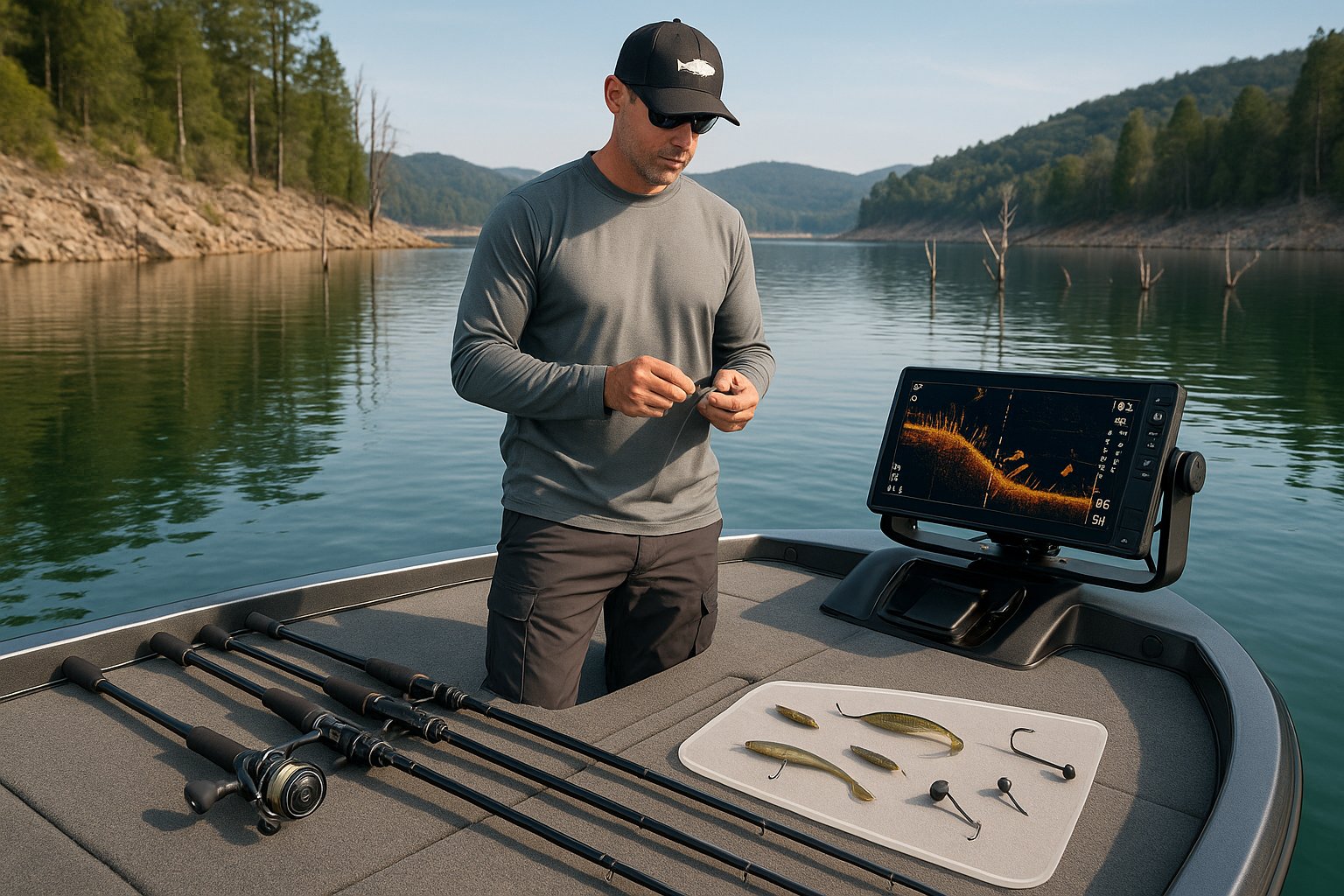
Spotted bass sit in an interesting middle ground. They fight with the attitude of a fish bigger than they are, often school like open-water feeders, and commonly hold on offshore structure longer than largemouth. That combination changes how we approach them.
In many reservoirs, spotted bass are heavily tied to rock, points, humps, bluff ends, brush piles, standing timber, and bait movement. They also tend to handle current well. If there's moving water from generation, wind pushing across a point, or bait getting pinned along structure, spotted bass usually notice first.
That matters because our spotted bass fishing setup needs to do three things well:
-
Cover water efficiently to locate active schools.
-
Present finesse baits naturally when fish get pressured.
-
Handle vertical and offshore fishing without sacrificing sensitivity.
Another big difference is how often spots suspend. Largemouth often give us cleaner targets, dock shade, grass lines, wood cover. Spotted bass are more willing to float off the obvious structure, especially around bait. That's one reason electronics have become such a big deal for dedicated spot anglers. Even without forward-facing sonar, though, we can still catch them consistently by understanding their tendencies.
They're also notorious for eating smaller presentations. A spotted bass that won't touch a bulky jig may absolutely crush a drop shot, finesse swimbait, underspin, or shaky head. In clear water especially, downsizing is often the best setup for spotted bass.
And then there's the fight. Spots dig, roll, and surge late. They're famous for making one last hard run beside the boat, which is why line choice and drag settings matter more than many anglers think. Too much gear and we lose bites. Too little control and we lose fish.
So when we build a bass fishing gear guide for spotted bass, we're not just talking about generic bass tackle. We're matching our setup to a fish that is mobile, structure-oriented, often finesse-friendly, and surprisingly strong for its size.
Ideal Rod, Reel, and Line Setup
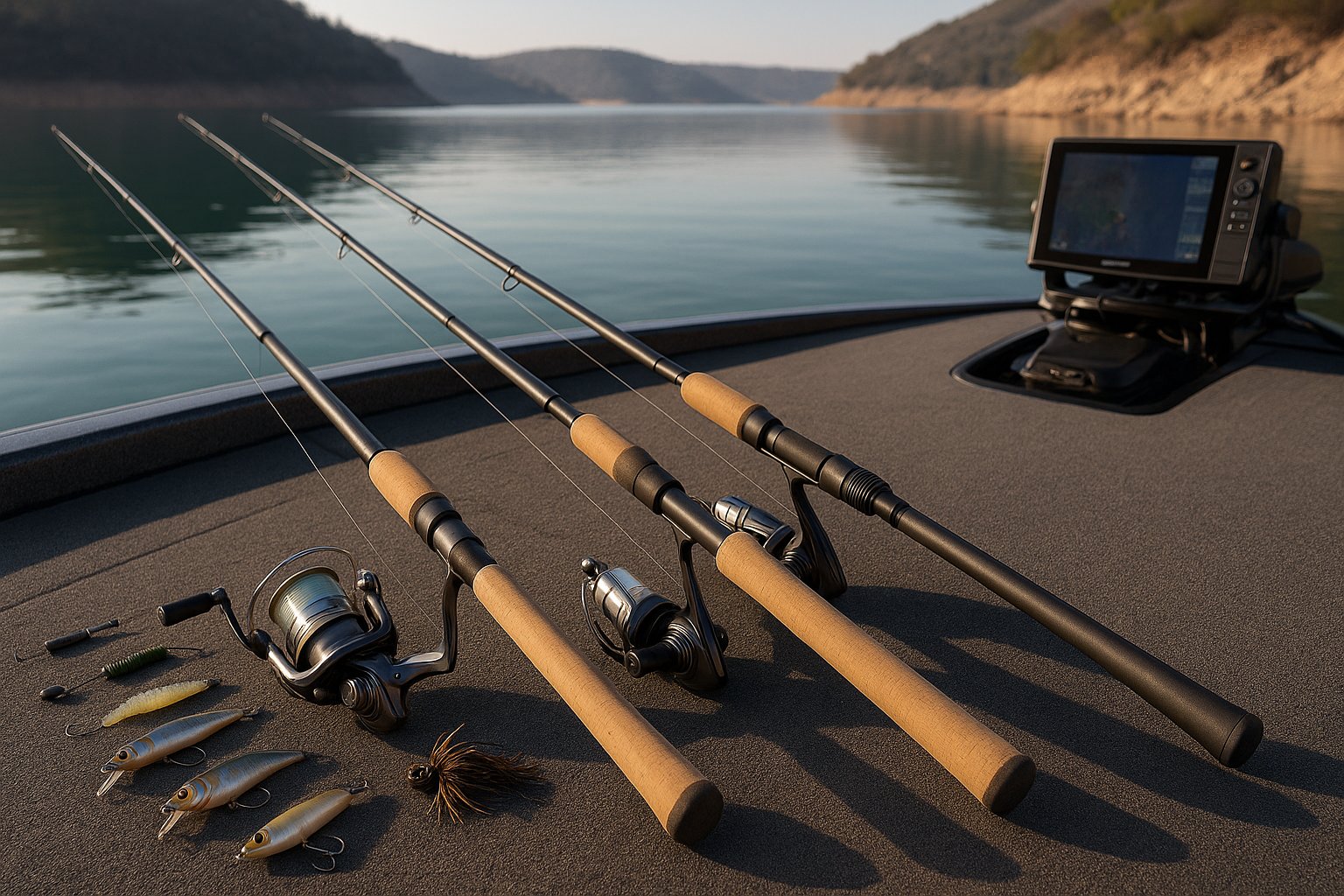
If we wanted one simple answer, it would be this: medium-light to medium spinning gear and medium baitcasting gear cover most spotted bass situations. The exact combination depends on water clarity, depth, and lure style, but the theme stays the same, sensitivity, casting distance, and control matter more than brute force.
Spinning setup for finesse fishing
For drop shots, Ned rigs, shaky heads, small swimbaits, and finesse worms, our go-to is a 6'10" to 7'3" medium-light or medium fast-action spinning rod. That range gives us enough tip to cast light baits yet enough backbone to drive a light-wire hook.
Pair it with a 2500 or 3000 size spinning reel with a smooth drag. Spotted bass often hit on semi-slack line, especially offshore, so a reel that manages light line cleanly is a real advantage.
For line, a very reliable combo is:
-
10 lb braid main line
-
6 to 8 lb fluorocarbon leader in clear water
-
8 to 10 lb leader when fish are around brush, rock, or heavier cover
This is one of the most dependable answers for anglers searching for the best setup for spotted bass because it handles so many productive finesse tactics.
Baitcasting setup for moving baits and bottom contact
When we're throwing jerkbaits, crankbaits, underspins, topwaters, spinnerbaits, football jigs, or swimbaits, a baitcaster usually gives us better control.
A strong all-around choice is a 7'0" to 7'3" medium or medium-heavy baitcasting rod. Fast action works well for jigs, worms, and underspins. Moderate or moderate-fast can be better for treble-hook baits like crankbaits and jerkbaits.
A 6.8:1 to 7.5:1 casting reel covers most scenarios. We don't need extreme speed for everything, but we do want to pick up slack quickly when a fish eats and runs toward us.
Line choices typically break down like this:
-
10 to 12 lb fluorocarbon for jerkbaits and smaller crankbaits
-
12 to 15 lb fluorocarbon for jigs, Texas rigs, and underspins
-
15 to 20 lb braid for topwater in open water, sometimes with a leader depending on the bait
Sensitivity matters more than many anglers realize
Spotted bass often bite subtly, especially in deep water. Sometimes it's just weight. Sometimes the line jumps. Sometimes the bait simply stops falling. A good rod doesn't have to be wildly expensive, but it does need to transmit bottom composition and light bites clearly.
If we're trying to simplify our bass fishing gear guide, we can think in terms of a three-rod system:
-
Medium-light spinning rod for drop shot and finesse work
-
Medium spinning or casting rod for small swimbaits, shaky heads, and jerkbaits
-
Medium-heavy casting rod for jigs, heavier worms, and reaction baits around structure
That compact lineup covers the majority of productive spotted bass fishing tips we actually use on the water.
Best Techniques for Spotted Bass
The best techniques for spotted bass usually depend on whether the fish are feeding on bait, holding tight to structure, or suspended nearby. The good news is that a handful of presentations consistently produce across the country.
Drop shot
If we had to pick one confidence bait for spotted bass, the drop shot would be high on the list. It excels when fish are deep, pressured, or suspended just off bottom. A 3/16- to 3/8-ounce weight and a small worm, shad-style bait, or minnow profile can be deadly.
We can drag it, shake it in place, or fish it vertically. The key is restraint. Overworking the bait is a common mistake.
Shaky head and finesse worm
A shaky head shines on rocky points, bluff ends, ledges, and brush. It's simple, efficient, and catches both active and neutral fish. In clearer water, natural worm colors usually get the nod. In stained water, darker tones or something with a little chartreuse can help.
This is one of those spotted bass fishing tips that stays relevant year-round: when in doubt, drag a worm where the fish live.
Jerkbait
Spotted bass are notorious for crushing jerkbaits, especially in cool water and around suspended bait. Long casts matter. So does cadence. Some days they want a sharp snap-snap-pause rhythm. Other days the pause is the whole game.
If fish are schooling or roaming over points, a jerkbait can help us cover water faster than a finesse rig while still getting bites from quality fish.
Underspin and small swimbait
Few lures match an underspin for spotted bass that are chasing bait around points, humps, and open-water structure. A subtle flash and compact swimbait profile often trigger fish that ignore louder, bulkier presentations.
A plain paddle-tail swimbait on a ball head is also excellent. Count it down, keep it steady, and pay attention to depth. Once we dial in where the school is traveling, the bite can get very repetitive, in a good way.
Topwater
When spots are up, they're really up. Walking baits, poppers, prop baits, and smaller pencil-style topwaters can be outstanding during schooling activity, low light, and windy conditions. The fun part is obvious. The less obvious part is how important it is to keep a topwater rod ready at all times.
Schooling fish can appear, feed for 20 seconds, and vanish. If we spend that window retieing, we miss it.
Jig and worm for bigger fish
Finesse gets most of the attention, but bigger spotted bass still eat jigs, football heads, and Texas rigs. Around rock transitions, brush piles, and deeper staging areas, a compact jig often picks off the better fish in the area.
So the short version? Start with bait movement and location. If fish are active, throw moving baits. If they're pressured or glued to bottom, slow down with finesse. That's the pattern behind a lot of the best setup for spotted bass decisions we make.
Seasonal Adjustments
Spotted bass aren't static, and our setup shouldn't be either. The core tackle can stay similar, but lure choices, line sizes, and presentation angles should shift with the season.
Spring
Spring is about transition. Fish move from winter structure toward staging points, pockets, and spawning areas. This is a prime time for jerkbaits, shaky heads, swimbaits, and finesse worms.
We usually focus on secondary points, chunk rock, and places where deeper water sits close to spawning flats. A slightly longer spinning rod helps with casting distance in clear water, and lighter leaders often get more bites.
Summer
In summer, many spotted bass pull offshore and group up around humps, timber, brush, river-channel swings, and deep points. Early and late, we may see schooling activity. Midday often becomes a game of structure, bait, and depth control.
This is when drop shots, underspins, football jigs, and swimbaits become especially important. Electronics help, but we can still graph traditional structure and fish methodically. Summer is also when line management matters a lot, deep water exposes every weakness in knots, drag, and leader connection.
Fall
Fall can be feast or frustration. Bait moves, fish roam, and the pattern can change quickly. Spotted bass often feed aggressively, but they may not hold on one sweet spot for long.
This is a good time to keep multiple rods ready: a topwater, jerkbait, swimbait, and finesse option. Wind-blown points, pockets with bait, and creek-channel intersections can all produce. In our experience, fall rewards anglers who stay mobile and trust what the bait is telling them.
Winter
Winter spotted bass can be very catchable, especially in clear reservoirs, but we need patience. They often group tightly and relate to steep structure, bluff walls, vertical timber, and deep points.
Slower presentations dominate: jerkbaits with longer pauses, spooning in some fisheries, finesse worms, and precise drop-shotting. This is not the season for sloppy hooksets or cheap line. Cold-water bites are too subtle for that.
Adjusting without overcomplicating
One mistake anglers make is changing everything every season. We don't need to do that. A better approach is to keep the same foundation and swap a few variables:
-
Lighter leaders in clear, pressured conditions
-
Heavier fluorocarbon around rock, brush, and bigger reaction baits
-
More finesse when fish are pressured or inactive
-
More moving baits when bait is present and fish are feeding up
That's really what smart seasonal setup changes look like, not chaos, just useful adjustments.
Recommended Gear Setup for Better Results
If we want a practical spotted bass fishing setup we can actually carry to the lake tomorrow, here's a streamlined system that covers almost everything without turning the deck into a tackle-shop explosion.
Our recommended 4-rod setup
1. Finesse spinning combo
-
Rod: 7'0" medium-light fast spinning rod
-
Reel: 2500 spinning reel
-
Line: 10 lb braid to 6 or 8 lb fluorocarbon leader
-
Best for: drop shot, Ned rig, light shaky head, finesse worm
2. All-purpose spinning or light casting combo
-
Rod: 7'0" medium fast
-
Reel: 2500/3000 spinning reel or compact baitcaster
-
Line: 10 to 12 lb fluorocarbon or braid-to-leader
-
Best for: small swimbaits, spy-style baits, flukes, light underspins
3. Reaction bait casting combo
-
Rod: 7'0" medium moderate-fast casting rod
-
Reel: 6.8:1 baitcaster
-
Line: 10 to 12 lb fluorocarbon
-
Best for: jerkbaits, crankbaits, topwaters, lighter moving baits
4. Bottom-contact casting combo
-
Rod: 7'2" medium-heavy fast casting rod
-
Reel: 7.1:1 baitcaster
-
Line: 12 to 15 lb fluorocarbon
-
Best for: football jigs, Texas rigs, heavier shaky heads, underspins around cover
Terminal tackle that earns its keep
We don't need 40 hook styles. For most situations, a compact kit works:
-
Drop-shot hooks in sizes #2 to 1/0
-
Shaky heads from 1/8 to 3/8 ounce
-
Ball-head jigs for minnow baits and swimbaits
-
Football jigs in 3/8 to 1/2 ounce
-
Fluorocarbon leaders from 6 to 10 lb
-
Quality snaps or split-ring tools for jerkbait tuning if needed
The details that quietly improve catch rates
A few small choices make a big difference:
-
Retie more often around rock and spotted bass habitat with abrasive structure.
-
Use a smooth drag instead of trying to horse every fish in.
-
Match bait size to forage, spots often prefer compact profiles.
-
Keep one rod ready for schooling fish at all times.
-
Watch your electronics and your line: many deep bites show up before we feel them.
If we're building the best setup for spotted bass, consistency beats complexity. We want gear that lets us fish light when necessary, react fast when fish school, and stay connected in deep water. That's the real goal.
And if we had to give one final piece of advice from this bass fishing gear guide, it'd be this: don't overpower spotted bass. Fine-tune your setup, fish where bait and structure meet, and let the fish tell you how subtle, or aggressive, you need to be. That's usually when the day gets good.
Spotted Bass Fishing Setup FAQs
What is the best rod setup for finesse fishing when targeting spotted bass?
A 6'10" to 7'3" medium-light or medium fast-action spinning rod paired with a 2500 or 3000 size spinning reel is ideal for finesse techniques like drop shots and shaky heads, allowing for sensitive presentations and efficient casting of light baits.
How should I choose line for a spotted bass fishing setup?
Use 10 lb braid main line with a 6 to 8 lb fluorocarbon leader in clear water, or 8 to 10 lb leaders around brush and rock. For baitcasting setups, fluorocarbon between 10 to 15 lb or braid from 15 to 20 lb works well, depending on the bait type and cover.
What makes spotted bass unique compared to largemouth or smallmouth bass?
Spotted bass often school in open water, relate strongly to deeper structures and current, suspend off obvious cover, and prefer smaller finesse baits. They fight hard and can surge aggressively, requiring sensitive, controlled gear setups.
Which fishing techniques are most effective for catching spotted bass?
Top techniques include drop shot rigs, shaky heads, jerkbaits, underspin lures, small swimbaits, topwater baits, and jigs. Selection depends on season, fish activity, and structure, with finesse presentations favored when fish are pressured or suspended.
How do seasonal changes affect the best spotted bass fishing setup?
In spring, use lighter leaders and finesse baits like shaky heads and jerkbaits. Summer calls for focus on deeper structure with drop shots and jigs. Fall benefits from multiple rods for varied presentations, and winter requires slow, subtle baits and precise hooksets for cold water bites.
Why is sensitivity important in a spotted bass fishing setup?
Spotted bass often bite subtly—detecting light taps, line jumps, or slight bait pauses. A sensitive rod and light, smooth drag help anglers detect these subtle bites and maintain contact with the bait, improving hookup and catch rates.


