

The Right Reel for Heavy Lures: 5 Must-Know Factors Before You Buy
Heavy lures punish weak reels. Casting force, retrieve torque, and big-fish pressure will expose flaws fast. In this guide, learn what actually matters: gear ratio for torque vs. speed, frame rigidity, drag smoothness, and matching rod and line. Plus when to choose low-profile baitcasters, round reels, or heavy spinning gear for power fishing.
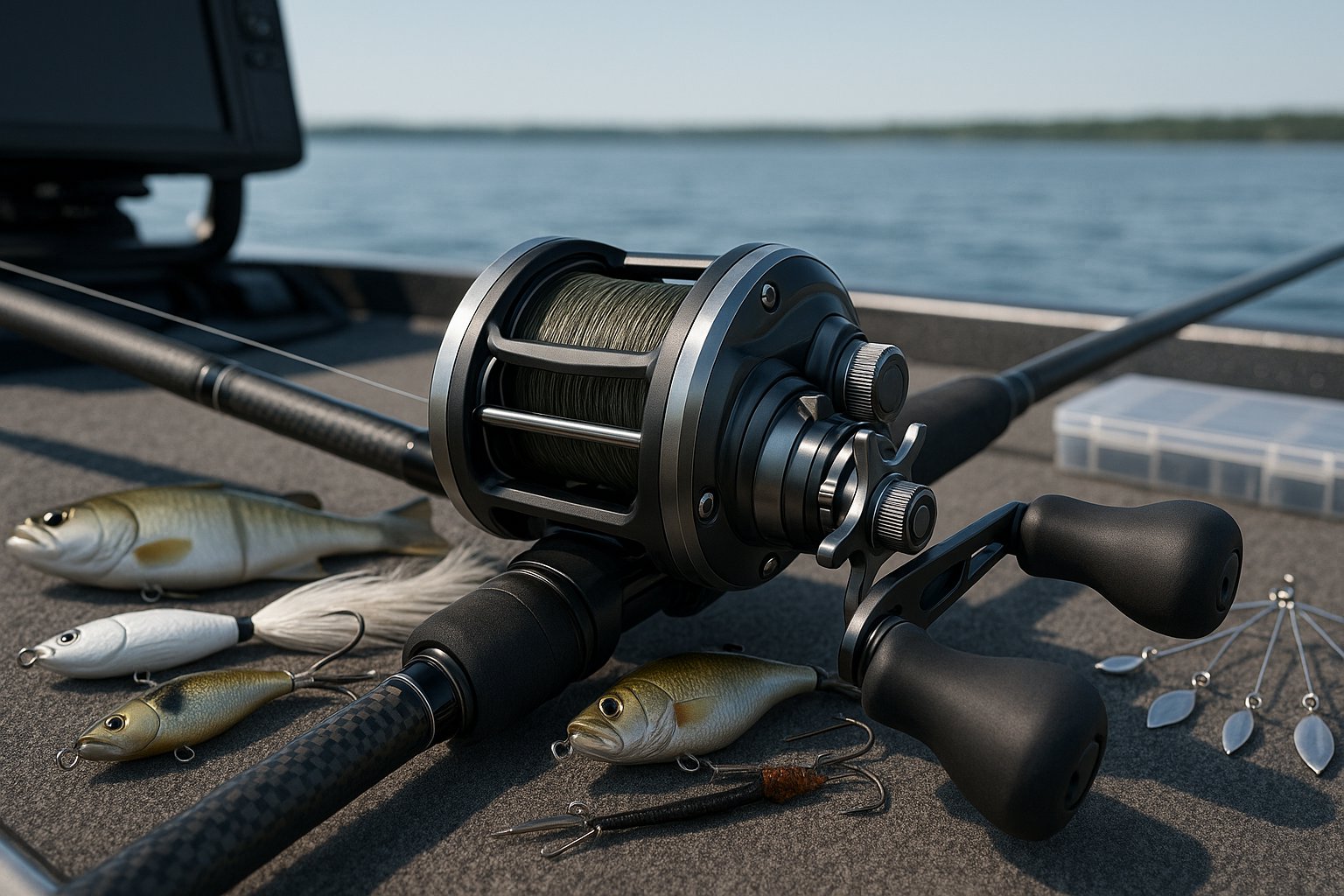
Throwing oversized swimbaits, magnum crankbaits, giant bucktails, or heavy umbrella rigs is a different game than standard bass or pike fishing. We're asking more from our gear on every cast: more torque, more line control, more drag pressure, and a lot more durability over time. Use the wrong reel, and the problems show up fast, fatigue, poor casting, sloppy retrieves, worn gears, and sometimes a lost fish when it matters most.
That's why choosing the right reel for heavy lures isn't just about brand preference. It's about matching reel strength, gearing, line capacity, and overall balance to the baits we actually throw. In this guide, we'll break down what makes a heavy duty fishing reel different, how gear ratio affects performance, how to pair rod and line correctly, and what to look for in the best reel for big lures when power fishing is the goal.
Why Heavy Lures Require Special Reels
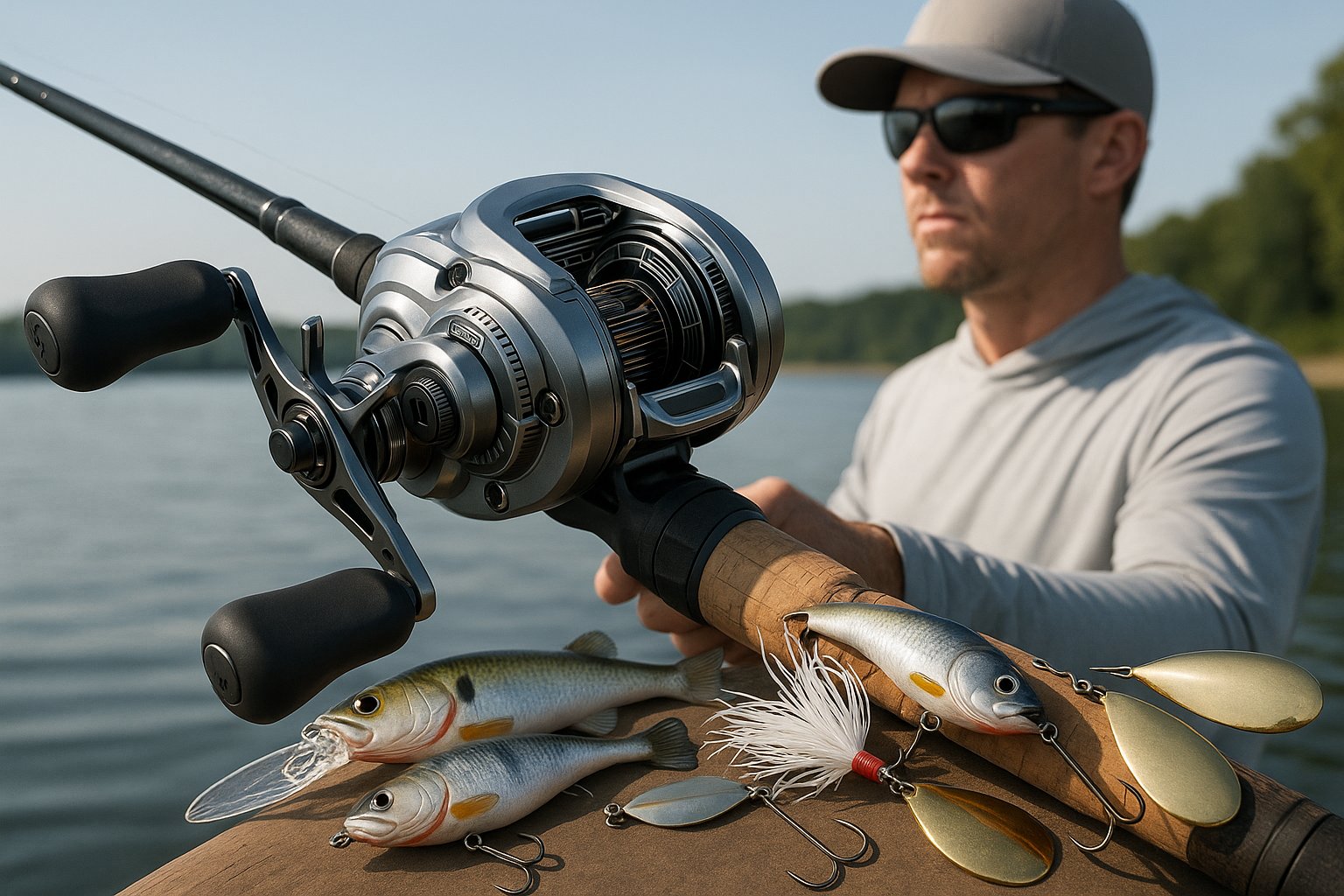
Heavy lures put mechanical stress on a reel in ways lighter presentations simply don't. A 1/4-ounce bait might let almost any decent reel feel smooth. Start throwing 2-, 4-, or even 8-ounce baits, though, and weaknesses become obvious in a hurry.
The first issue is load. Every cast with a heavy lure puts more force on the spool, handle, gears, frame, and levelwind system. Then the retrieve adds another layer of resistance, especially with high-drag baits like deep-diving plugs, large spinnerbaits, oversized soft swimbaits, or musky bucktails. If the reel isn't built for that pressure, it can feel geary, flex under load, or wear down far faster than expected.
The second issue is control. Heavy baits carry more momentum, so the spool has to start and stop cleanly. A reel that feels fine with standard lures may become unpredictable with heavier ones, leading to overruns, rough casting, or inconsistent distance. Good braking helps, but reel design matters too, particularly spool support, frame rigidity, and overall build quality.
There's also the matter of angler fatigue. We tend to focus on fish-fighting power, but casting big baits all day can be punishing. A poorly matched reel makes that worse. If the handle is too short, the gear ratio is wrong, or the reel is underpowered, we end up working harder than we should every single retrieve.
In practice, a dedicated reel for heavy lures gives us three things:
-
More torque for pulling resistance-heavy baits
-
Better durability under repeated stress
-
More reliable fish-fighting power when a big fish eats at close range
That's why a standard reel and a true heavy duty fishing reel are not the same tool. For occasional medium-heavy use, some crossover reels work. But once heavy lures become a core part of our fishing, purpose-built equipment stops being a luxury and starts being the smart choice.
Key Features: Power, Drag, Durability
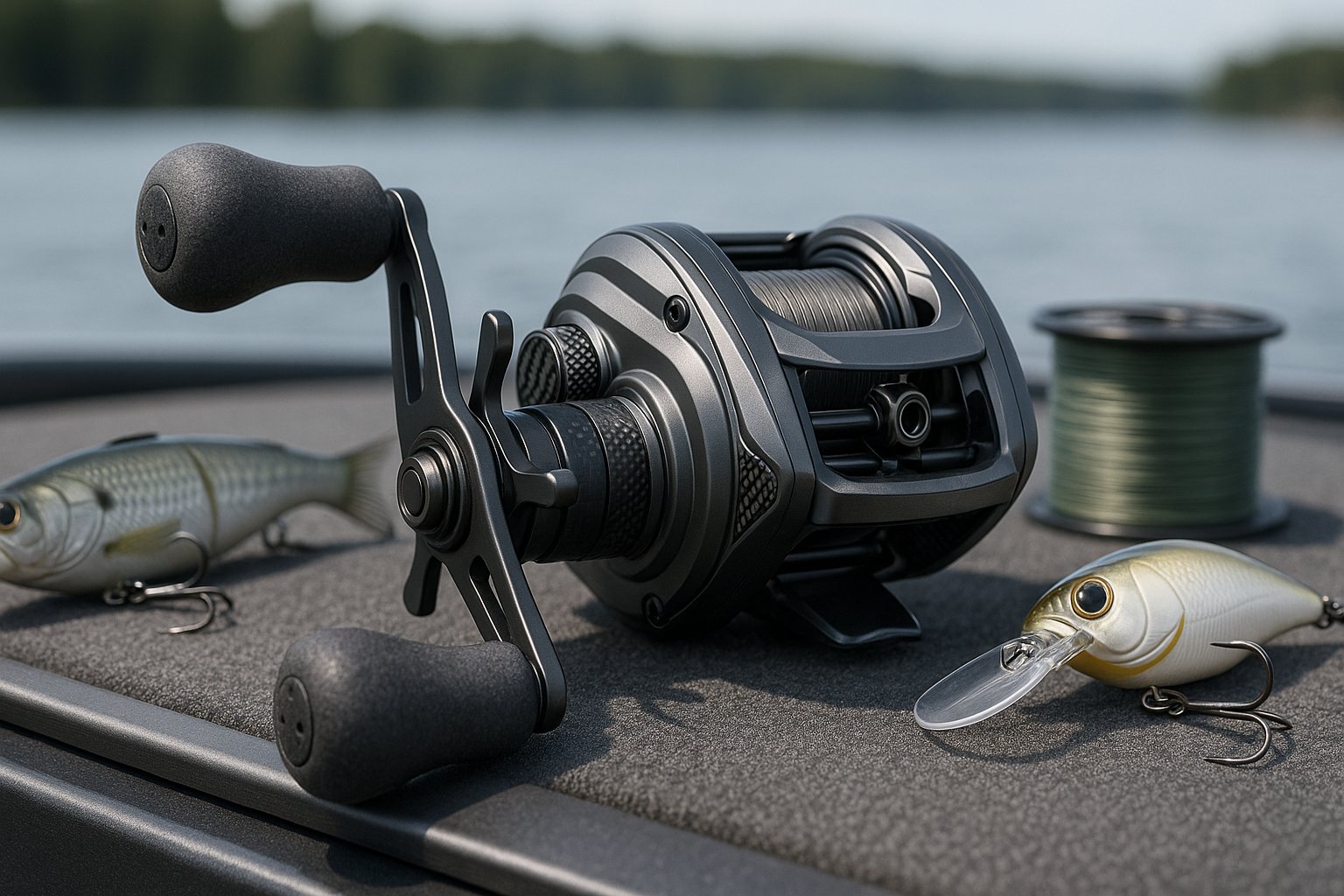
When we compare reels for heavy applications, three features matter most: power, drag, and durability. Marketing terms can muddy the water, so it helps to look at what actually affects real-world performance.
Power
Power starts with the gear train and the handle assembly. A reel with brass or hardened main gears usually holds up better than one built around lighter-duty internals, especially when we're retrieving resistance-heavy lures over and over. Gear size matters too. Bigger, stronger gears generally provide better torque and smoother performance under load.
Handle length is often overlooked, but it makes a noticeable difference. A longer handle gives us more leverage, which helps when pulling giant blades, deep cranks, or high-resistance swimbaits. Oversized knobs can help as well, especially when our hands are wet, cold, or tired.
Rigid frame construction also contributes to power. Aluminum frames tend to resist flex better than graphite-based alternatives. Less flex means better gear alignment, and better gear alignment means more efficient transfer of force.
Drag
A strong drag matters, but usable drag matters more. For heavy-lure fishing, we want a drag system that starts smoothly and stays consistent without pulsing or sticking. That's especially important when a large fish surges near the boat or when we're using heavy braid and tight hooksets.
For many heavy setups, max drag numbers in the mid-to-upper range are plenty. The headline number alone doesn't tell the whole story. We should care more about:
-
Smooth startup
-
Heat resistance under pressure
-
Fine adjustment
-
Consistency through a long fight
Carbon drag washers are commonly preferred because they tend to handle heat and pressure well. In a quality reel, that translates to confidence, not just on one fish, but after a full season of hard use.
Durability
Durability is where the best reel for big lures usually separates itself from average models. We want reels that can handle repeated shock from casting, sustained resistance on the retrieve, and exposure to water, grit, and boat rash.
The most important durability indicators include:
-
Metal frame construction
-
Quality gear materials
-
Strong spool support and bearings
-
Reliable anti-reverse system
-
Tight tolerances that stay tight over time
Not every durable reel has to be huge or overly heavy. But it does need to be built for abuse. If we fish large baits regularly, durability isn't a bonus feature, it's part of baseline performance.
Gear Ratio Considerations
Gear ratio has a major impact on how a reel performs with heavy lures, and this is where many anglers buy the wrong setup. Faster isn't always better. In fact, with power fishing, overly fast reels can make hard-pulling baits feel even heavier.
At a basic level, gear ratio tells us how many times the spool turns with one full handle rotation. But on the water, what we really feel is a combination of retrieve speed and torque.
Lower ratios for torque
Lower gear ratios, often in the 5:1 to low-6:1 range, are popular for heavy, high-resistance lures. They make it easier to retrieve:
-
Large spinnerbaits
-
Big Colorado-blade baits
-
Deep-diving crankbaits
-
Giant musky bucktails
-
Heavy umbrella rigs
These reels reduce strain on us and on the reel itself. If we spend hours winding lures that pull like a shovel, a lower ratio is often the smarter choice.
Mid-range ratios for versatility
A mid-range ratio, often around 6.3:1 to 7.1:1 depending on spool size, is a strong all-around choice when we throw a mix of heavy baits. This range balances power and speed well enough for swimbaits, glide baits, larger jigs, and many reaction lures.
If we want one reel to cover multiple applications, this is usually the safest zone. It won't be the absolute best at every task, but it's often the most practical.
Higher ratios for line pickup
High-speed reels have their place even in heavy setups. They can be useful when we need to pick up slack quickly after a fish eats on a semi-slack line, or when we're fishing presentations that benefit from rapid repositioning. Large soft swimbaits, some topwater wake baits, and certain hookset-driven techniques can justify faster ratios.
The tradeoff is simple: the faster the reel, the more work we usually do when the lure pulls hard.
A simple rule of thumb
If the bait creates a lot of drag in the water, lean lower. If the bait is heavy but doesn't pull that hard, a faster reel can work just fine.
That's why the right reel for heavy lures depends not just on lure weight, but on retrieve resistance. Two 3-ounce baits can fish completely differently. One may glide with little effort: the other may feel like dragging a wet boot. Gear ratio should match the bait's behavior, not just the number on the package.
Matching Rod and Line for Heavy Setups
Even the best reel struggles in a poorly balanced setup. For heavy lures, reel choice only works when it's matched with the right rod and line. We need the whole system to cast safely, fish efficiently, and hold up under pressure.
Rod power and action
A rod for heavy lures should be rated for the actual bait range we plan to throw, not the range we hope it can handle. That sounds obvious, but plenty of gear gets pushed past its real comfort zone.
For larger swimbaits, magnum hard baits, and oversized reaction lures, we usually want:
-
Heavy to extra-heavy power
-
A lure rating that honestly covers the bait weight
-
Enough length for casting distance and leverage, often around 7'6" to 8' or more depending on technique
Action matters too. A fast action can help with hooksets and control, while a more moderate taper may help with treble-hooked moving baits. The correct choice depends on the lure style and hook type.
Line selection
Line needs to match both the lure and the cover. Heavy baits create force on the cast, so weak or mismatched line can turn into an expensive lesson fast.
Common choices include:
-
Braid for strength, sensitivity, and hook-driving power
-
Fluorocarbon for abrasion resistance and lower visibility
-
Heavy mono/coploymer when more stretch or buoyancy is helpful
For many heavy applications, anglers step up significantly in line size compared with standard bass tackle. That's not overkill. It's often necessary for casting safety, lure control, and landing fish cleanly.
Reel balance and capacity
The reel also needs enough line capacity for the line diameter we're using. Heavy braid and thick fluorocarbon take up spool space quickly. A reel that looks compact and sleek may become a poor fit if it can't hold enough usable line.
Balance matters as much as raw specs. A combo that's too tip-heavy becomes exhausting after a day of casting. Sometimes a slightly larger reel actually improves comfort because it counterbalances a long heavy rod better.
A practical matching checklist
Before buying, we should ask:
-
What is the true lure weight range?
-
Does the rod rating support it safely?
-
Does the reel hold enough of the line we need?
-
Does the gear ratio fit the bait's resistance?
-
Will the full setup stay comfortable through a long day?
A heavy setup should feel intentional, not pieced together. When rod, line, and reel work as a system, casting gets easier, retrieves feel smoother, and the whole outfit inspires a lot more confidence.
Best Reel Options for Power Fishing
The best choice depends on the species, lure style, and how often we fish heavy gear, but most strong options fall into a few clear categories. Instead of chasing hype, we should focus on matching reel class to the job.
Low-profile heavy-duty baitcasters
These are the most common choice for bass anglers throwing larger swimbaits, Alabama rigs, oversized jigs, and medium-to-heavy reaction baits. A good low-profile heavy duty fishing reel offers comfort, decent palmability, and enough power for repeated casting without feeling bulky.
Best for:
-
Larger bass lures
-
Multi-purpose heavy casting
-
Anglers who want power without a full-size round reel
Look for metal frames, brass gearing, strong drags, and generous line capacity. This category often gives us the best blend of ergonomics and performance.
Round reels
Round reels remain a top option for true big-bait work, musky fishing, and other high-stress applications. They're often favored for durability, capacity, and cranking authority. They may not feel as compact, but they excel when lure size and fish size both increase.
Best for:
-
Giant swimbaits
-
Musky bucktails and hard baits
-
Pike and trophy-class applications
-
Long sessions with high-resistance lures
If our fishing regularly pushes tackle hard, round reels deserve serious consideration. They're not outdated, they're specialized.
Heavy spinning reels
While baitcasters dominate most heavy-lure categories, spinning reels still make sense in some cases. Heavy spinning setups can work well for large inshore-style lures, some oversized soft plastics, and applications where spinning gear offers better line management or casting ease.
Best for:
-
Anglers more comfortable with spinning gear
-
Heavy soft-plastic presentations
-
Select saltwater or crossover freshwater uses
In this category, body rigidity, rotor strength, and drag smoothness are especially important.
How to choose the best reel for big lures
If we want a quick filter, we can use this framework:
|
Need |
Best starting point |
|---|---|
|
Versatile heavy bass setup |
Low-profile baitcaster |
|
Maximum power and durability |
Round reel |
|
Simpler casting with heavy soft baits |
Heavy spinning reel |
|
High-resistance retrieve baits |
Lower-gear power reel |
|
Mixed heavy lure techniques |
Mid-speed baitcaster |
The best reel for big lures is the one that matches our real fishing, not our most optimistic scenario. If we throw heavy baits once a month, a versatile crossover reel may be enough. If we throw them every weekend, it makes sense to buy more reel than we think we need. That extra strength, capacity, and stability usually pays off in longer service life and a much better experience on the water.
In short, for serious power fishing, we should prioritize build quality first, correct gearing second, and comfort third. Get those three right, and the rest becomes much easier.
Frequently Asked Questions About Reels for Heavy Lures
What makes a reel suitable for heavy lures?
A reel for heavy lures must provide increased torque, superior durability, and reliable drag performance. It should have strong metal gears, a rigid frame, smooth drag systems, and sufficient line capacity to handle the stress of casting and retrieving oversized, resistance-heavy baits.
How does gear ratio affect performance when using heavy lures?
Lower gear ratios (around 5:1 to low 6:1) provide more torque, making it easier to retrieve heavy, high-drag lures. Mid-range ratios (6.3:1 to 7.1:1) offer versatility for mixed heavy baits, while higher ratios help with line pickup speed but may increase fatigue during heavy retrieves.
Why is reel durability important for throwing big lures?
Heavy lures exert more force on reel components during casting and retrieval. Durable reels with metal frames, hardened gears, strong spool support, and quality bearings resist wear, maintain tight tolerances, and withstand repeated stress, ensuring long-lasting performance and preventing gear failure.
Can spinning reels be used effectively with heavy lures?
Yes, heavy spinning reels can be effective for large inshore lures, oversized soft plastics, or applications where spinning gear offers better line management or casting ease. Key factors include strong body construction, sturdy rotors, and smooth, reliable drag systems suitable for heavy presentations.
What rod and line characteristics work best with reels for heavy lures?
Use heavy to extra-heavy power rods rated for the actual lure weight, typically 7'6" to 8'+ length. For line, braid offers strength and sensitivity, fluorocarbon provides abrasion resistance and low visibility, and heavy mono or copolymer lines add stretch or buoyancy, ensuring balanced performance with heavy lures.
How does handle length influence reel performance with heavy lures?
Longer handles provide greater leverage, making it easier to turn the reel and retrieve heavy, resistance-heavy baits. Combined with oversized knobs for better grip, a longer handle reduces angler fatigue and improves power transfer during hard pulls and extended fights.
Reel Type Comparison
Use this overview to understand broad differences between reel types. Individual product specifications and intended uses vary by model.
| Reel Type | Best For | Control | Learning Curve |
|---|---|---|---|
| Spinning | Versatile casting | Easy handling | Approachable |
| Baitcasting | Precise lure placement | Direct spool control | More practice |
| Round Baitcasting | Trolling and offshore setups | Controlled line retrieval | Technique dependent |
 Featured

