

The Best Walleye Fishing Setup in 2026: Rod, Line, Lures, and Adjustments That Actually Catch More Fish
An effective walleye setup matches their low-light feeding behavior and seasonal depth changes. The core combo is a 6'6" to 7' medium-light fast-action spinning rod with a 2500 reel, 8 lb braid, and an 8 lb fluorocarbon leader. Jigging works best for concentrated fish on structure; trolling covers water when fish are scattered. At night, fish shallower with slower retrieves and high-contrast lures. Day setups require more precision and lighter finesse presentations. Essential gear includes jigs from 1/8 to 3/8 oz, crankbaits, live bait rigs, and quality electronics. Success comes from matching presentation to fish mood, not using one generic combo.
Walleye can make good anglers feel average fast. One day they're crushing jigs on a windblown point, and the next they won't touch anything unless the presentation is painfully precise. That's why having the right walleye fishing setup matters so much. It's not just about buying better gear. It's about matching rod, reel, line, presentation, and timing to how walleye actually feed.
In this guide, we'll break down the best setup for walleye fishing for common real-world situations. We'll cover how walleye behavior affects your choices, the ideal rod, reel, and line combinations, how to adjust for day versus night, and when to use a walleye jigging setup instead of a trolling spread. If we dial in these fundamentals, we make every cast, drift, and pass more productive.
Understanding Walleye Feeding Behavior
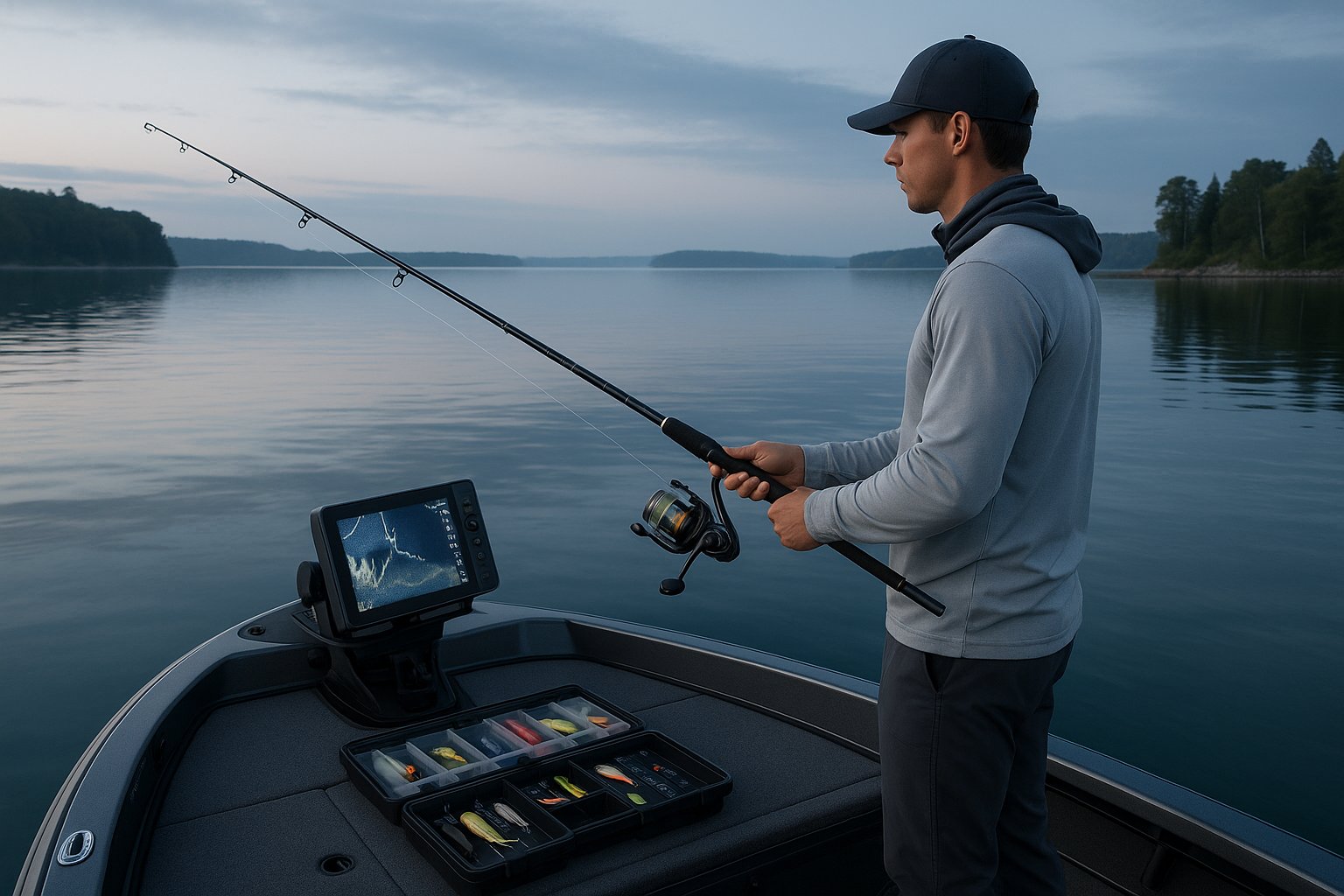
Walleye setup starts with behavior. If we don't understand where fish are positioned, how they track prey, and when they feed aggressively, even premium walleye fishing gear won't save us.
Walleye are built to feed efficiently in low light. Their eyes give them a major advantage at dawn, dusk, at night, and in stained water. That's why they often slide shallow during low-light periods and pull deeper when the sun gets high. In clear lakes, that shift can be dramatic. In stained rivers or reservoirs, they may stay accessible much longer.
A few feeding patterns matter most when choosing the best setup for walleye fishing:
-
Light level matters more than clock time. Cloud cover, chop, and water clarity can extend feeding windows.
-
They relate tightly to bait. If perch, shiners, or smelt move, walleye usually move with them.
-
They often hold near edges. Think weedlines, breaklines, rock-to-sand transitions, points, humps, and current seams.
-
Mood changes everything. Active fish will chase crankbaits. Neutral fish often need slower jigs, live bait rigs, or precise trolling speeds.
Season changes setup too. In spring, walleye are often shallow, current-oriented, and easier to target with lighter jig setups. In summer, they commonly shift to deeper structure, basin edges, and offshore humps, where line control and electronics matter more. In fall, baitfish movements can concentrate big fish, and reaction presentations become stronger again.
The practical takeaway: we should build our setup around depth, water clarity, forage, and fish mood. If fish are pinned to bottom on a rock edge, a sensitive jigging rod and light braided main line make sense. If they're roaming suspended over flats, trolling crankbaits or spinner rigs usually covers water better.
A common mistake is assuming one all-purpose combo will handle every scenario. It won't. Walleye reward precision. The closer our setup matches how they're feeding, the more bites we convert.
Best Rod, Reel, and Line Setup
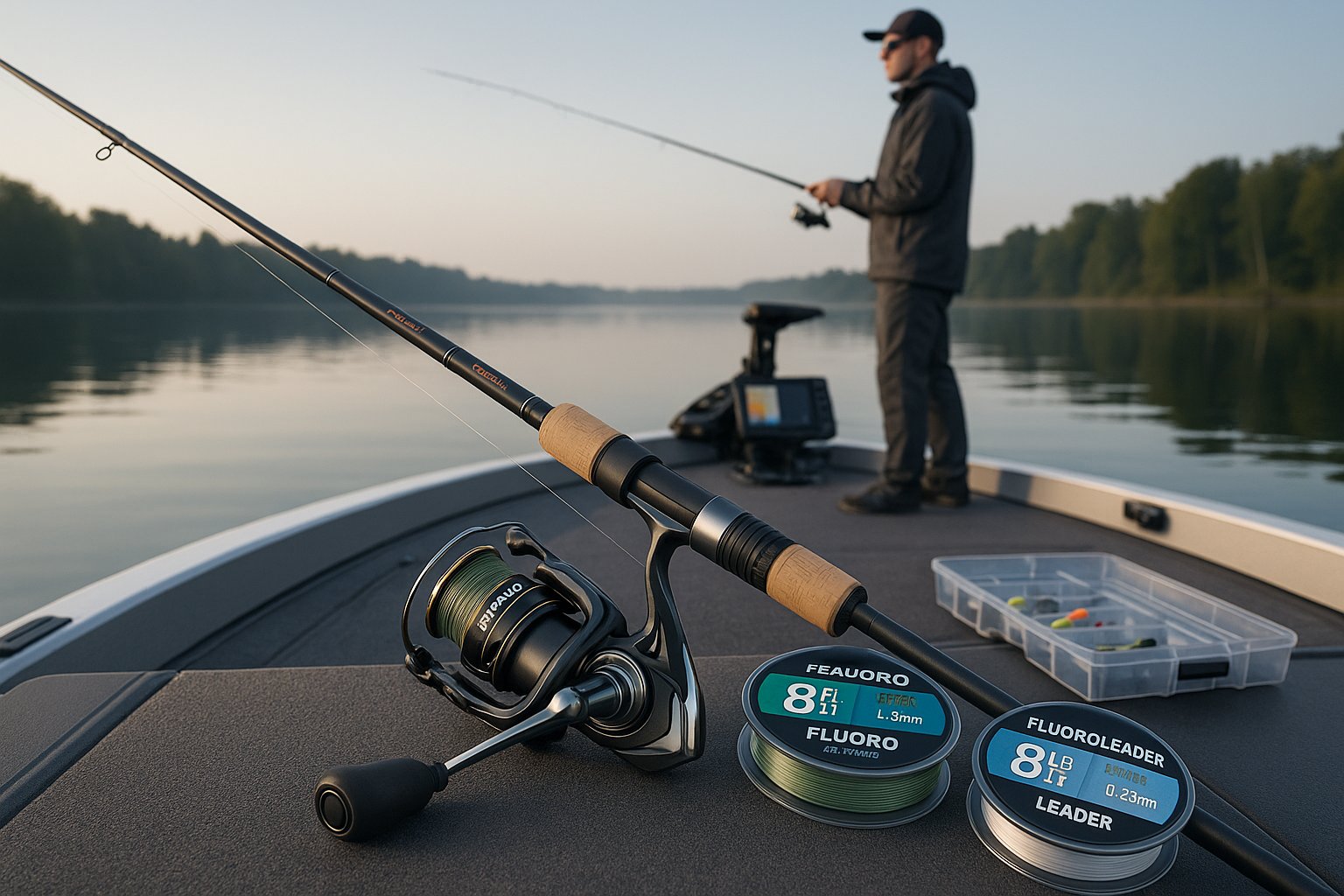
For most anglers, the core walleye combo is straightforward: a 6'6" to 7' medium-light or medium fast-action spinning rod, a 2500-size spinning reel, and either braid with a leader or low-visibility monofilament/flourocarbon, depending on technique.
Rod
A fast-action spinning rod gives us two big advantages: sensitivity and hook-setting control. We can feel light bottom contact, subtle pickups, and changes in structure much better than with a softer, slower rod.
For general use:
-
Length: 6'6" to 7'
-
Power: Medium-light for finesse jigging and live bait: medium for heavier jigs, rigs, and dual-purpose use
-
Action: Fast or extra-fast tip
If we mostly fish vertical jigs in current, a shorter rod around 6'3" to 6'8" can improve control. If we cast live bait rigs or light jigs over flats, a 7' rod helps with distance and line pickup.
Reel
A 2500-size spinning reel balances well with standard walleye rods and offers enough line capacity without adding unnecessary weight. Smooth drag matters because walleye often inhale baits softly and can surge boatside.
We want:
-
A reliable front drag
-
Smooth line lay for braid
-
Solid anti-reverse
-
Comfortable retrieve speed in the 5.2:1 to 6.2:1 range
Baitcasters can work for trolling and some bottom-bouncer applications, but for the average angler, spinning gear remains the most versatile walleye fishing setup.
Line
Line choice changes performance more than many anglers realize.
For jigging and finesse work:
-
8- to 10-pound braid main line
-
6- to 10-pound fluorocarbon leader
Braid gives us incredible sensitivity and cleaner hooksets, especially in deeper water or wind. The leader adds abrasion resistance and lowers visibility.
For live bait rigs and some crankbait applications:
-
6- to 10-pound monofilament or fluorocarbon
Mono's stretch can actually help with treble-hooked crankbaits, keeping fish pinned during surges.
Simple setup guide
|
Technique |
Rod |
Reel |
Line |
|---|---|---|---|
|
Jigging |
6'6"-7' ML/F |
2500 spinning |
8 lb braid + 8 lb fluoro leader |
|
Live bait rigging |
7' M/F |
2500 spinning |
8-10 lb mono or braid + leader |
|
Trolling crankbaits |
7'-8' M/moderate |
Line counter or spinning |
10 lb mono / lead core as needed |
If we want one combo only, the safest answer is a 7' medium-light fast spinning rod, 2500 reel, and 8-pound braid with an 8-pound fluorocarbon leader. It's hard to beat that as the best setup for walleye fishing across lakes, reservoirs, and rivers.
Day vs Night Fishing Adjustments
Walleye don't just feed at different times: they often feed in different places and respond to different presentations. Our setup should change with them.
Daytime setup adjustments
During the day, especially under bright skies and in clear water, walleye usually hold deeper or tighter to cover. They may sit on the base of a break, on deep weed edges, around rock humps, or along current seams.
That means we should emphasize:
-
More precision in boat control and depth
-
Better sensitivity for subtle bites
-
Natural colors like perch, shiner, smoke, gold, and green pumpkin
-
Finesse presentations when fish are pressured
A daytime setup often includes lighter jigs, live bait rigs, or slow-death style crawler presentations. Electronics become a bigger part of the equation too. If we can hold directly over fish or trace the exact contour they're using, our odds go up quickly.
Night fishing adjustments
At night, walleye commonly move shallow to hunt. Flats, riprap, shoreline points, shallow reefs, and weed edges that look empty at noon can become prime after dark.
Our approach should get simpler, not more complicated.
Key changes:
-
Fish shallower water than we would in daytime
-
Use slower, steadier retrieves
-
Rely on profile and vibration more than fine detail
-
Favor dark, high-contrast, or reflective patterns depending on moonlight and water clarity
Long-line trolling small crankbaits is a proven night pattern, but casting minnow baits can be deadly too. In many systems, a size and shape that imitates young perch or shallow baitfish will outperform oversized lures.
Setup differences that matter
For day fishing, we often want maximum feel: braid, a fast rod, and a lighter leader. For night fishing, we may lean a little more toward forgiving tackle if we're casting trebled baits around shallow structure.
A practical split looks like this:
-
Day: ML fast spinning rod, braid-to-fluoro, jigs or rigs
-
Night: Medium or ML moderate-fast rod, mono or braid with a slightly longer leader, shallow crankbaits or swimbaits
One mistake we see often is anglers fishing too fast at night. Walleye can be shallow and aggressive, but they still track and commit better to controlled, predictable movement. Slow down just enough to let the lure hunt without blowing past fish.
Jigging vs Trolling Setup
Choosing between jigging and trolling depends on one question: are the fish concentrated enough to fish vertically or precisely, or do we need to cover water to find and trigger them? The answer determines the right setup.
Jigging setup
A strong walleye jigging setup is ideal when fish are on specific structure, relating to bottom, holding in current, or showing on electronics in a defined area.
Our preferred jigging setup includes:
-
6'6" to 7' medium-light fast spinning rod
-
2500 spinning reel
-
8-pound braid main line
-
6- to 10-pound fluorocarbon leader
-
Jigs from 1/8 to 3/8 ounce depending on depth, wind, and current
-
Soft plastics, minnows, or leeches depending on season and local rules
Vertical jigging shines when we can stay nearly on top of fish. Casting jigs works better when fish are spread along weed edges, gravel transitions, or shoreline breaks.
Best for:
-
Cold fronts
-
Spring current areas
-
Deep schools on humps or ledges
-
Finicky fish that need precise presentation
Trolling setup
Trolling is the better option when fish are scattered, suspended, actively roaming, or when we need to search large sections of water efficiently.
A standard trolling setup often includes:
-
7' to 8' medium or medium-light moderate-action rod
-
Spinning reel or line-counter reel
-
10-pound mono for crankbaits, or specialized trolling line if targeting precise depths
-
Crankbaits, crawler harnesses, bottom bouncers, or spinner rigs
A more moderate rod helps absorb head shakes and keeps trebles pinned. If we're pulling bottom bouncers or heavier harnesses, stepping up to a medium rod makes sense.
Best for:
-
Summer basin edges
-
Suspended fish over open water
-
Windy days when boat control is difficult
-
Finding active fish fast
Which setup catches more?
Neither, consistency comes from matching the method to fish location. Jigging usually wins when fish are grouped and neutral. Trolling often wins when fish are scattered and feeding.
If we're unsure, trolling is usually the faster search tool. Once we find a concentrated group, switching to jigging can produce more efficient, repeatable bites. That combination is often the real best setup for walleye fishing: use trolling to locate, then jigging to capitalize.
Recommended Walleye Fishing Gear
The best gear list is practical, not flashy. We want tackle that covers the highest-percentage walleye situations without filling the boat with redundant gear.
Core rod and reel combos
If we were building a compact but complete walleye lineup, we'd carry:
-
All-around spinning combo
7' medium-light fast rod + 2500 spinning reel
Use it for jigs, light rigs, plastics, and most finesse presentations.
-
Live bait / rigging combo
7' medium fast rod + 2500 spinning reel
Better for slip sinkers, heavier jigs, and pulling live bait in wind or current.
-
Trolling combo
7'6" to 8' medium moderate rod + line-counter reel
Best for crankbaits, bottom bouncers, and precise repeated passes.
Essential terminal tackle
Our walleye fishing gear box should include:
-
Round-head and stand-up jigs: 1/8, 1/4, and 3/8 oz
-
Fluorocarbon leaders: 6, 8, and 10 lb
-
Swivels and snap swivels
-
Slip sinkers and bottom bouncers
-
Hooks for live bait rigs: sizes 2 to 6
-
Jig heads for soft plastics
-
Assorted beads and spinner blades for crawler harnesses
Productive lure categories
Instead of obsessing over brand names, we should cover lure roles:
-
Minnow-profile jigs/plastics for spring and cold fronts
-
Paddle-tail swimbaits for active fish
-
Shallow crankbaits for night fishing
-
Deep-diving crankbaits for summer trolling
-
Blade baits or lipless presentations when fish want vibration
-
Live bait options like minnows, leeches, and crawlers where legal and available
Helpful extras anglers overlook
A few non-lure items improve results more than another pack of plastics:
-
Polarized sunglasses for reading water and spotting weed edges
-
Long-handled net with fish-friendly mesh
-
Electronics/GPS for contour tracking and waypoint management
-
Headlamp for night fishing
-
Quality pliers and line cutters
-
Drift socks for controlling speed in wind
A smart starter loadout
If we wanted a simple shopping list for the best setup for walleye fishing, it would be this:
-
7' ML fast spinning rod
-
2500 spinning reel
-
8 lb braid
-
8 lb fluorocarbon leader spool
-
1/8 and 1/4 oz jigs
-
Minnow plastics and live bait hooks
-
Two shallow crankbaits and two deep crankbaits
-
Slip sinkers and swivels
That setup covers an enormous percentage of walleye situations without overspending. And that's really the goal: versatile gear, clean presentation, and the ability to adapt fast when fish move.
Walleye Fishing Setup FAQs
What is the best rod, reel, and line setup for walleye fishing?
The ideal setup typically includes a 6'6" to 7' medium-light fast-action spinning rod, a 2500-size spinning reel, with 8-pound braided main line and an 8-pound fluorocarbon leader for sensitivity and strong hooksets in most conditions.
How does walleye feeding behavior influence fishing setup choices?
Walleye feed efficiently in low light and move with baitfish along structures like weedlines or points. Understanding their depth, mood, and forage patterns helps anglers choose the right rod, line, and presentation for better bite rates.
When should I use a jigging setup versus a trolling setup for walleye?
Use jigging when fish are concentrated near structure for precise vertical presentations. Trolling is better for searching wide areas when fish are scattered or suspended, with trolling helping locate fish and jigging capitalizing on bites.
What gear adjustments should I make for walleye fishing during day versus night?
Day setups favor lighter jigs, fast-action rods, braid-to-fluoro lines, and finesse techniques on deeper structure. At night, fish shallow with medium-action rods, monofilament or braid with longer leaders, and use slower retrieves with high-contrast lures.
Can I use the same walleye fishing setup year-round?
One all-purpose combo is possible—like a 7' medium-light fast spinning rod with a 2500 reel and 8-pound braid plus fluorocarbon leader—but adjusting gear and technique based on season, water clarity, and fish mood yields better results.
What are essential terminal tackle items for an effective walleye fishing setup?
Key tackle includes round-head and stand-up jigs (1/8 to 3/8 oz), fluorocarbon leaders (6-10 lb), slip sinkers, bottom bouncers, hooks sized 2 to 6 for live bait rigs, swivels, and jig heads for soft plastics.
 Featured

