

The Best Reel Size for Bass Fishing: How We Pick 1000, 3000, or 4000 With Confidence
Confused about spinning reel sizes for bass fishing? Learn why 3000 is the best all-around choice, how to match reel size to your rod and line, and which sizes work for finesse, cover fishing, and open-water smallmouth.
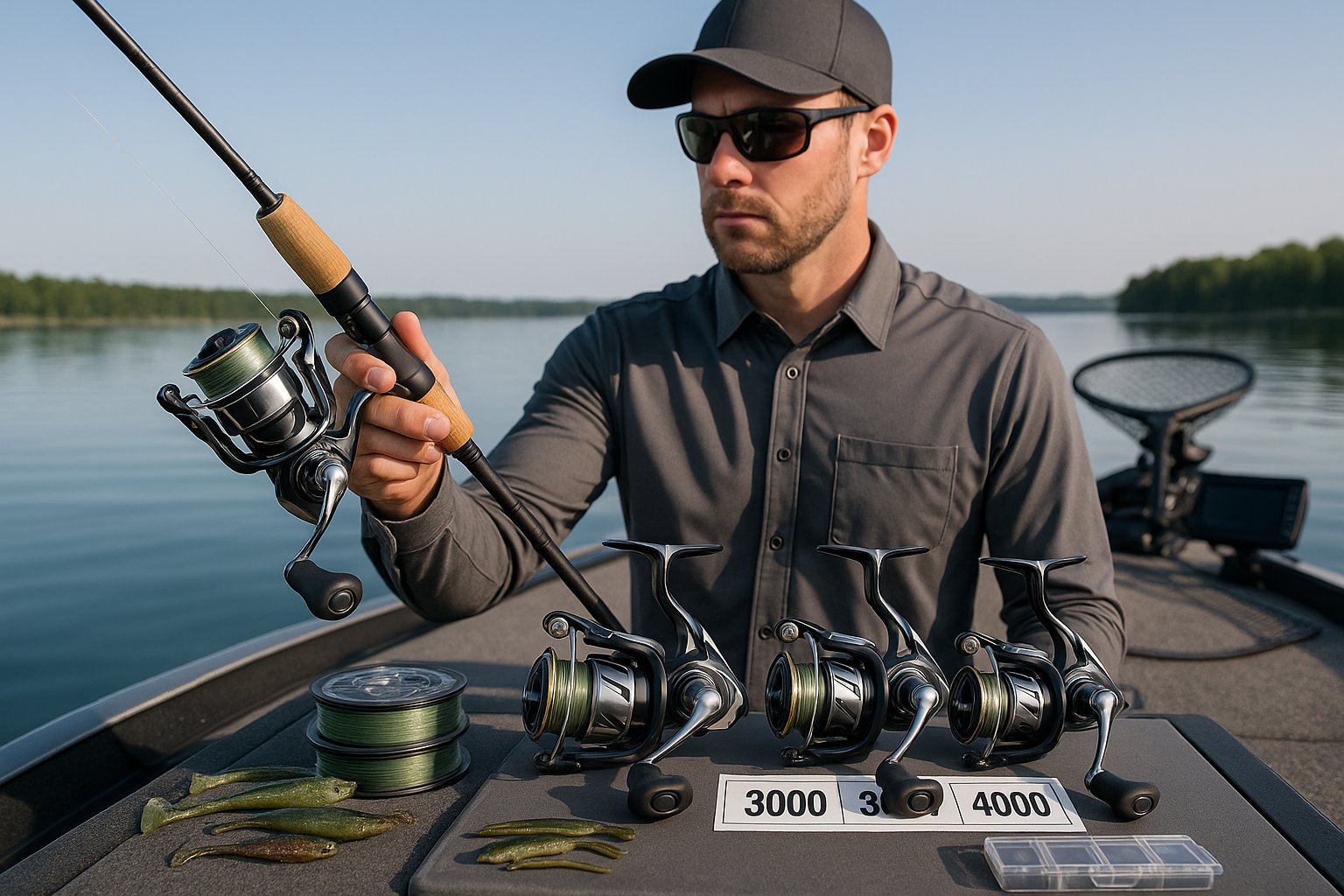
Choosing the right reel size for bass fishing seems simple, until we're standing in the tackle shop comparing numbers like 1000, 3000, and 4000 and wondering what actually works on the water. Pick too small, and we may fight line capacity, balance, and drag limits. Pick too big, and the setup can feel clunky, heavy, and less precise than it should.
The good news is that bass anglers don't need to overcomplicate this. In most cases, there's a practical size range that matches the way we fish, the rod in our hands, and the line we plan to spool. In this guide, we'll break down what reel sizing really means, how to match it to rod and line, the mistakes beginners make, and which sizes make the most sense in real bass fishing situations. By the end, we'll be able to choose a bass fishing reel size with a lot more clarity.
Why Reel Size Matters for Bass Fishing
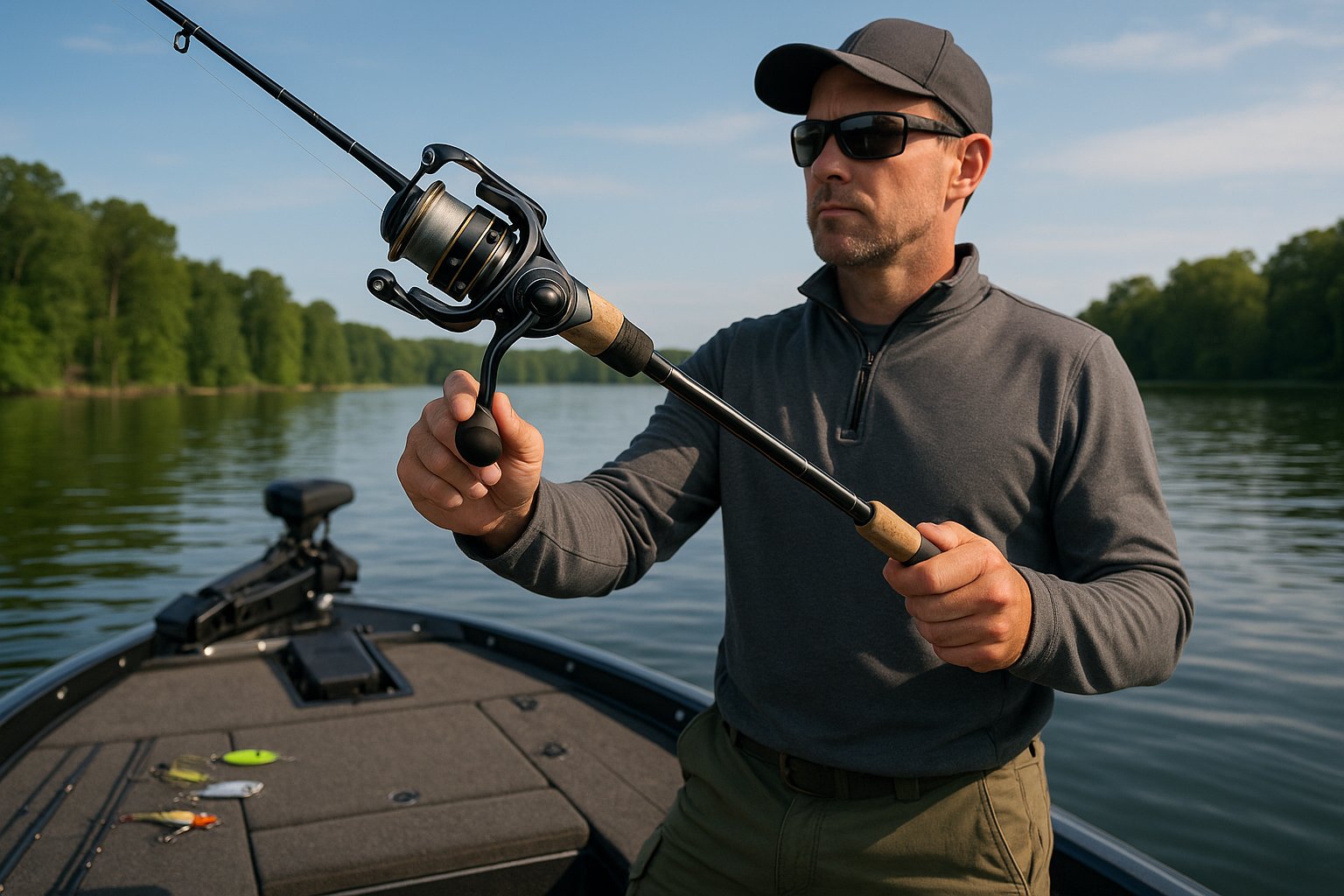 The right reel size matters because it affects almost everything we feel and control during a day of bass fishing: balance, casting comfort, line management, drag performance, and even how quickly we wear out our wrist.
Bass fishing is full of technique changes. We might throw a finesse worm in the morning, skip a jig under docks at lunch, and burn a spinnerbait before sunset. Reel size influences how well our setup handles those shifts. A reel that's too small may not hold enough line for heavier braid or long casts. A reel that's too large can overpower the rod, make the combo tip-light or butt-heavy, and reduce the nimble feel we want for accurate presentations.
A properly sized reel helps us in a few key ways:
-
Better rod balance: A balanced combo feels lighter and more responsive.
-
Cleaner line management: The spool size affects line memory, twist, and casting behavior.
-
Appropriate drag and power: Bigger reels usually offer more drag and cranking leverage, though not always dramatically.
-
Comfort over a full day: A few extra ounces matter when we're making hundreds of casts.
For bass specifically, reel size is less about chasing giant fish and more about matching the tool to the technique. Largemouth, smallmouth, and spotted bass usually don't demand oversized spinning reels. Instead, we want enough capacity and drag for our line choice while keeping the setup compact and easy to fish.
That's why many bass anglers land in the middle sizes. We're not selecting a reel based on guesswork or brand hype: we're matching the reel to real fishing conditions. When we get that match right, the combo feels natural in hand, performs more smoothly, and lets us focus on locating and catching bass instead of fighting our gear.
Understanding Reel Size Numbers (1000 vs 3000 vs 4000)
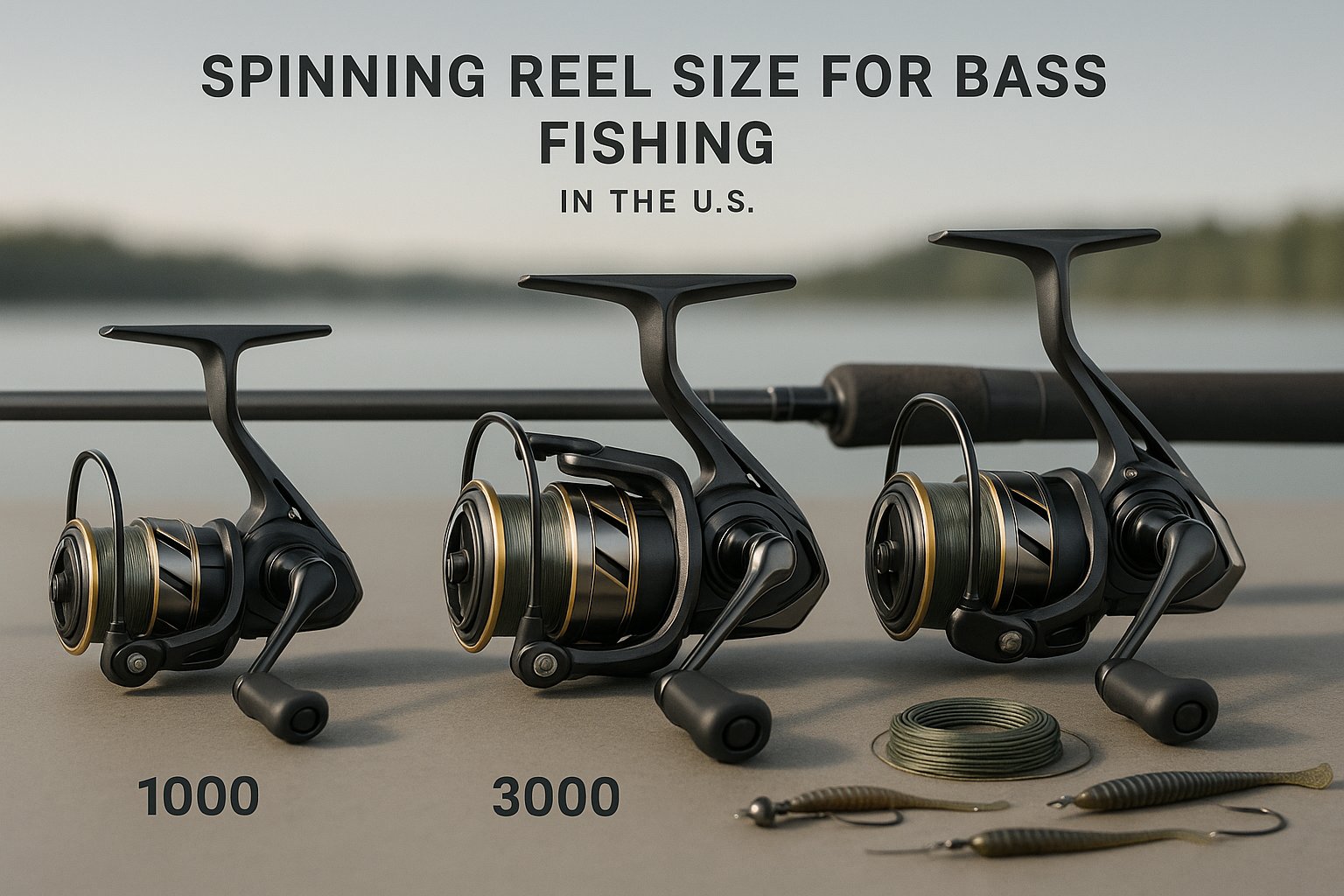
Reel size numbers can be confusing because they're not perfectly standardized across every brand. A 3000 from one manufacturer may be very close in size to a 2500 or even another brand's compact 3000. Still, the numbers are useful for understanding the general class of the reel.
In simple terms, a bigger number usually means a larger reel body or spool, more line capacity, and often a bit more weight. For bass fishing, spinning reels in the 1000 to 4000 range are the sizes we'll most often consider.
1000-size reels
A 1000-size reel is small, lightweight, and best suited to very light presentations. It works well for ultralight or panfish applications, and it can be used for bass in niche finesse situations.
For bass, though, 1000-size reels are usually on the small side. They can feel great with very thin line, but drawbacks show up fast:
-
Limited line capacity
-
Less versatility with braid-to-leader setups
-
Reduced balance on longer bass rods
-
Smaller spool diameter, which can affect casting and line flow
We generally see 1000 reels as a specialty choice rather than the best all-around bass fishing reel size.
3000-size reels
For many anglers, 3000 is the sweet spot. It offers a strong balance of capacity, comfort, and versatility without becoming bulky. A 3000-size spinning reel usually pairs well with the rods most bass anglers use for shaky heads, drop shots, wacky rigs, Ned rigs, tubes, and light swimbaits.
Why 3000 works so well:
-
Enough capacity for 10- to 20-pound braid with a leader
-
Better line management than very small spools
-
Good match for medium-light to medium spinning rods
-
Stronger all-purpose feel for largemouth and smallmouth
If we had to recommend one starting point for most bass anglers using spinning gear, 3000 would be very hard to beat.
4000-size reels
A 4000-size reel steps up in spool size, capacity, and usually weight. It's more common when we're fishing heavier line, larger moving baits on spinning gear, or dealing with situations where extra drag and pickup matter.
That said, 4000 is often more reel than most bass anglers need. It can make sense for:
-
Heavier braid around vegetation
-
Bigger smallmouth waters with long casts
-
Multi-species use where bass aren't the only target
-
Larger spinning rods in the 7' to 7'6" range
But if our main goal is a nimble, bass-specific setup, 4000 can feel oversized.
So, while the numbers don't tell the whole story, they give us a useful rule of thumb: 1000 is usually small, 3000 is often ideal, and 4000 is situational for bass fishing.
How to Match Reel Size with Rod and Line
This is where reel selection becomes practical. The best reel size for bass fishing isn't chosen in isolation: we need to match it to the rod and the line we actually plan to use.
Match reel size to rod power and length
A spinning reel should balance the rod, not fight it. When the reel is too small, the combo can feel tip-heavy. When it's too large, the setup loses finesse and comfort.
A simple guide:
-
6'6" to 7' medium-light spinning rods: usually pair well with 2500 or 3000 reels
-
6'10" to 7'2" medium spinning rods: often best with 3000 reels
-
7' to 7'6" medium or medium-heavy spinning rods: can handle 3000 or 4000 reels depending on line and technique
For typical bass applications, we usually lean toward the smaller size that still gives us enough capacity and balance. That keeps the combo lighter and more agile.
Match reel size to line type and pound test
Line choice matters just as much as the rod. A spool has to manage the line diameter we plan to fish.
-
Light finesse line such as 6- to 8-pound fluorocarbon or light braid works well on smaller-to-mid spools.
-
10- to 15-pound braid with leader is ideal on many 2500 or 3000 reels.
-
15- to 20-pound braid often feels better on a 3000, and sometimes a 4000 if we want extra capacity.
Larger spools generally help line come off cleaner, especially with braid or fluorocarbon that can behave poorly on tiny spools. That's one reason many bass anglers skip 1000-size reels.
Think about technique, not just fish size
This is the part people miss. We aren't just matching reel size to the size of the bass, we're matching it to how we fish.
For example:
-
Drop shot, Ned rig, shaky head: 2500 or 3000
-
Wacky rig and small swimbaits: 3000
-
Skipping docks with braid to leader: 3000
-
Heavier spinning applications around grass: 3000 or 4000
Quick matching table
|
Rod setup |
Common line |
Best reel size |
|---|---|---|
|
ML spinning finesse rod |
6–8 lb fluoro or 10 lb braid |
2500–3000 |
|
M spinning all-purpose rod |
10–15 lb braid with leader |
3000 |
|
Longer/heavier spinning rod |
15–20 lb braid |
3000–4000 |
If we want the simplest answer, here it is: choose the smallest reel that still balances the rod well and handles our line cleanly. For most bass spinning setups, that points straight to a 3000.
Common Reel Size Mistakes Beginners Make
Most beginners don't choose the wrong reel because they're careless. They choose the wrong one because reel sizing is marketed in a way that makes "bigger" sound stronger and "smaller" sound more finesse-friendly than it really is. In practice, there are a few mistakes we see again and again.
Buying too small for bass applications
A lot of newer anglers assume a tiny spinning reel will automatically cast light lures better. Sometimes that's true in ultralight fishing, but for bass, going too small often creates more problems than benefits.
A 1000-size reel may struggle with:
-
Line capacity for braid plus leader
-
Balance on a 7-foot bass rod
-
Smooth line flow on repeated casts
-
General versatility across techniques
For mainstream bass fishing, tiny reels are often limiting.
Going too big because it feels more powerful
The opposite mistake is buying a 4000 simply because it looks tougher. Bigger reels do offer more capacity, but they also add weight and bulk. That extra size can reduce sensitivity and comfort, especially when we're finesse fishing or making hundreds of casts.
If we aren't using heavier line or a larger spinning rod, we're often carrying unnecessary reel.
Ignoring rod balance
Many beginners buy the reel first and the rod second. That can work, but it often leads to awkward combos. A reel might seem fine in the box, then feel wrong once mounted.
Whenever possible, we should think of the setup as one system. A balanced combo simply fishes better.
Not checking actual capacity specs
This is a sneaky one. A 3000 reel from one brand may have a shallow spool meant for finesse braid, while another has more capacity and a different frame feel. The number alone doesn't tell the full story.
We should always check:
-
Mono and braid capacity
-
Reel weight
-
Gear ratio and line pickup
-
Spool design
Choosing based only on fish size
Bass aren't tuna. We don't need oversized spinning tackle just because a big largemouth might hit. Technique and line management matter more than brute force.
A good beginner rule is simple: don't size up unless we have a clear reason. For most anglers building a spinning setup for bass, a 2500 or 3000 keeps us in the safe zone and covers far more situations than extremes on either end.
Recommended Reel Sizes for Different Bass Fishing Scenarios
If we want practical advice, this is the section that matters most. The ideal reel size depends on where we fish, how we fish, and what role the combo needs to fill.
Best all-around reel size for bass fishing
If we're choosing one spinning reel for bass and want the safest, most versatile answer, we should start with a 3000-size reel.
It handles:
-
Finesse techniques
n- Braid-to-leader setups
-
Light moving baits
-
Dock skipping
-
Smallmouth and largemouth applications
It's the size that gives us enough spool diameter and capacity without becoming oversized. For many anglers, a 3000 is the best overall reel size for bass fishing.
Finesse bass fishing
For drop shots, Ned rigs, damiki rigs, shaky heads, and other finesse presentations, we usually want a light, balanced combo with excellent line management.
Best choice:
-
2500 or 3000, depending on brand and rod
If the reel brand runs compact, a 3000 may feel perfect. If the frame runs larger, a 2500 may do the same job. The main goal is pairing well with a medium-light or medium spinning rod and handling light braid or fluorocarbon cleanly.
Dock skipping and wacky rig fishing
Skipping puts extra demands on line control. A reel that manages braid well and picks up line smoothly is a major advantage.
Best choice:
-
3000-size reel
That size typically gives us the best blend of control, spool performance, and comfort. It's especially useful when we're fishing 10- to 15-pound braid to a fluorocarbon leader.
Fishing around grass, brush, or heavier cover on spinning gear
Sometimes we use spinning tackle in heavier cover, especially when fishing pressured bass that won't commit to baitcasting presentations. In those situations, we may spool heavier braid and need more authority.
Best choice:
-
3000 or 4000, depending on rod strength and line size
A 4000 can make sense here, especially on a longer rod with 15- to 20-pound braid. But for many anglers, a strong 3000 is still enough.
Smallmouth fishing in open water
Open-water smallmouth often means long casts, light line, and a lot of fighting room. That usually points back to a mid-size spinning reel.
Best choice:
-
3000-size reel
It offers the line management and casting efficiency we want without making the combo cumbersome.
When a 1000-size reel does make sense
There are a few exceptions. If we're using an ultralight rod for creek bass, highly specialized light-line presentations, or a crossover panfish-and-bass setup, a 1000 can work.
But for dedicated bass fishing, it's rarely our first recommendation.
Scenario summary
|
Scenario |
Recommended size |
|---|---|
|
One spinning reel for bass |
3000 |
|
Finesse bass fishing |
2500–3000 |
|
Dock skipping / wacky rigs |
3000 |
|
Heavier spinning around cover |
3000–4000 |
|
Open-water smallmouth |
3000 |
|
Ultralight crossover use |
1000 |
If we keep it simple, the pattern is obvious: 3000 is the workhorse size, 2500 is a finesse variation in some brands, 4000 is a specialty step up, and 1000 is a narrow-use option.
Frequently Asked Questions About Reel Size for Bass Fishing
What is the best reel size for bass fishing?
The best reel size for bass fishing is typically a 3000-size spinning reel. It balances line capacity, comfort, and versatility well for most bass fishing techniques and rod setups.
Why does reel size matter when bass fishing?
Reel size influences rod balance, casting comfort, line management, drag performance, and wrist fatigue. A properly sized reel improves overall fishing smoothness and helps match technique requirements.
How do I match reel size to my rod and line for bass fishing?
Choose a reel size that balances your rod length and power. Medium-light 6'6" to 7' rods pair well with 2500–3000 reels, while heavier rods or heavier braid lines might need 3000–4000 size reels.
Can a 1000-size reel be used for bass fishing?
A 1000-size reel is generally too small for bass. It has limited line capacity and spool size, making it better suited for ultralight or finesse niche situations rather than mainstream bass fishing.
When should I consider a 4000-size reel for bass?
Consider a 4000 reel if you're using heavier braid around vegetation, fishing larger smallmouth waters requiring long casts, or using longer spinning rods (7' to 7'6") where extra drag and line capacity are needed.
What common mistakes do beginners make when choosing a bass fishing reel size?
Beginners often choose reels that are too small, too big, ignore rod balance, or base choices solely on fish size rather than technique. Selecting the smallest reel that balances the rod and handles the line cleanly usually works best.
 Featured

