

The Best Reel for Kayak Fishing: What Actually Matters on the Water
Choosing a reel for kayak fishing isn't like picking one for a bass boat. Kayaks mean constant water exposure, seated casting, tight storage, and odd fighting angles. Prioritize smooth, reliable drag, corrosion resistance, compact size, and lightweight design. For spinning reels, sizes 2000 to 3000 hit the sweet spot—balanced, manageable, and fatigue-free. Low-profile baitcasters excel for precision around cover. Avoid oversized reels that throw off rod balance. Durability matters: look for sealed or semi-sealed bodies, corrosion-resistant bearings, and rigid frames. Rinse after salt use and service regularly. The best reel kayak anglers trust is the one that stays comfortable, predictable, and tough trip after trip.
Choosing the right reel for kayak fishing isn't quite the same as picking one for a bass boat, pier, or shoreline setup. In a kayak, we're lower to the water, tighter on space, and constantly dealing with motion, splash, awkward rod angles, and limited room to fight a fish. That changes what "good" looks like.
A reel that feels perfect in a tackle shop can become annoying fast once we're paddling, casting one-handed, or trying not to dump gear overboard. For kayak anglers, small details matter more: weight, balance, corrosion resistance, drag smoothness, and how easily a reel can be managed in a seated position.
In this guide, we'll break down the unique demands of kayak fishing, the reel features that genuinely make a difference, and the types of reels that tend to perform best. If we're trying to find a compact fishing reel, a lightweight fishing reel, or simply the best reel kayak anglers can trust day after day, this is where to start.
Unique Challenges of Kayak Fishing
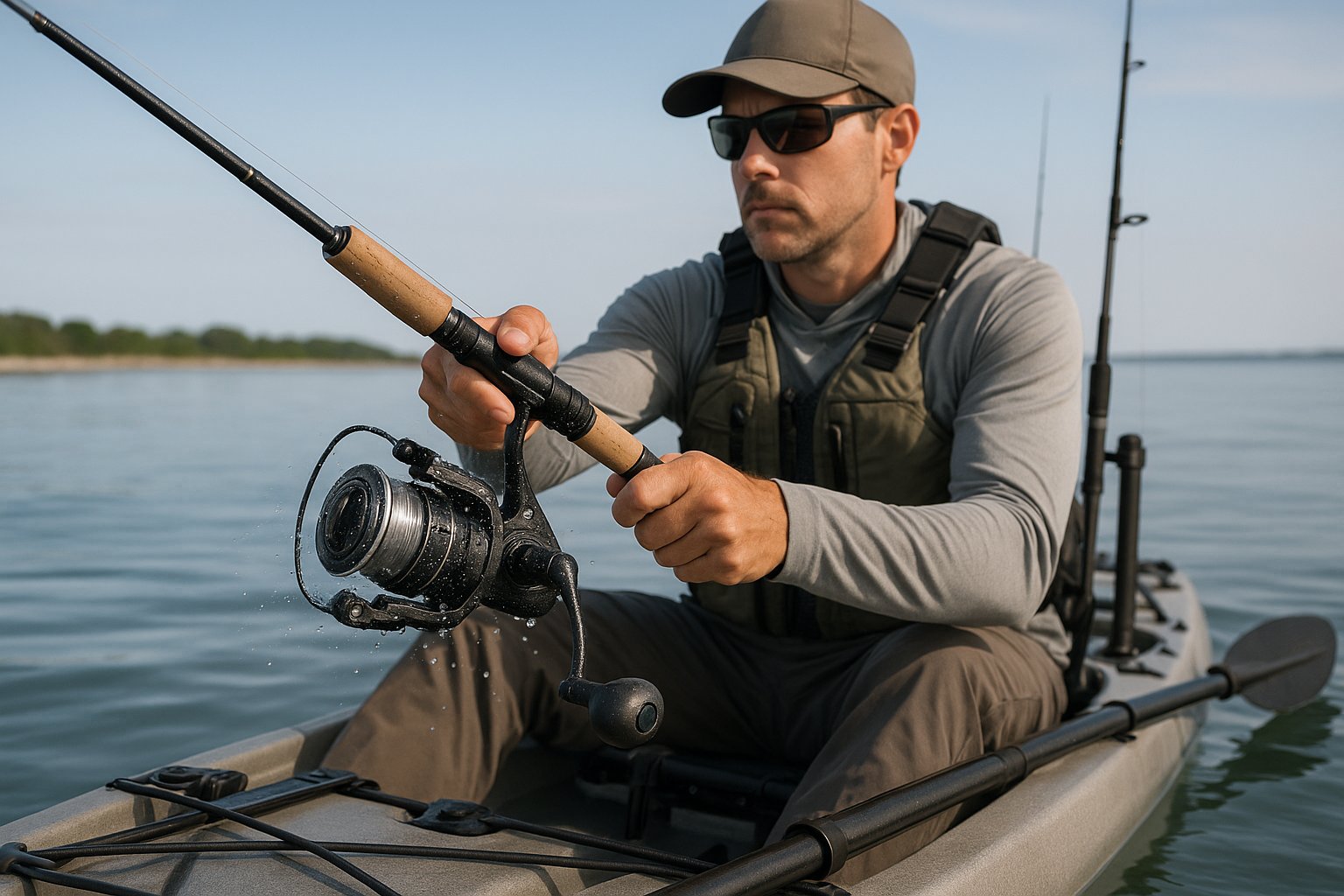
Kayak fishing asks more from our gear than many anglers expect. On paper, it looks simple: smaller craft, lighter tackle, fewer accessories. In practice, the reel becomes one of the hardest-working pieces of equipment we bring.
First, there's constant exposure to water. Even in freshwater, reels get splashed, dripped on, and occasionally dunked. In saltwater, that same exposure becomes much harsher. Spray gets into places we don't notice right away, and if the reel isn't built to handle that environment, performance declines fast.
Then there's body position. We fish from a seated platform, often close to the surface, which changes our casting motion and our leverage during a fight. A reel has to feel manageable when we're casting low, sweeping sideways around the bow, or adjusting while a fish pulls us off angle. This is one reason many kayak anglers prefer a compact fishing reel over something oversized and cumbersome.
Storage is another issue. On a kayak, every inch matters. Reels get bumped by paddles, rod holders, crate systems, PFD straps, and our own knees. A bulky setup can become frustrating, especially when we're switching rods quickly. And when a fish runs under the kayak, we need smooth drag and easy control, not something heavy and clunky that fights us as much as the fish does.
Kayaks also make balance more important. A reel that's too heavy can make the rod tip feel wrong over a long session. After four or five hours of casting, jigging, or working topwater, even a little extra weight starts to show up in our wrist and forearm.
That doesn't mean we always need ultralight gear. It means we need the right gear for a smaller, less forgiving platform. The ideal reel for kayak fishing is one that stays out of our way until a fish is on, then performs with total reliability.
Key Features to Look for
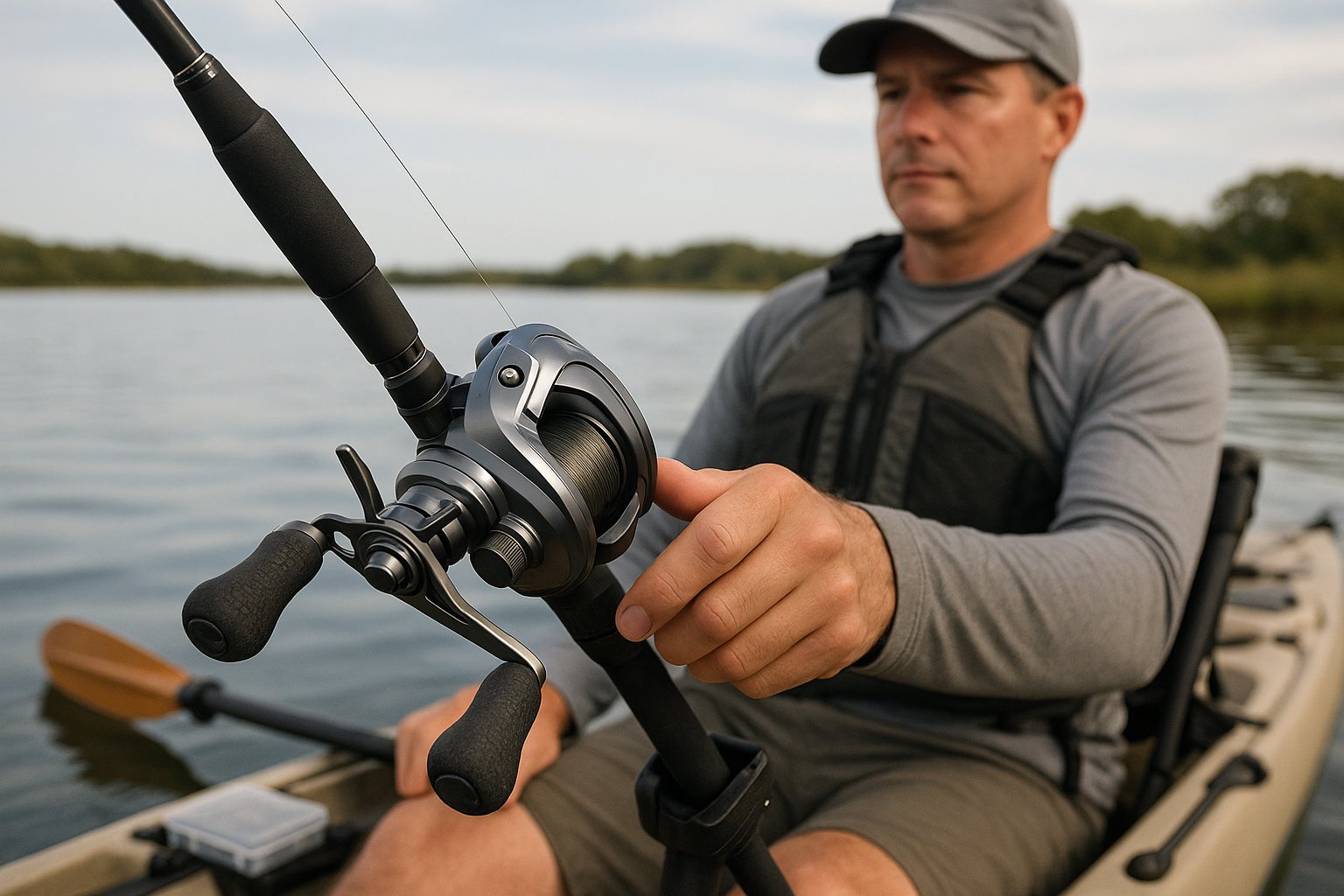
When we're shopping for a reel for kayak fishing, a few features consistently matter more than flashy extras.
The first is smooth, dependable drag. Kayaks move when fish pull, which can help absorb pressure, but it also creates odd angles during the fight. A sticky or jerky drag causes problems quickly, especially with braid and lighter leaders. We want drag that starts clean and stays consistent, whether we're battling redfish, bass, snook, pike, or schoolie stripers.
Next is retrieve efficiency. Gear ratio matters, but not in a one-size-fits-all way. Faster reels help pick up slack quickly when a fish charges the kayak or when we need to re-engage after a missed strike. Moderate ratios, though, often feel more controlled for moving baits, finesse work, and all-around use. The best choice depends on how we fish, but smooth line pickup is essential either way.
Handle grip and ergonomics deserve more attention than they usually get. Our hands may be wet, slimy, cold, or sunscreen-covered. A reel that's hard to grip becomes surprisingly annoying. Knobs should feel secure and easy to control without requiring perfect hand placement.
We should also pay attention to line management. For spinning reels, that means even line lay, low twist, and good bail operation. For baitcasters, it means a braking system that's forgiving when we're making sidearm or seated casts in tight quarters. Kayak anglers often cast from awkward positions, so reels that behave well under less-than-perfect mechanics are worth their weight in gold.
Another big one: one-handed usability. We may be holding a paddle, adjusting position, managing current, or steering with our feet while getting ready to cast. Reels that are intuitive and quick to operate make a real difference.
Finally, prioritize reliability over hype. Fancy coatings, extreme bearing counts, and aggressive marketing don't matter much if the reel can't hold up to repeated use in wet conditions. The best reel kayak anglers choose is usually the one that combines comfort, predictability, and toughness, not the one with the loudest product page.
Size and Weight Considerations
For kayak fishing, size and weight aren't side notes, they're central to how comfortable and effective our setup feels.
A reel that's too large can throw off rod balance and make repetitive casting tiring. That matters more in a kayak because we're often making compact, controlled casts from a seated posture. Oversized reels may hold more line, but for many inshore and freshwater situations, that extra capacity is unnecessary bulk.
In spinning reels, sizes around 2000 to 3000 often hit the sweet spot for freshwater and light inshore kayak fishing. A 2500-size reel, in particular, is popular because it balances casting distance, drag capability, and manageable weight. For heavier inshore species or stronger current, a 3000 or 4000 may make sense, but jumping too big too quickly can make the combo feel top-heavy.
For baitcasting setups, low-profile reels tend to fit kayak use better than larger round reels unless we're targeting bigger fish specifically. Low-profile models are easier to palm, easier to manage in close quarters, and generally more comfortable over a full day.
This is where a lightweight fishing reel really earns its keep. Saving even an ounce or two may not sound dramatic in the store. On the water, after hundreds of casts, it absolutely does. Lighter reels reduce fatigue and improve overall rod balance, especially with modern graphite or carbon rods built for kayak anglers.
That said, lighter isn't always better if it comes at the expense of strength. We want the lightest reel that still has a rigid frame, dependable gears, and enough drag for the species we're targeting. There's a difference between purposefully light and cheaply light.
A good rule: match the reel to the actual fishery, not our worst-case fantasy. If we mostly fish ponds, rivers, and sheltered flats, a compact reel with moderate line capacity is often ideal. If we regularly fish tidal current, nearshore structure, or larger species, stepping up in size makes sense. The goal is balance, enough reel, not too much reel.
Durability and Water Resistance
If there's one area where kayak anglers shouldn't cut corners, it's durability. Reels in kayaks live hard lives.
Even careful anglers end up exposing reels to water more than they intended. Paddle drip lands on them. Waves break over the bow. Rain sneaks in. A net handle smacks the side plate. Sometimes the reel gets laid down on a wet deck or briefly submerged during a chaotic landing. So while no reel is truly invincible, water resistance and solid construction matter a lot.
For freshwater anglers, durability still matters because moisture, mud, grit, and general wear can shorten a reel's lifespan. For saltwater kayak fishing, corrosion resistance becomes absolutely critical. Aluminum bodies, sealed drags, corrosion-resistant bearings, and protective coatings all help. So do tight tolerances and designs that keep water out of sensitive internal components.
This is one reason many anglers pay attention to whether a manufacturer offers any level of sealing. Full sealing usually costs more, but even partial protection around the drag and main body can be valuable. It doesn't make a reel maintenance-free, nothing does, but it can buy us time and reduce long-term damage.
Still, construction matters just as much as seals. A rigid frame keeps gears aligned under load. Quality internals hold up better after repeated hooksets, heavy retrieves, and hard fights from odd kayak angles. Cheap reels often feel fine at first, then develop play, roughness, or line issues after a season of real use.
Maintenance is part of the durability equation too. After saltwater trips, we should lightly rinse, not blast, the reel with fresh water, wipe it down, and let it dry before storage. Periodic lubrication and service go a long way. The toughest reel for kayak fishing is still a lot tougher when we don't neglect it.
In short, buy for the environment we actually fish. If we're on salt or brackish water often, prioritize corrosion resistance early. If we fish freshwater only, we can be a bit more flexible, but ruggedness is never wasted.
Recommended Reels for Kayak Anglers
The best recommendations depend on where and how we fish, but a few reel categories stand out consistently for kayak use.
For all-around spinning performance, a 2500 or 3000-size spinning reel is hard to beat. This is the setup many anglers end up using most because it covers so much ground: soft plastics, jerkbaits, small swimbaits, topwater, live bait, and finesse presentations. Look for a model with smooth drag, solid sealing or at least good corrosion protection, and a weight that won't wear us out over a long day. For many people, this is the best reel kayak anglers can start with if they want one dependable choice.
For finesse freshwater fishing, a smaller spinning reel in the 2000 to 2500 range makes sense. It pairs well with lighter rods, skips docks more easily, and keeps the whole combo nimble. If we spend most of our time fishing worms, Ned rigs, drop shots, or small paddle tails from a kayak, this setup is efficient and comfortable.
For power fishing and precise lure control, a low-profile baitcaster is a strong option. It shines when we're throwing jigs, spinnerbaits, frogs, chatterbaits, or pitching around cover. In a kayak, compactness matters, so a low-profile reel with a manageable spool and forgiving brakes tends to outperform oversized models for everyday use.
For inshore saltwater kayak fishing, moving up slightly in size is often worth it. A sealed or semi-sealed 3000 to 4000 spinning reel gives us better line capacity, stronger drag, and more confidence around current, wind, and stronger fish. Here, durability is just as important as smoothness.
If we want the simplest buying advice, it's this: choose a compact fishing reel or low-profile reel that balances your rod, has trustworthy drag, and is built for wet conditions. That usually beats chasing extreme speed, oversized line capacity, or gimmicky specs.
And one more practical note: owning two well-chosen reels often serves kayak anglers better than one do-everything setup. A lightweight spinning combo plus a compact baitcaster covers an enormous range of fishing without cluttering the kayak or overcomplicating the day.
In the end, the right reel is the one that feels natural in a small craft, stays dependable when wet, and lets us focus on fishing, not fighting our gear.
A great reel won't magically make kayak fishing easy. But it will make it smoother, quieter, and a lot more enjoyable. That's usually what we're after.
Frequently Asked Questions About Reels for Kayak Fishing
What features should I look for in a reel specifically for kayak fishing?
For kayak fishing, prioritize smooth, consistent drag, corrosion resistance, compact size, lightweight design, and easy one-handed operation to handle tight spaces, constant motion, and exposure to water effectively.
Why is reel weight and size important when fishing from a kayak?
Reel weight and size affect rod balance and arm fatigue during long sessions. Compact, lightweight reels improve comfort and casting control in a seated and confined kayak environment, preventing hand and wrist strain.
Can spinning reels be suitable for kayak fishing?
Yes, spinning reels sized 2000 to 3000 are ideal for kayak fishing, offering a balance of line capacity, smooth drag, and manageable weight perfect for freshwater and light inshore kayak fishing conditions.
How do I maintain a kayak fishing reel to ensure durability?
Rinse reels lightly with fresh water after use, especially in saltwater, dry them thoroughly, and lubricate periodically. Proper maintenance prevents corrosion and extends the reel's lifespan in wet fishing environments.
What is the best reel type for precision lure control from a kayak?
Low-profile baitcasting reels excel for precision and power when throwing jigs, spinnerbaits, or pitching around cover. Their compact size and forgiving braking systems make them ideal for kayak fishing's close-quarters.
Are sealed reels necessary for saltwater kayak fishing?
While full sealing isn't mandatory, reels with sealed or semi-sealed drags and corrosion-resistant components offer better protection against saltwater damage, making them highly recommended for durability and reliable performance.
 Featured

