

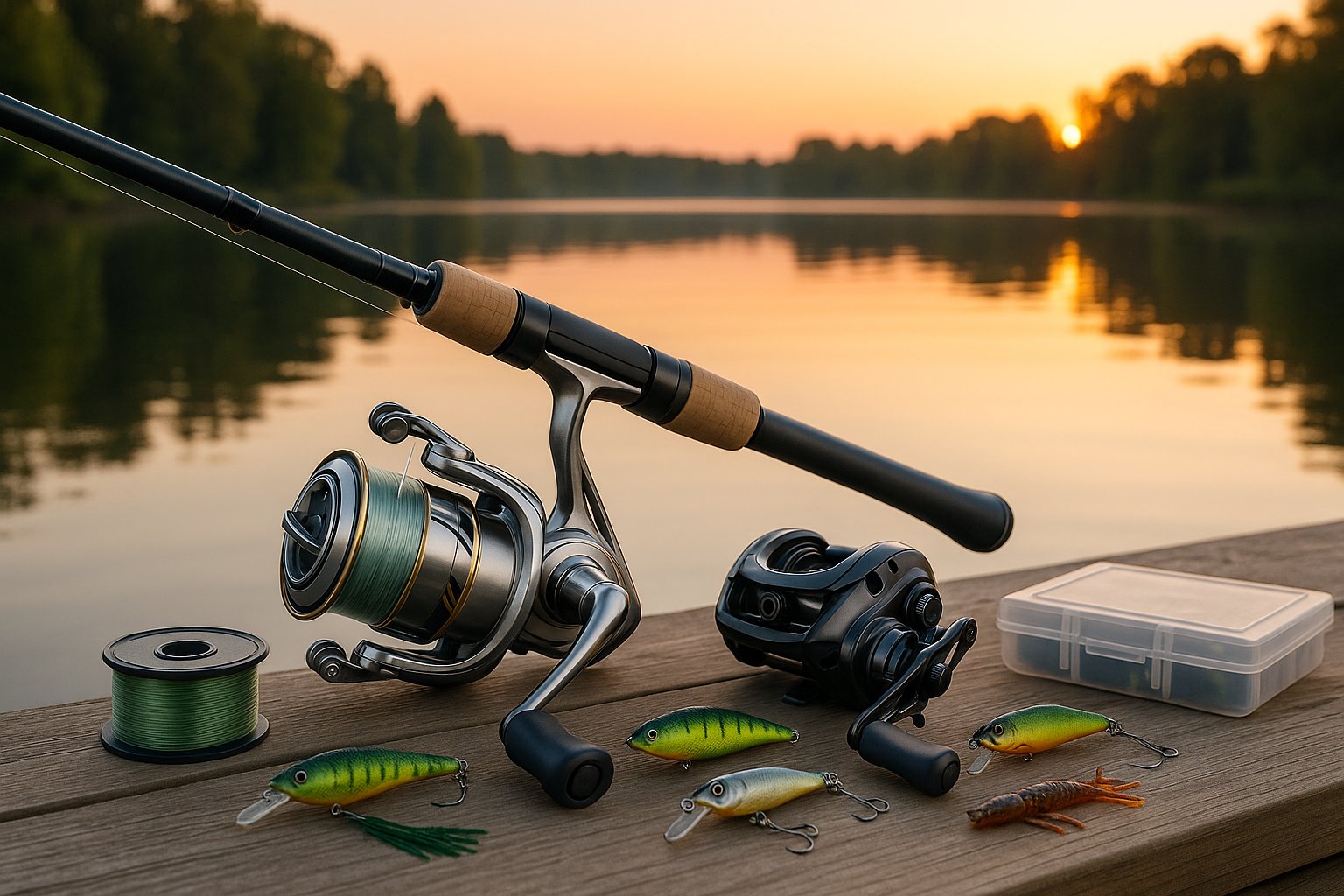
Pick the wrong reel for freshwater fishing, and even a good day on the water starts to feel harder than it should. Casting gets clumsy, line twists pile up, drag slips at the worst moment, and suddenly we're fiddling with gear instead of fishing. The right reel does the opposite: it disappears into the experience and lets us focus on finding fish.
That's why choosing the best reel for freshwater fishing isn't really about buying the most expensive model. It's about matching the reel to the species, lure weight, technique, and our own skill level. A trout setup has different demands than a bass combo, and a beginner usually needs something very different from an angler who's pitching jigs into heavy cover.
In this guide, we'll break down the main reel types, compare spinning vs baitcaster freshwater setups, explain the features that actually matter, and close with practical reel recommendations for different budgets and skill levels.
Types of Reels for Freshwater Fishing
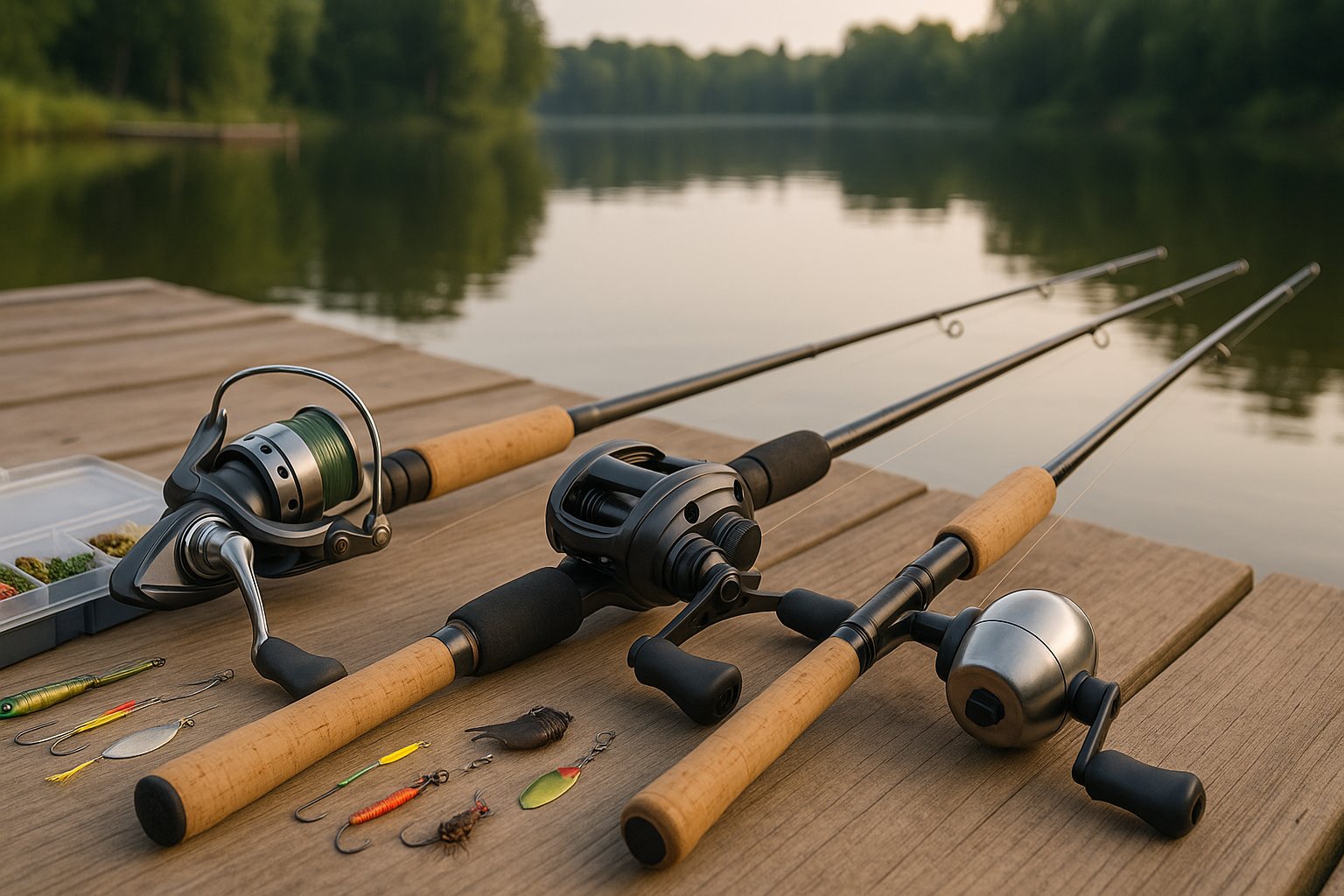
When we talk about a freshwater fishing reel, we're usually talking about three main categories: spinning reels, baitcasting reels, and spincast reels. Fly reels matter too, of course, but for general-purpose freshwater fishing, bass, trout, crappie, walleye, bluegill, catfish, those first three dominate the conversation.
Spinning reels
Spinning reels are the most versatile and forgiving option for most anglers. The spool stays fixed while the bail guides line onto it, which makes these reels easier to cast with lighter lures and easier to manage for beginners. They're especially strong for finesse tactics, small soft plastics, inline spinners, live bait rigs, and light jigs.
We usually recommend spinning reels for trout, panfish, finesse bass fishing, and all-around use. They handle lighter line well, including braid with a fluorocarbon leader, and they're less likely to punish small technique mistakes.
Baitcasting reels
Baitcasters sit on top of the rod and rotate the spool during the cast. That design gives us better casting control, stronger cranking power, and more precision once we learn how to use one well. They shine when throwing heavier lures, working around cover, or targeting bigger freshwater fish where power and accuracy matter.
For bass anglers in particular, baitcasting reels are often the preferred tool for jigs, frogs, spinnerbaits, chatterbaits, and Texas rigs. But they do come with a learning curve. Backlashes happen. Everyone says it won't happen to them. It does.
Spincast reels
Spincast reels are the button-operated, enclosed-spool reels many of us used when we first started fishing. They're simple, approachable, and perfectly fine for casual panfish fishing or for kids. That said, they usually offer lower durability, weaker drag systems, and less casting range than a good spinning reel.
Which reel type is best?
If we want one answer for most people, spinning reels win on versatility. If we want maximum casting precision and power for bass techniques, baitcasters often take the lead. And if we just need the easiest possible setup for occasional use, spincast still has a place.
So the best reel for freshwater fishing depends less on a universal ranking and more on where, how, and what we fish for.
Spinning vs Baitcasting Reels Compared
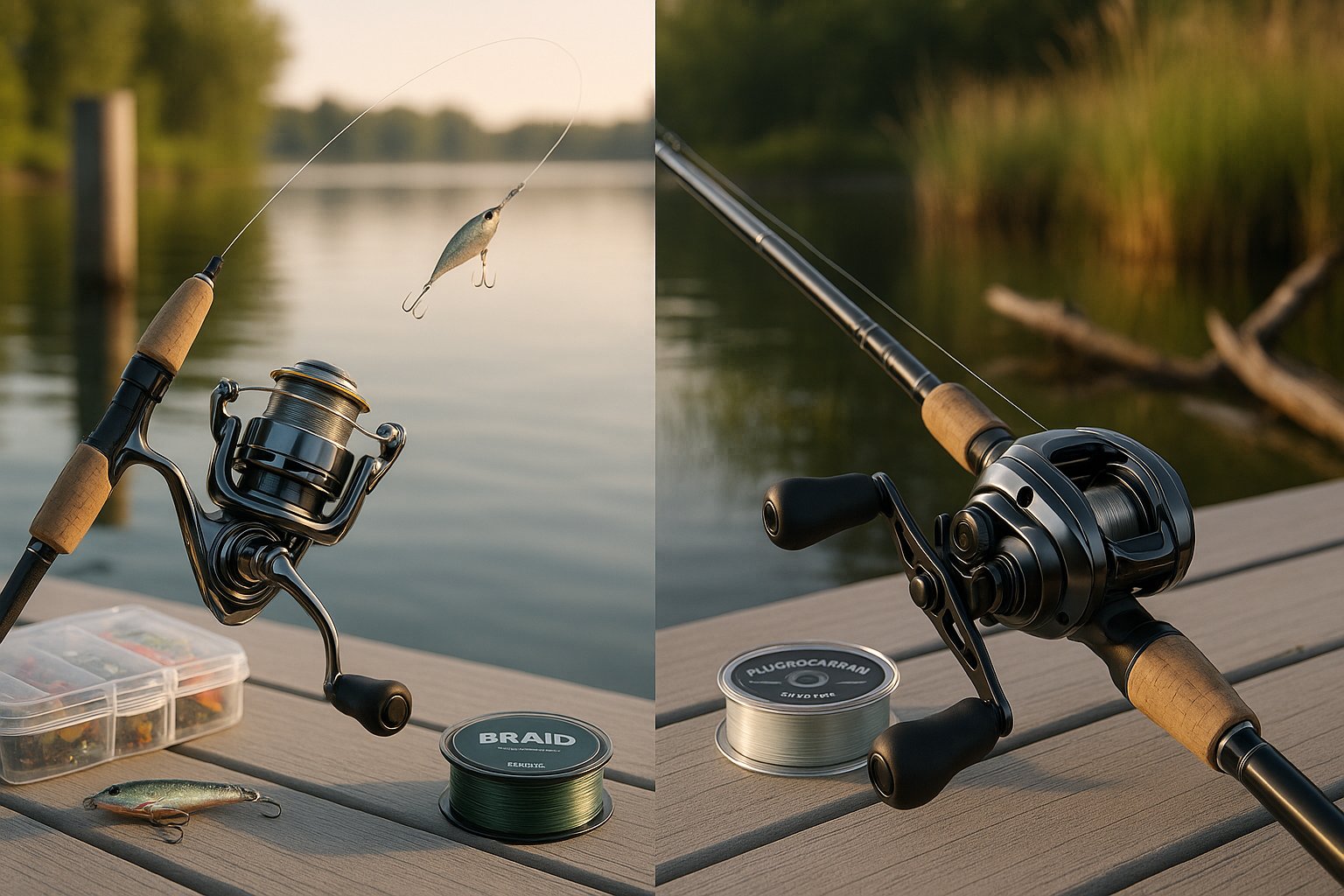
This is the comparison most anglers really care about: spinning vs baitcaster freshwater setups. Both catch fish. Both can be excellent. But they solve slightly different problems.
Ease of use
Spinning reels are easier to learn, plain and simple. We can cast them with less thumb control, they handle lighter lures better, and line management is generally more forgiving. If we're building a first serious combo, spinning is usually the safer choice.
Baitcasters require more setup and more practice. Brakes, spool tension, thumb pressure, those all matter. Once dialed in, they feel incredibly efficient. But the learning phase can be frustrating.
Casting performance
For lightweight baits, spinning reels usually outperform baitcasters. A 1/16-ounce jig, small trout lure, or weightless finesse bait is just easier to launch with spinning gear.
For heavier lures and accurate target casting, baitcasters often have the advantage. Skipping docks, pitching around timber, or dropping a lure right into a pocket in the weeds is where a good baitcaster starts to make real sense.
Power and control
Baitcasters typically provide better leverage and power, especially when paired with heavier line. We can winch fish out of grass, turn bass away from cover, and fish techniques that put more load on the reel without feeling undergunned.
Spinning reels can absolutely handle strong fish, especially in the 2500 to 4000 size range, but they're generally more finesse-oriented in freshwater applications.
Line and lure compatibility
Spinning reels excel with light mono, fluorocarbon, and braid. They're ideal when we're finesse fishing and need sensitivity with smaller presentations.
Baitcasters are great with heavier fluorocarbon, mono, and braid, especially for lures in the roughly 3/8-ounce-and-up zone. There are BFS-style baitcasters for ultralight work, but that's a more specialized niche.
So which should we choose?
If we're asking for the best beginner freshwater reel, spinning wins almost every time. If we already have solid casting fundamentals and mostly target bass with moving baits or bottom-contact lures, a baitcaster may be the better tool.
The honest answer? Many experienced anglers end up using both. Spinning for finesse. Baitcasting for power and precision. That's not indecision, it's just matching gear to the job.
Key Features to Look for in a Freshwater Reel
A reel can look impressive in a product listing and still disappoint on the water. Marketing tends to spotlight ball bearing counts and flashy cosmetics, but the best freshwater reel choices usually come down to a few practical features.
Drag quality
A smooth, consistent drag matters more than many anglers realize. In freshwater, we may not be battling tuna, but a sticky drag can still cost us fish, especially with lighter line for trout, crappie, or finesse bass fishing. We want startup inertia to be low and pressure to stay predictable through the fight.
Reel size
Size affects balance, line capacity, and intended use. For spinning reels, 1000 to 2500 sizes are common for panfish and trout, while 2500 to 3000 sizes are excellent all-around picks for bass and walleye. Larger sizes can make sense for catfish or heavier applications.
For baitcasters, size is often discussed by frame style and line capacity rather than a universal number system. Low-profile reels are the default for bass. Round reels still have a place for bigger fish and heavier line.
Gear ratio
Gear ratio influences how quickly the reel retrieves line. A higher ratio helps when we need to pick up slack fast, work a frog, or maintain control after a fish charges toward us. A moderate ratio is often the best all-around option. Slower ratios can help with crankbaits and other moving baits where a steadier pace matters.
Build quality and frame material
Graphite reels can be lightweight and affordable, but aluminum frames typically offer better rigidity under load. That matters more on baitcasters and heavier-duty setups, where flex can affect performance. We don't always need premium metal construction, but we do want a reel that feels solid, tight, and durable.
Bearings and smoothness
More bearings do not automatically mean a better reel. Quality matters far more than quantity. A well-made reel with fewer quality bearings can feel better and last longer than a bargain reel advertising a huge number.
Line management
On spinning reels, spool design, bail quality, and line roller performance all influence casting distance and twist control. On baitcasters, braking systems and spool design play a huge role in cast control and backlash prevention.
Handle and ergonomics
This one gets overlooked. If a reel feels awkward in hand, we'll notice it after a few hours. A comfortable handle, secure knobs, and a body shape that matches the rod can make a bigger difference than a spec-sheet bragging point.
In any freshwater fishing setup guide, these are the features we'd prioritize before brand hype or trend chasing.
Beginner vs Advanced Setup Differences
Not every angler needs the same reel, even when they fish the same lake. Skill level changes what we can actually take advantage of, so the right reel for a beginner can be very different from the right reel for someone who's been dialing in technique for years.
What beginners should prioritize
For beginners, simplicity beats specialization. We'd usually point them toward a spinning reel in the 2000 or 2500 size range, paired with a medium-light or medium rod depending on target species. This kind of setup covers an enormous range of freshwater fishing without demanding perfect mechanics.
The best beginner freshwater reel should have:
-
Smooth drag
-
Reliable line management
-
Comfortable handle feel
-
Moderate weight
-
Straightforward operation
-
Good durability for the price
What it doesn't need is complexity. Beginners don't benefit much from ultra-high gear ratios, ultra-light magnesium frames, or highly technique-specific tuning. They benefit from a reel that works every time and builds confidence.
What advanced anglers often want
Advanced anglers tend to optimize. We start matching reels not just to species, but to presentations: one reel for finesse worms, another for frogs, another for jerkbaits, another for deep cranks. At that point, details like spool startup, braking adjustment, retrieve speed, frame rigidity, and drag stack quality become much more important.
An experienced angler might prefer:
-
A high-speed baitcaster for jigs or frogs
-
A shallow-spool spinning reel for finesse presentations
-
A lower gear ratio reel for crankbaits
-
Lighter, more sensitive gear for all-day casting comfort
-
Tighter tolerances and stronger frame materials
The real difference: forgiveness vs performance
That's the dividing line. Beginner setups should be forgiving. Advanced setups can be less forgiving but more capable in skilled hands.
We've all seen it happen: someone buys a nice baitcaster because it looks "pro," then spends half the afternoon picking at a backlash the size of a sparrow's nest. Meanwhile, the friend with the humble spinning combo is quietly catching fish.
There's no shame in choosing the setup that helps us fish better right now. In fact, that's usually the smartest move.
Recommended Freshwater Fishing Reels
Rather than pretend there's one perfect reel for everyone, we think it's more useful to recommend by use case. The best reel for freshwater fishing depends on our budget, skill level, and target species.
Best all-around spinning reel
A 2500-size spinning reel from a trusted brand is hard to beat for general freshwater use. Models in the Shimano Nasci, Daiwa Fuego LT, and Pflueger President tier are popular for a reason: they balance smooth drag, dependable line management, and strong value. For many anglers, this is the sweet spot.
If we fish bass, trout, walleye, and panfish across the year and want one reel that can handle most situations, this category makes the most sense.
Best beginner option
For a true beginner, a 2000 or 2500 spinning reel with moderate gearing and an easy-to-manage spool is usually ideal. The Pflueger President, Shimano Sahara, and Daiwa Regal are frequently recommended because they're accessible, forgiving, and durable enough to last beyond the "starter" phase.
That matters. A beginner reel shouldn't feel disposable.
Best baitcaster for freshwater bass fishing
If we're specifically targeting bass and want a baitcaster, low-profile reels like the Shimano SLX, Daiwa Tatula series, or Lew's Tournament MP are proven options. They offer a strong mix of casting control, durability, and fish-turning power without requiring flagship-level money.
For many bass anglers, this is where the spinning-vs-baitcaster debate settles: use spinning for finesse and a reel like this for power applications.
Best budget-friendly choice
Budget doesn't have to mean junk. There are several solid freshwater fishing reel choices under the midrange price tier, especially in spinning models. The key is to prioritize function over flashy extras. A reel with decent drag and reliable mechanics will serve us far better than a bargain model loaded with questionable "features."
What we'd buy first
If we were building a freshwater arsenal from scratch, we'd start with a quality 2500 spinning reel. It's the most versatile, the easiest to use well, and the least likely to become dead weight in the closet.
And if we later add a baitcaster? Great. But a dependable spinning reel is still the foundation of a smart freshwater fishing setup guide.
The short version: for most anglers, the best reel is the one that matches how they actually fish, not how they imagine they'll fish after watching three tournament highlights and buying gear at midnight.
Frequently Asked Questions about the Best Reel for Freshwater Fishing
What types of reels are best for freshwater fishing?
The three main types are spinning reels, baitcasting reels, and spincast reels. Spinning reels are versatile and beginner-friendly, baitcasters offer power and precision for experienced anglers, and spincast reels are simple options for casual use or kids.
Which reel type is recommended for beginners in freshwater fishing?
Spinning reels in the 2000 to 2500 size range are ideal for beginners because they are easy to use, manage lighter lures well, have smooth drag, and offer reliable line management, helping build confidence without complexity.
How do spinning reels compare to baitcasting reels for freshwater fishing?
Spinning reels excel with lighter lures and finesse tactics and are easier to learn, while baitcasting reels provide superior casting accuracy, power, and are better for heavier lures and targeting bigger fish but come with a learning curve.
What features should I prioritize when choosing a freshwater fishing reel?
Focus on smooth and consistent drag quality, appropriate reel size for the target species, comfortable handle and ergonomics, reliable line management, solid build quality, and a gear ratio that suits the fishing technique.
Can I use a spinning reel for bass fishing or should I get a baitcaster?
Many bass anglers use spinning reels for finesse and light presentations, but baitcasters are preferred for power techniques with heavier lures, offering greater control and fish-turning power once properly mastered.


