

Spinning vs Baitcasting Reel: 5 Clear Ways to Choose the Right Setup for Your Fishing Style
Choosing between a spinning reel and a baitcasting reel comes down to more than brand loyalty—it's about matching the reel to how you actually fish. This guide breaks down the real-world differences in mechanics, casting, control, and lure weight handling. Spinning reels are more forgiving, easier to learn, and excel with light lures and finesse techniques. Baitcasting reels offer superior accuracy, power, and line control for heavy-cover bass fishing and larger baits—but demand practice to master backlashes. Whether you're a beginner looking for the safest starting point or a serious angler deciding when to add a baitcaster to your lineup, this reel comparison will help you choose with confidence based on your skill level, target species, and fishing style.
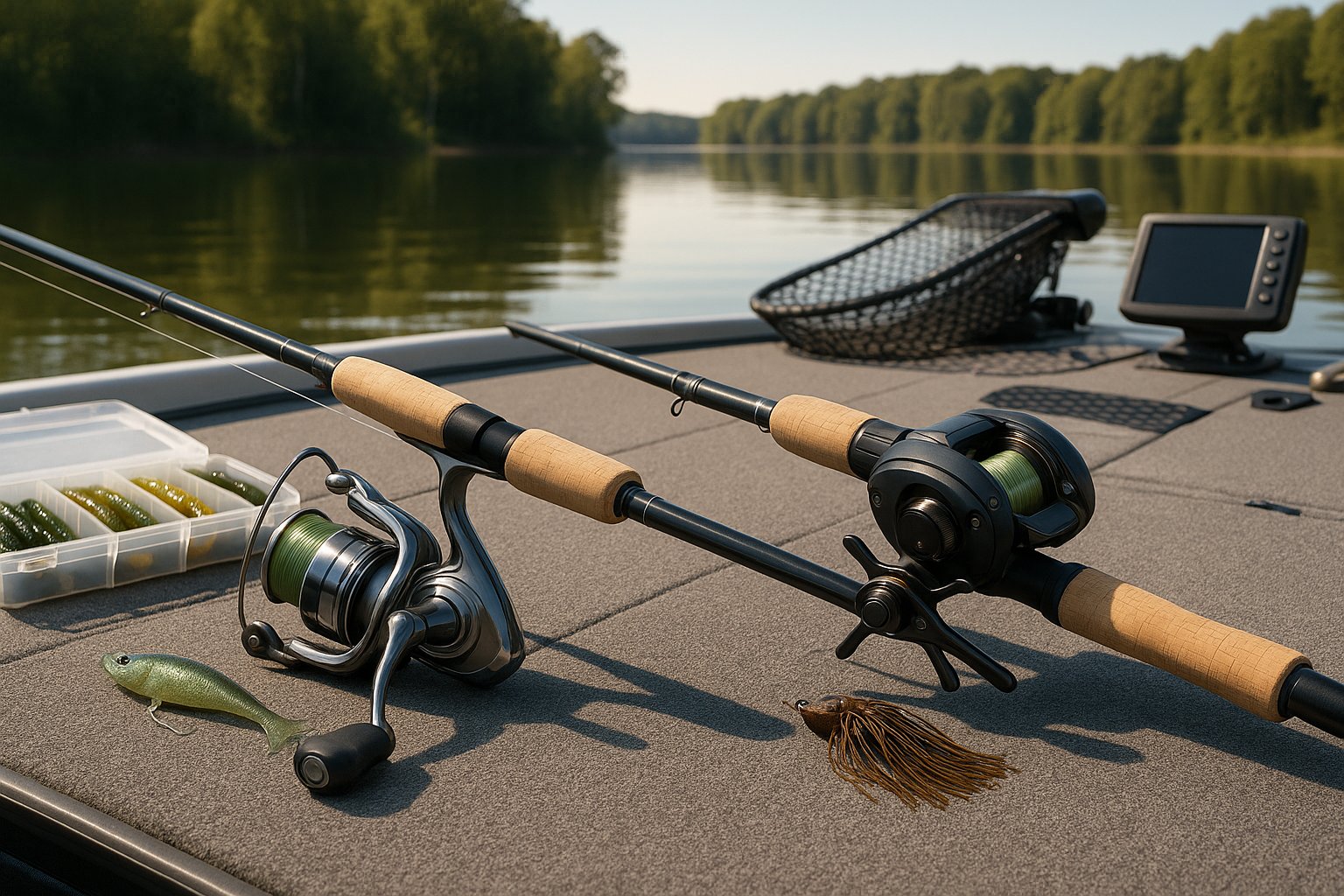
Choosing between a spinning reel and a baitcasting reel can feel harder than picking the right lure. Both catch fish. Both have loyal fans. And both shine in very different situations. If we pick the wrong one for our skill level, target species, or techniques, we usually feel it fast, shorter casts, more tangles, less control, and a lot more frustration on the water.
In this guide, we'll break down the real-world differences between these two reel types without the usual forum noise. We'll cover how each reel works, where each one performs best, and the practical trade-offs that matter most. By the end, we'll have a much clearer answer to the question behind every reel comparison: which setup fits the way we actually fish? Whether we're buying our first combo or upgrading for specific techniques, this spinning vs baitcasting reel guide will help us choose with confidence.
Key Differences Between Reel Types
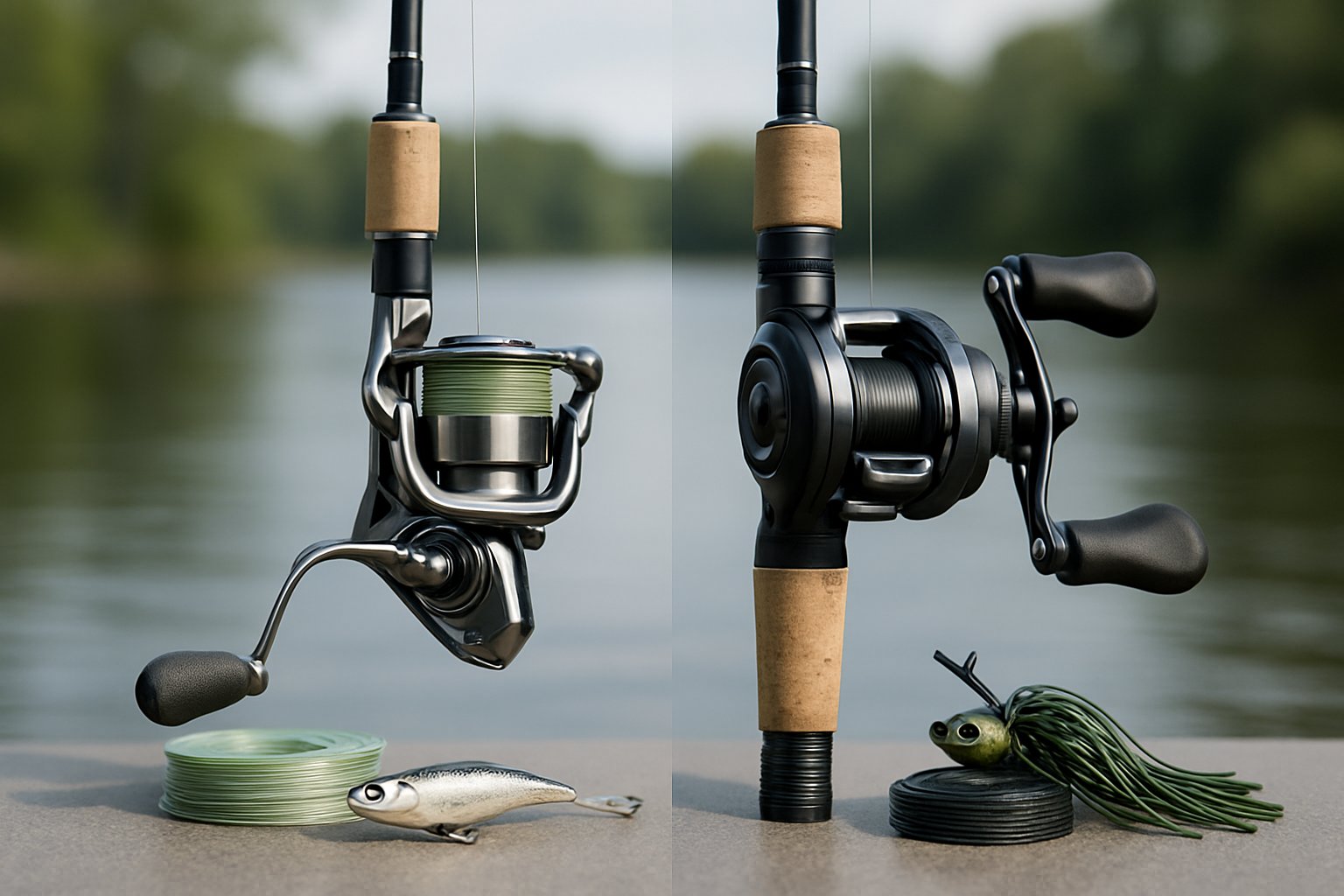
A good spinning vs baitcasting reel decision starts with mechanics, because the design changes how we cast, manage line, fight fish, and learn technique.
A spinning reel hangs beneath the rod. Its spool stays fixed while a bail guides line on and off the spool in loops. That design makes it naturally forgiving, especially with lighter line and smaller lures.
A baitcasting reel sits on top of the rod. Its spool rotates during the cast, which gives us more direct control over line output, but also creates a steeper learning curve. If the spool spins faster than the line leaves the rod guides, we get the classic backlash, or "bird's nest."
Here are the biggest differences in a simple reel comparison:
|
Feature |
Spinning Reel |
Baitcasting Reel |
|---|---|---|
|
Reel position |
Under the rod |
On top of the rod |
|
Spool movement |
Fixed spool |
Rotating spool |
|
Best for |
Light lures, finesse, beginners |
Accuracy, power, heavier lures |
|
Learning curve |
Easy |
Moderate to steep |
|
Line types |
Excellent with light mono, fluoro, braid |
Great with heavier line and braid |
|
Common issue |
Line twist |
Backlashes |
Casting and control
Spinning reels are easier to cast with minimal thumb input. We open the bail, hold the line, cast, and release. Baitcasters require spool tension, braking, and thumb control. In return, they offer superior cast management once we know what we're doing.
Lure weight and presentation
Spinning setups usually handle light baits better, think small worms, drop shots, shaky heads, inline spinners, and panfish jigs. Baitcasters tend to excel with medium to heavy lures, including jigs, frogs, spinnerbaits, buzzbaits, and larger Texas rigs.
Power and ergonomics
Baitcasters often provide better cranking power and a more compact in-hand feel for repeated casting. That matters when we're pitching heavy cover all day. Spinning reels, though, are excellent for versatility and reduced frustration, especially when conditions demand lighter presentations.
If we boil it down, spinning vs baitcaster pros and cons come down to this: spinning reels are more forgiving, while baitcasters reward skill with control, precision, and power.
Advantages of Spinning Reels
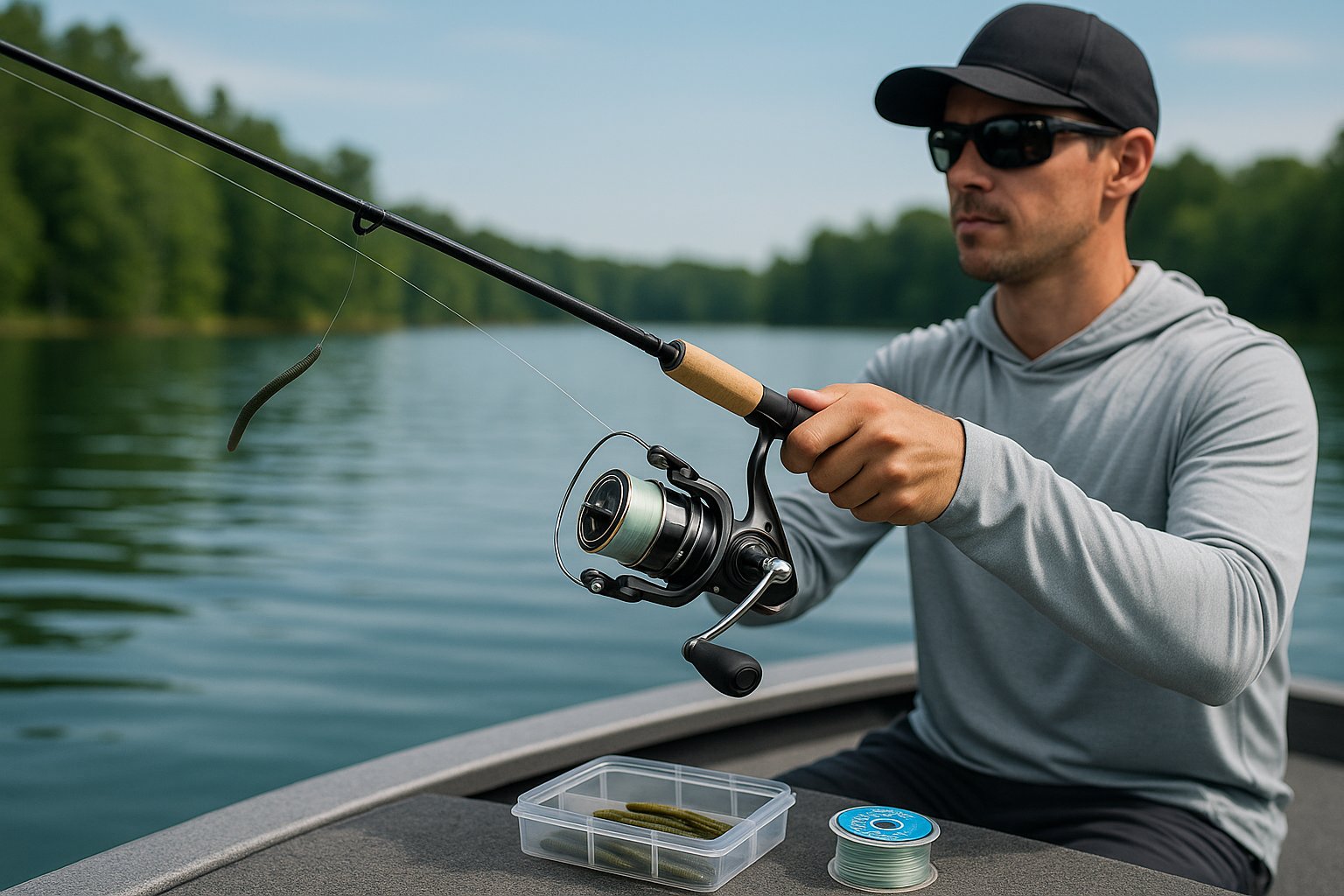
Spinning reels remain the most practical choice for a huge percentage of anglers, and not just beginners. They're simple, versatile, and extremely effective in everyday fishing situations.
Easier to learn and use
The biggest benefit is usability. Spinning reels ask less from us on day one. We don't need to master brake settings or manage spool speed with our thumb before making decent casts. That's why, when people ask which reel is better for beginners, spinning reels usually win.
That ease matters more than many anglers admit. If we spend our trip untangling line, we fish less. And if we fish less, we learn slower.
Better with light lures and finesse techniques
Spinning reels shine when our lure doesn't carry much weight. A lightweight Ned rig, wacky worm, small swimbait, trout spoon, or crappie jig loads a spinning rod more naturally and leaves the spool with less resistance.
This makes spinning tackle a strong choice for:
-
Finesse bass fishing
-
Trout and panfish presentations
-
Dock skipping with lighter plastics
-
Open-water presentations in clear conditions
-
Windy days when baitcasters get touchy with small baits
Handles light line more gracefully
Spinning reels do especially well with lighter pound-test line. If we're fishing 6- to 10-pound braid with a fluorocarbon leader, or light mono for trout and panfish, spinning gear usually behaves better than a baitcaster.
There can still be line twist, of course. But that's usually manageable with good line management, proper spooling, and closing the bail by hand.
More affordable entry point
At the budget end of the market, spinning combos often perform better than cheap baitcasters. A low-cost spinning reel can be smooth, durable, and fishable right away. A low-cost baitcaster, on the other hand, may have inconsistent brakes, rough gears, or poor line lay that makes learning harder than it needs to be.
Where spinning reels make the most sense
If we want one setup that covers a wide range of species and techniques, spinning reels are hard to beat. They're ideal for casual anglers, finesse-focused bass anglers, kids, travelers, and anyone who values simplicity.
That's the core of the spinning side of the spinning vs baitcaster pros and cons debate: less drama, easier casting, and excellent performance with light tackle.
Advantages of Baitcasting Reels
Baitcasting reels earn their reputation because they offer performance advantages that matter once our techniques demand more control. They're not better in every situation, but in the right hands and with the right lures, they can absolutely outperform spinning gear.
Better casting accuracy
One of the biggest reasons anglers switch is precision. Baitcasters let us feather the spool with our thumb and stop a cast exactly when we want. That makes a real difference when we're pitching to laydowns, docks, grass edges, or tight pockets in heavy cover.
Instead of just casting far, we're placing the lure where it needs to be.
More power for heavier techniques
Baitcasting reels are built for applications where torque and control matter:
-
Flipping and pitching jigs
-
Frog fishing in pads
-
Throwing spinnerbaits and chatterbaits
-
Working large Texas rigs
-
Pulling fish out of wood, grass, or mats
The reel sits inline with the rod and often feels stronger under load. Pair that with heavier line and faster gear options, and baitcasters become a workhorse for power fishing.
Superior line control with heavier line
Baitcasters handle heavier fluorocarbon, monofilament, and braid very well. If we're fishing 12-, 15-, or 20-pound line and up, a baitcaster often manages it more cleanly than a spinning reel. We also get direct control over spool tension and braking, which helps fine-tune performance for specific lure weights.
Faster presentations and efficiency
Once dialed in, baitcasters are efficient. Many anglers find them faster for repetitive casting, target casting, and one-handed operation. Engaging the spool, making a short accurate pitch, and immediately controlling the lure becomes second nature.
That speed adds up over a full day, especially in bass fishing where we may make hundreds of casts.
The trade-off
Of course, this is where the baitcaster side of the spinning vs baitcasting reel debate gets real: we pay for that control with complexity. If settings are off, or if our thumb timing is sloppy, we get backlashes.
Still, for anglers chasing precision, stronger hooksets, and better heavy-cover performance, baitcasters offer real advantages. They're not just "advanced" for the sake of it. They solve specific fishing problems very well.
Which One Fits Your Fishing Style
The best answer isn't about brand loyalty. It's about matching the reel to the way we fish most often. That's where this reel comparison becomes useful.
Choose spinning if we prioritize versatility and ease
A spinning reel is usually the better fit if we:
-
Fish multiple species
-
Use lighter lures often
-
Want a setup that's easy to share with family or friends
-
Fish from shore and need simple, reliable casting
-
Prefer finesse tactics over heavy-cover power fishing
For many anglers, this is the smarter default choice. It covers more situations with less hassle.
Choose baitcasting if we prioritize control and power
A baitcaster makes more sense if we:
-
Primarily target bass with technique-specific setups
-
Throw medium to heavy lures most of the time
-
Fish around thick cover, docks, timber, or vegetation
-
Want tighter casting control and more efficient presentations
-
Don't mind a learning curve in exchange for performance
If our fishing involves repeated target casting and heavier line, a baitcaster often feels like the right tool, not just a fancy one.
Consider where and how we fish
The environment matters more than many gear lists suggest.
Bank fishing: Spinning gear often wins for portability and flexibility.
Kayak fishing: Both work, but spinning reels are easier in awkward casting positions, while baitcasters shine for close-range target work.
Boat fishing for bass: Baitcasters become more valuable because we can set up for specialized techniques and make more controlled casts.
Trout, panfish, finesse bass: Spinning reels are usually the better fit.
Heavy bass cover, frogs, jigs, big moving baits: Baitcasters usually get the nod.
A practical rule of thumb
If we're still unsure, we can simplify the decision like this:
-
Light bait + light line + ease of use = spinning reel
-
Heavier bait + heavier line + accuracy/power = baitcaster
That's not a perfect formula, but it's a reliable starting point. In the end, the answer to which reel is better for beginners is still spinning, while the answer to "which reel gives us more control for advanced bass tactics?" is usually baitcasting.
And yes, plenty of experienced anglers keep both on deck for exactly that reason.
Recommended Choices for Different Users
The right pick depends less on hype and more on who we are as anglers. Here's a practical way to choose.
For complete beginners
Recommendation: Spinning reel
If we're brand new, a spinning setup gives us the fastest path to enjoyable fishing. We'll spend less time fighting the reel and more time learning fish behavior, knots, casting angles, and lure retrieves.
Best use cases:
-
Weekend fishing
-
Learning basic casting
-
Panfish, trout, and general freshwater fishing
-
Light bass techniques
For beginner-to-intermediate bass anglers
Recommendation: Start with spinning, add baitcasting later
This is often the sweet spot. We can use spinning gear for senkos, drop shots, shaky heads, and small swimbaits, then add a baitcaster when we're ready for jigs, frogs, and spinnerbaits.
This two-reel path is more practical than forcing one setup to do everything.
For serious bass anglers
Recommendation: Baitcasting reel, with spinning as a complement
If we fish bass frequently and target specific patterns, a baitcaster deserves a primary role. We'll appreciate the accuracy, power, line control, and efficiency.
But even advanced anglers rarely abandon spinning tackle completely. Finesse techniques still call for it.
For kids, casual anglers, and shared family setups
Recommendation: Spinning reel
If the goal is fun, simplicity wins. A spinning reel is easier for new users to understand and less likely to turn a fishing trip into a line-management lesson.
For anglers fishing heavy cover
Recommendation: Baitcasting reel
When we need to drive hooks hard and move fish away from weeds, pads, wood, or docks, baitcasters have a clear advantage.
Final takeaway
If we want the safest all-around answer in this spinning vs baitcasting reel debate, start with spinning. If we already know we love power techniques and bass-specific fishing, move into baitcasting.
The best gear choice isn't the one that looks most "serious." It's the one that helps us fish more effectively and more often.
In short, spinning reels are the smart starting point for most people, while baitcasters become the better tool as our techniques narrow and our need for control grows. Use that as the filter, and the choice gets much easier.
Frequently Asked Questions about Spinning vs Baitcasting Reels
What is the main mechanical difference between spinning and baitcasting reels?
Spinning reels have a fixed spool with a bail that guides line on and off, hanging beneath the rod. Baitcasting reels have a rotating spool positioned on top of the rod, requiring thumb control to prevent backlash.
Which reel type is better for beginners and why?
Spinning reels are better for beginners because they are easier to learn and use, require less thumb control, and handle lighter lures and lines gracefully, reducing frustration and line tangles.
When should I choose a baitcasting reel over a spinning reel?
Choose a baitcasting reel if you prioritize casting accuracy, power, and control, especially when using medium to heavy lures or fishing in heavy cover like docks, grass, or timber.
Can spinning reels handle heavy line and large lures effectively?
Spinning reels generally perform best with light to medium lures and lighter lines. For heavier lines and larger lures, baitcasting reels provide better control and power.
What are common casting issues with spinning and baitcasting reels?
Spinning reels can experience line twists, while baitcasting reels are prone to backlash or 'bird’s nests' if spool speed or thumb control is mismanaged.
How does my fishing style influence the choice between spinning vs baitcasting reels?
If you fish multiple species with lighter lures in open or varied conditions, spinning reels are versatile and user-friendly. If you fish mainly bass using heavier lures and techniques requiring precision and power, baitcasting reels are preferable.
 Featured

