

Round Reel Aesthetics With CNC Precision For Scottish Pike: How To Choose The Right Conventional Reel
Choosing the right reel for pike fishing on large, windswept venues like Loch Lomond requires balancing classic durability with modern precision. Round conventional reels remain highly relevant, offering rigid frames, strong gearing, and smooth drag systems that excel with heavy lures, long drifts, and deadbaits. CNC machining enhances performance through tighter tolerances, better alignment, and reduced frame flex under load. When matched with appropriate rod, line, and tactics—and avoiding common buying mistakes—a well-built round reel delivers timeless aesthetics alongside reliable, repeatable control. For Scottish pike anglers seeking both heritage and performance, the round conventional reel remains a compelling, practical choice.

Few pieces of tackle split opinion like the round conventional reel. Some anglers see it as old-school charm. We see a tool that still makes real sense for Scottish pike fishing, especially on big, windswept water like Loch Lomond, UK. When we're casting heavy lures, managing long drifts, or fishing deadbaits with confidence, a well-built round reel offers durability, control, and a look that never goes out of style.
In this guide, we'll break down exactly how to choose the right fishing reel for pike. We'll cover frame construction, CNC machining, drag, spool size, gear ratio, and the practical differences between a conventional reel and modern Baitcasting Reels. By the end, we'll know how to build a setup that blends classic round reel aesthetics with the precision and reliability serious pike fishing demands.
Why Round Reels Still Make Sense For Pike Fishing In Loch Lomond, UK
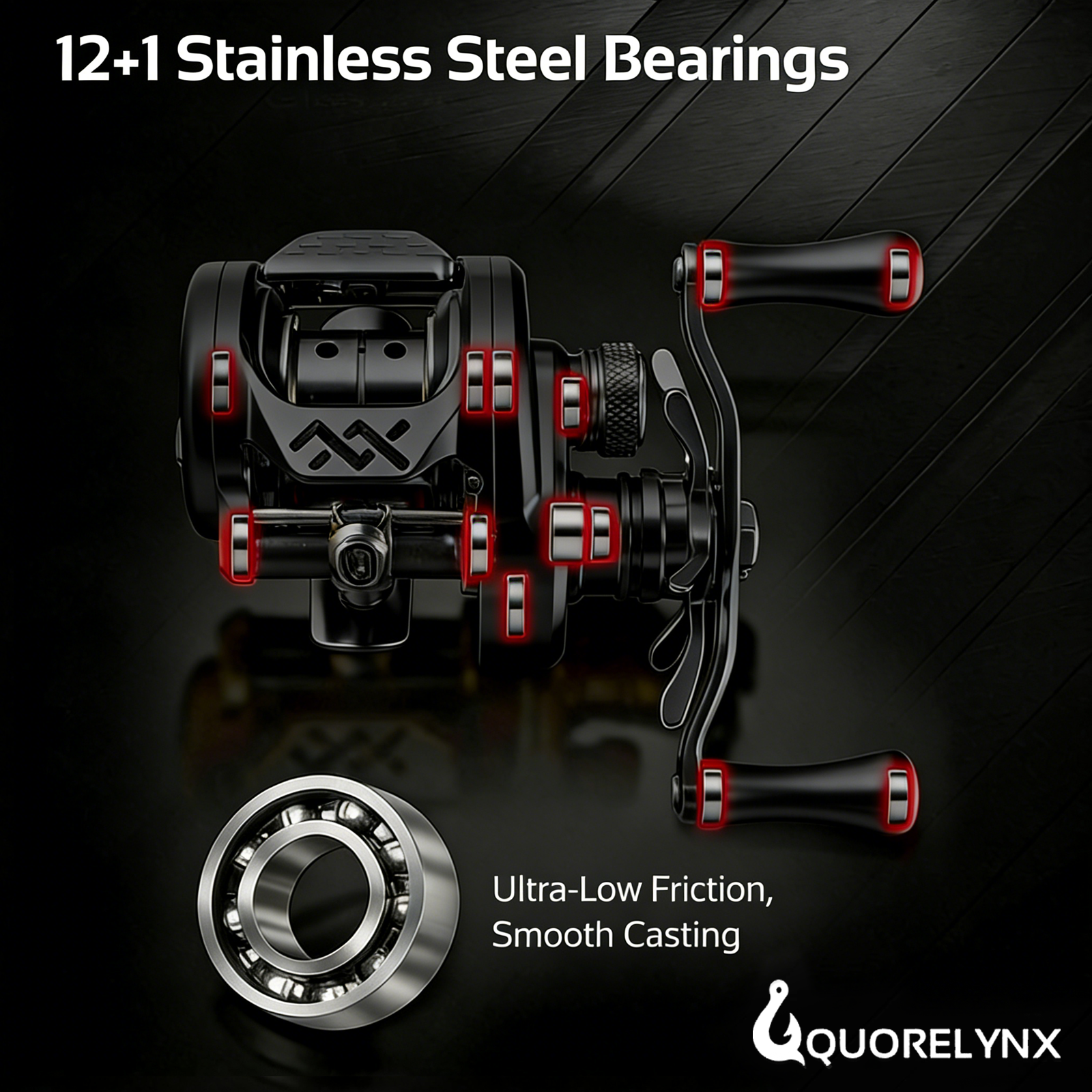
Round reels still earn their place because pike fishing on large freshwater systems is rarely delicate. On Loch Lomond, UK, we often deal with wind, wave chop, heavy lures, big soft plastics, deadbait rigs, and long hours on the water. A compact, lightweight reel is nice, but strength, stability, and easy serviceability matter more.
A quality round conventional reel usually gives us:
-
A more rigid frame under load
-
Better support for larger spools
-
Strong gearing for repeated retrieves
-
A classic profile that's easy to palm once we're used to it
-
Long-term durability with fewer flex issues
That matters when a decent fish hits boatside or when we're grinding large plugs all day. Round reels also tend to suit anglers who value mechanical feel. The controls are often straightforward, and the reel feels planted rather than overly compact.
There's an aesthetic angle too, and it's not trivial. Tackle we enjoy using gets used more confidently. If we want a reel that looks timeless but performs to modern standards, a CNC-built round model is one of the smartest directions we can go for pike.
Define The Must-Have Reel Features Before You Buy
Before comparing brands or finishes, we should define what the reel actually needs to do. Pike setups vary, and the right reel for jerkbaits is not always the best choice for float-ledgered deadbaits.
Our core checklist should include:
-
Frame rigidity: no noticeable flex under pressure
-
Smooth drag: startup inertia should be low and predictable
-
Adequate line capacity: enough for our chosen braid or mono
-
Reliable braking: especially if we're casting heavier lures
-
Comfortable handle and knobs: important on cold Scottish days
-
Easy maintenance: access to bearings, spool, and levelwind parts
We should also ask a few practical questions:
-
Are we mostly casting or mostly presenting baits?
-
Do we fish from boat, bank, or both?
-
Are we using braid in the 50–80 lb range or lighter lure braid?
-
Do we value compactness more than torque?
This step prevents expensive mistakes. A beautiful fishing reel can still be the wrong tool if it lacks capacity, feels geary under load, or has a drag that surges. We're better off buying for our tactics first, then appearance second, ideally finding a reel that nails both.
CNC Machining, Frame Material, And Build Quality Explained
This is where round reel aesthetics become more than cosmetic. CNC machining improves precision because parts are cut to tighter tolerances from solid material rather than formed more loosely. In practice, that can mean better alignment, less frame twist, smoother gear meshing, and a more refined feel over time.
Why CNC matters
For pike, CNC construction helps most when we're repeatedly casting heavy lures or putting pressure on a fish close to the net. Better tolerances often translate into:
-
More consistent spool support
-
Reduced gear misalignment
-
Improved longevity
-
A tighter, more confidence-inspiring feel
Frame materials to look for
Machined aluminum is usually the sweet spot. It's rigid, corrosion-resistant with proper care, and strong enough for serious freshwater work.
Graphite or composite frames reduce weight and cost, but can flex more under strain. For light-duty lure fishing, that may be acceptable. For larger pike tactics, we generally prefer metal.
Signs of genuine build quality
Look beyond the spec sheet. Check for:
-
Minimal handle back-play
-
A spool that spins freely without side wobble
-
Cleanly fitted side plates
-
Solid thumb bar or clutch action
-
Smooth, even levelwind travel
A reel can look premium online and still feel hollow in hand. Build quality shows up in tolerance, finish, and mechanical consistency, not just branding.
How Line Capacity, Spool Size, And Drag Affect Pike Performance
These three factors decide whether a reel merely works or genuinely matches our pike fishing.
Line capacity
For most Scottish pike lure work, we want enough braid for safe casting, occasional long runs, and regular re-tying. We don't need saltwater-level capacity, but we also don't want a spool that looks half-empty after a season of cutting back frayed line.
As a rough guide:
-
Medium lure work: enough for 100–150 yards of suitable braid
-
Heavier lures or multi-purpose use: a bit more is welcome
-
Deadbaiting: capacity matters less than drag smoothness and line lay
Spool size
Larger spools often improve line pickup and reduce tight line coils. They can also cast heavier lures more consistently once tuned. The tradeoff is extra bulk and, sometimes, more startup inertia with lighter lures.
For pike, that tradeoff is usually acceptable because we're rarely trying to cast ultra-light baits.
Drag performance
Pike aren't long-running tuna, but drag still matters. A sticky drag can pull hooks, crack braid leaders at weak points, or create chaos boatside. We want a drag that starts smoothly and stays even.
In real terms, smoothness beats headline max-drag numbers. A reel with moderate but controllable drag is usually better than one advertised as brutally powerful but inconsistent.
Choose The Right Gear Ratio For Lures, Deadbaits, And Big-Water Retrieves
Gear ratio changes how a reel feels more than many buyers expect. It affects retrieve speed, cranking effort, and how well the reel suits certain presentations.
Lower to mid gear ratios
A lower or moderate ratio is often ideal for:
-
Large swimbaits
-
Deep-running plugs
-
High-resistance spinnerbaits
-
Long sessions where reduced fatigue matters
These ratios give us more torque. The reel feels less strained, and our hands notice the difference after hours of casting.
Faster gear ratios
Higher ratios help when we need to:
-
Pick up slack quickly on jerkbaits
-
Burn smaller lures over weed tops
-
React fast during figure-eight style follow-ups near the boat
-
Reset quickly after a missed take
Best all-around choice for Scottish pike
If we want one conventional reel for mixed tactics, a mid-range gear ratio is usually the safest bet. It handles most lures well, remains comfortable for steady retrieves, and still offers enough speed for lure control.
The key is matching ratio to resistance, not just speed. On a big water venue, where repeated retrieves add up, a reel that feels easy to crank often proves more effective than one that looks faster on paper.
Round Conventional Reel Vs Low-Profile Baitcasting Reels For Scottish Pike
This comparison matters because many anglers shopping for a pike fishing reel are choosing between a classic round model and modern low-profile Baitcasting Reels.
Where round reels win
Round reels usually offer:
-
Better structural rigidity
-
Stronger "winch" feel under load
-
More traditional styling
-
Often better line capacity in similarly priced models
-
Excellent durability for heavier applications
They're especially appealing for larger lures, deadbait crossover use, and anglers who prioritize toughness.
Where low-profile reels win
Low-profile reels generally offer:
-
Better ergonomics for all-day casting
-
Lighter overall weight
-
Faster, more compact handling
-
Often more advanced braking systems at mid-market levels
If we throw medium lures all day and value palmability above everything, a low-profile may feel easier to live with.
Which is better?
Neither is universally better. For a setup centered on classic looks, robust construction, and confidence with heavier pike tactics, the round conventional reel remains a strong choice. For maximum compactness and modern casting comfort, low-profile reels deserve a hard look.
Our decision should come down to tactics, lure size, and what feels best after a full day on Scottish water.
Match Your Fishing Reel To The Rod, Line, And Tactics You Use
Even the best reel feels wrong on the wrong rod. Balance matters more than isolated specs.
Rod pairing
A larger round reel works best on rods with enough handle length and backbone to balance the setup. On very short or ultra-light rods, the outfit can feel tip-heavy or awkward. For pike, we generally want a rod that matches the reel's mass and intended lure range.
Line pairing
Braid is the obvious choice for most lure applications because of its direct feel and solid hook-setting power. But spool it sensibly. Overfilling increases backlash risk: underfilling hurts casting distance.
A quick pairing guide:
|
Tactic |
Line preference |
Reel priority |
|---|---|---|
|
Heavy lures |
Strong braid |
Frame rigidity, torque |
|
Mixed lure fishing |
Mid-weight braid |
Versatility, braking |
|
Deadbaiting |
Mono or braid depending style |
Smooth drag, capacity |
Tactics first
If we cast big lures from a boat on Loch Lomond, UK, a rigid reel with a comfortable power handle makes sense. If we mostly troll or present deadbaits, retrieve refinement may matter less than drag behavior and capacity.
The smartest setup is a system: rod, reel, line, leader, and lure weight all working together rather than fighting each other.
What To Check Before Fishing Freshwater Venues Like Loch Lomond
Before we fish, we should make sure the reel is ready for local conditions and legal requirements. Big freshwater venues can punish poor preparation.
Check the reel itself
Run through a short pre-session inspection:
-
Is the drag smooth and correctly set?
-
Is the spool tension adjusted for the lure weight?
-
Is the levelwind laying line evenly?
-
Are there any braid digs or damaged sections?
-
Is the handle tight and free from play?
Check line and leader compatibility
Pike demand reliable trace material and clean terminal connections. The reel may perform perfectly, but if line diameter, knots, or leader hardware are mismatched, the whole system suffers.
Check venue rules and practicalities
At freshwater venues like Loch Lomond, we should confirm access points, boat rules, seasonal restrictions, and any local fish care expectations. Weather matters too. Wind can quickly expose poor reel setup, especially braking and spool fill.
A two-minute inspection before launch often prevents the kind of avoidable issue that ruins half a day, backlashes, slipping drags, or line bedding in after the first hard cast.
Common Buying Mistakes And Setup Problems To Avoid
Most reel disappointment starts before the first fish. We either buy the wrong model or set up the right one badly.
Common buying mistakes
-
Choosing style over function entirely
-
Buying too small for heavy pike lures
-
Assuming high max drag equals better performance
-
Ignoring spare parts and serviceability
-
Picking a very fast gear ratio for high-resistance baits
Common setup problems
A good fishing reel can still perform poorly if:
-
The spool is overfilled
-
Brakes are set too loose too early
-
The rod is mismatched to lure weight
-
Cheap braid digs into itself under pressure
-
Drag is locked down too hard
One mistake that catches many anglers
They expect any premium reel to cast perfectly straight away. In reality, every reel needs tuning to the lure, line, and user. Even excellent round reels require spool tension and braking adjustments.
We should also avoid judging reels only in the shop. A handle that feels smooth unloaded may feel very different when retrieving a large, water-resistant lure. Real-world use reveals far more than display-counter impressions.
Build A Pike Reel Setup That Balances Classic Looks And Modern Precision
The ideal pike reel setup doesn't force us to choose between heritage and performance. We can have both. A well-made round reel with CNC precision gives us the visual appeal many anglers love, while also delivering the alignment, rigidity, and reliability serious fishing demands.
For most of us, the right route is simple:
-
Choose a rigid machined frame
-
Prioritize smooth drag over inflated drag numbers
-
Match spool size and capacity to our line and tactics
-
Pick a sensible mid-range gear ratio unless a specialty tactic demands otherwise
-
Balance the reel with the rod, not in isolation
That combination works especially well for Pike fishing on large waters like Loch Lomond, UK. The result is a setup that feels dependable on the cast, controlled on the retrieve, and reassuring when a fish surges close to the net.
Classic round reel aesthetics are great. Classic looks backed by modern precision are much better.
Frequently Asked Questions about Round Reel Aesthetics with CNC Precision for Scottish Pike
Why is a round reel preferred for Scottish pike fishing, especially on Loch Lomond?
Round reels provide durability, control, and a classic look ideal for casting heavy lures and managing long drifts on large, windy waters like Loch Lomond, offering rigid frames and strong gearing suited for big pike tactics.
How does CNC machining enhance the performance of a round fishing reel for pike?
CNC machining ensures tighter tolerances by precisely cutting parts from solid material, resulting in better alignment, less frame twist, smoother gearing, and improved longevity important for repeated casting and heavy loads in pike fishing.
What line capacity and spool size should I look for in a pike fishing reel?
For Scottish pike lure fishing, a reel with enough capacity for 100–150 yards of braid suits most medium lure work, while larger spools help reduce line coils and improve casting consistency for heavier lures on big waters.
How does the gear ratio impact pike fishing with round reels?
Lower to mid gear ratios provide more torque and less fatigue for large swimbaits and long sessions, while faster ratios help retrieve slack quickly with jerkbaits and small lures; a mid-range ratio is often best to handle mixed Scottish pike tactics.
What are the main differences between round conventional reels and low-profile baitcasting reels for Scottish pike anglers?
Round reels offer stronger structural rigidity, durability, and a traditional aesthetic suited for heavier lures, while low-profile reels deliver lighter weight, better ergonomics, and advanced braking, making the choice depend on tactics and comfort preferences.
What common mistakes should be avoided when choosing and setting up a pike fishing reel?
Avoid prioritizing style over function, buying undersized reels for heavy lures, assuming high max drag equals performance, neglecting maintenance, overfilling the spool, improper brake adjustment, and mismatching rod and line to lure weight, as these cause poor reel performance.
 Featured

