

Northern Pike Fishing Setup: Build a Tough, Bite-Proof Rig That Lands More Fish
Northern pike demand heavy-duty, well-planned gear. Their explosive ambush strikes and razor-sharp teeth quickly expose weak tackle. An ideal setup pairs a 7'3" to 7'6" medium-heavy fast-action rod with a durable baitcaster, 40-50 lb braid, and a 60-100 lb fluorocarbon or wire leader to prevent bite-offs. Proven lures include spinnerbaits, spoons, jerkbaits, and swimbaits in ½ to 1 oz sizes. Match gear to seasonal patterns: shallow weeds in spring and fall, deeper edges in summer. A strong leader is non-negotiable. Quality snaps, pliers, and a large net complete the system. Confidence in bite-proof gear improves success.
Northern pike don't reward flimsy gear or vague planning. They hit hard, slash at baits, and can turn a casual setup into a quick lesson in lost lures and cut lines. That's why a proper northern pike fishing setup matters so much: when we match our rod, reel, line, leader, and lures to the way pike actually feed, we spend less time re-rigging and more time landing fish.
In this guide, we'll break down how pike behave, what heavy-duty tackle they demand, which lures consistently trigger strikes, and how to build a leader system that stands up to sharp teeth. Whether we're targeting smaller weed-edge fish or bigger predators in deeper water, the goal is the same: create a reliable, practical system that works. If we want the best setup for pike fishing, we need to start with the fish itself, and build from there.
Pike Behavior and Strike Patterns
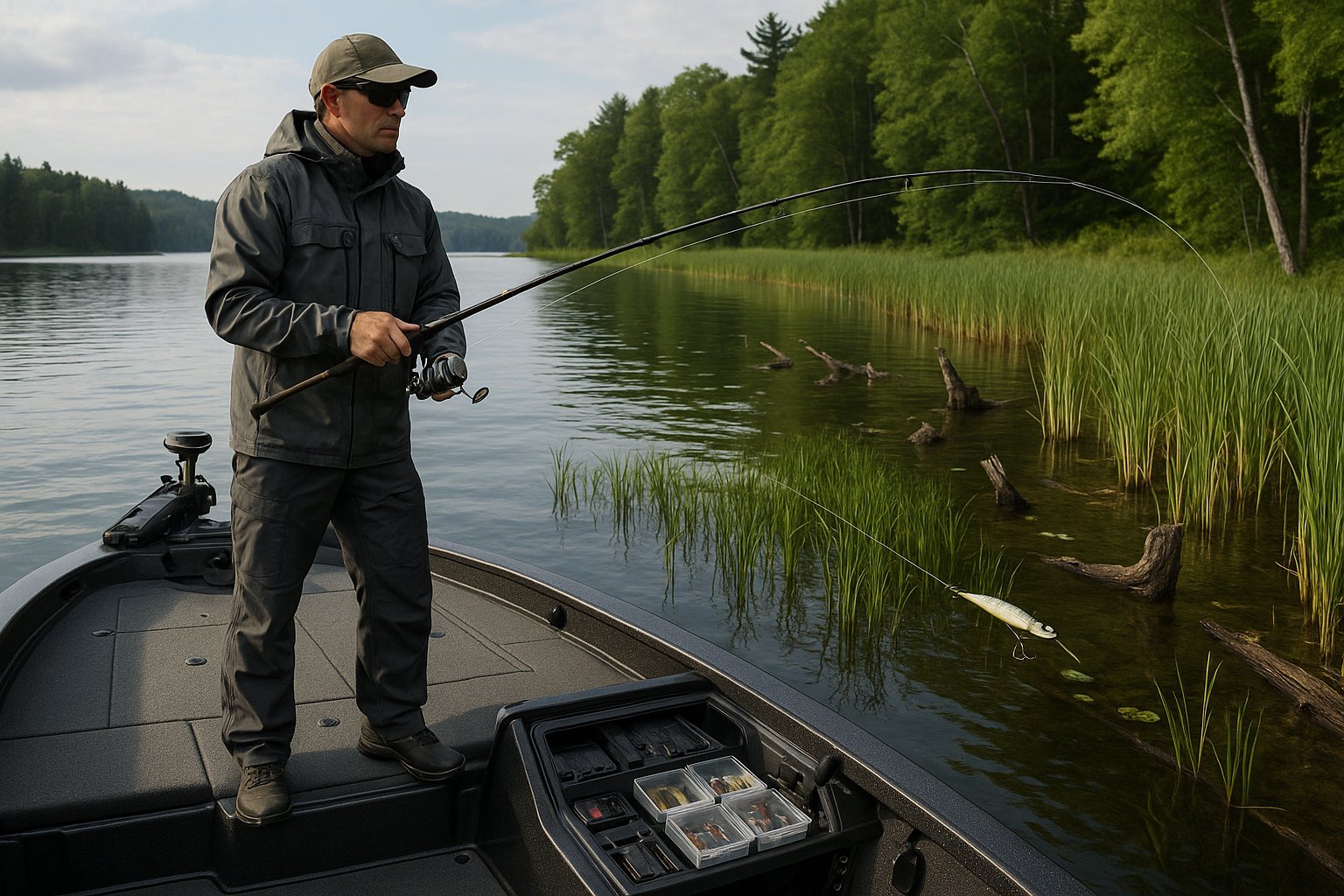
Pike are classic ambush predators, and understanding that one fact improves almost every part of our setup. They usually position themselves where they can strike fast from cover: weed lines, reed edges, fallen timber, docks, current seams, and drop-offs near baitfish. Instead of roaming nonstop like some open-water predators, they often wait, then explode.
That matters because our presentation has to pass through the strike zone cleanly. If our lure rides too high, moves too fast for conditions, or doesn't match where fish are staged, we'll miss active fish even with perfect gear.
Where pike usually set up
In most lakes and slow rivers, pike hold in places that combine cover, shade, and food. Productive areas include:
-
Outside weed edges in 6 to 15 feet
-
Shallow bays during spring and early summer
-
Points near cabbage beds
-
Creek mouths and inflows
-
Wind-blown shorelines pushing bait inward
Smaller pike often stay shallower and more aggressive. Larger fish commonly sit slightly deeper or just outside the obvious cover, where they can intercept prey without burning much energy.
How pike strike
Pike rarely nibble. They hit with speed, and many strikes are sideways slashes rather than neat, head-on eats. That's why they throw baits so easily if our hooks are dull or our line has too much stretch. It's also why many fish get hooked near the outside of the mouth, where those teeth can still reach our leader.
Their strikes often happen in one of three ways:
-
Reaction strike: We burn or rip a bait past cover and trigger instinct.
-
Tracking strike: A fish follows, then commits boatside or after a pause.
-
Opportunistic strike: We drop a lure into a holding lane and the fish simply can't ignore it.
Seasonal pattern matters
A strong northern pike fishing setup should match season as much as lure size.
-
Spring: Pike often move shallow after the spawn. Suspending jerkbaits, spinnerbaits, and swimbaits shine.
-
Summer: Fish split between shallow weeds early/late and deeper, cooler edges during bright periods.
-
Fall: Big pike feed heavily. Larger soft baits, spoons, and glide-style lures become more important.
When we understand these patterns, our tackle choices stop being random. We can choose heavier gear, more deliberate leaders, and lure styles that fit how pike actually hunt, not how we wish they would.
Heavy-Duty Gear Requirements
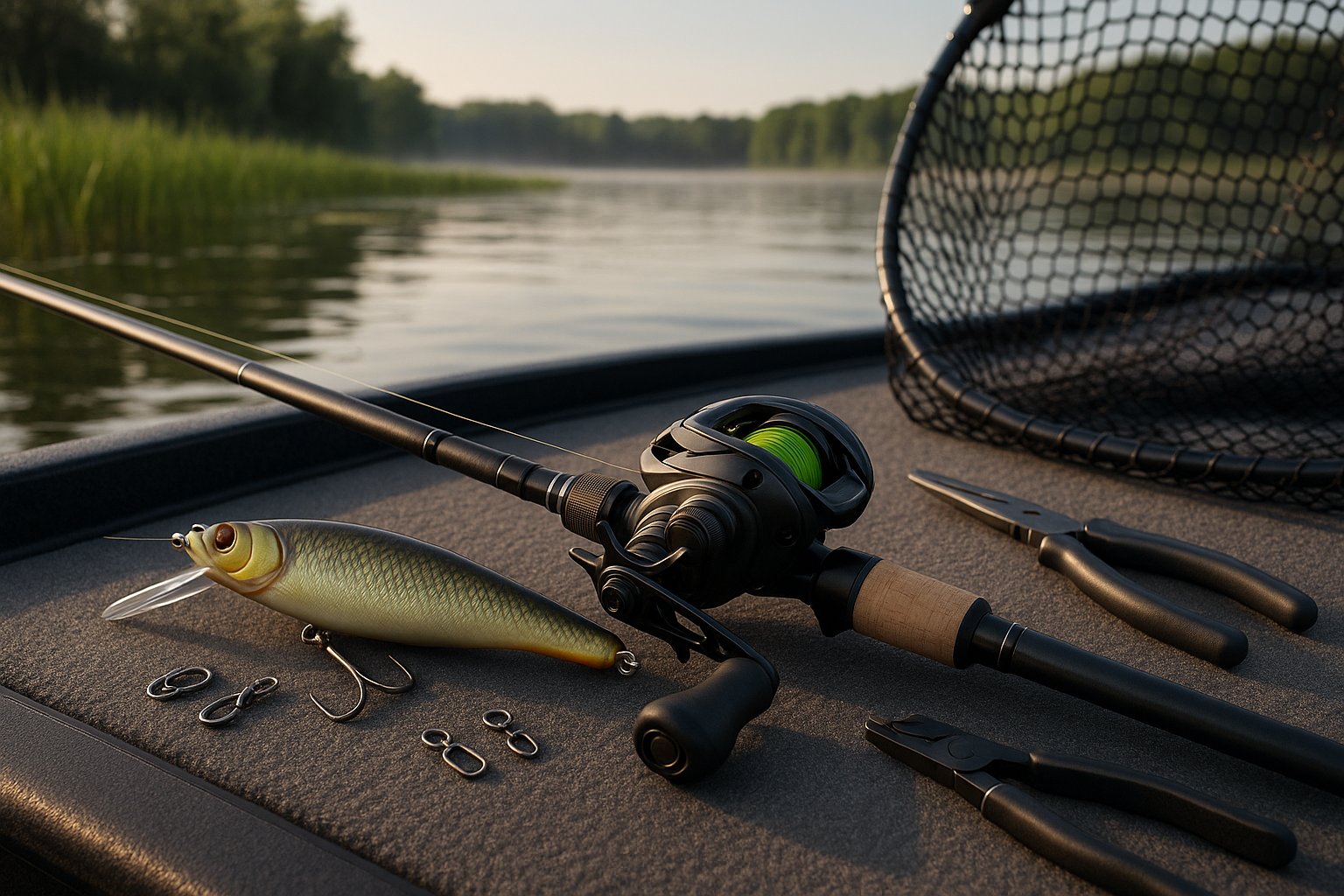
Pike expose weak tackle fast. A light bass combo may survive the occasional fish, but if we want consistency, better hooksets, and fewer failures, we need true pike fishing heavy tackle. The right gear doesn't just fight fish: it casts larger lures, cuts through weeds, and handles violent head shakes close to the net.
Rod selection
For most pike work, we want a medium-heavy to heavy power rod with a fast action. A rod in the 7'0" to 8'0" range gives us better casting distance, more leverage on hooksets, and improved control around weeds.
A practical breakdown looks like this:
|
Technique |
Ideal Rod |
|---|---|
|
Spinnerbaits, spoons, medium swimbaits |
7'0"–7'6" medium-heavy fast |
|
Big soft baits, oversized jerkbaits |
7'6"–8'0" heavy fast |
|
Mixed-use pike setup |
7'3"–7'6" medium-heavy fast |
If we fish from a kayak or tight boat layout, a slightly shorter rod may be easier to manage. But for a one-rod approach, 7'4" to 7'6" medium-heavy fast is hard to beat.
Reel choice
A quality baitcaster is usually the best fit for larger pike lures, though spinning gear still works for lighter presentations. We want a reel with:
-
A strong drag
-
Solid gears that won't flex under load
-
Enough line capacity for 30- to 65-pound braid
-
Comfortable handle knobs for wet conditions
For baitcasters, a 6.3:1 to 7.3:1 gear ratio covers most situations. That range lets us slow-roll spinnerbaits, rip jerkbaits, and recover slack quickly after violent strikes.
Line strength and type
Braid is the standard for serious predator fishing gear because it offers excellent hooksetting power, abrasion resistance around vegetation, and direct feel. For pike, we usually recommend:
-
30-pound braid for lighter lures and clearer water
-
40- to 50-pound braid as the all-around sweet spot
-
65-pound braid for heavy weeds, large baits, or trophy-focused setups
Monofilament has more stretch, which can cushion surges, but it gives up too much control in most pike situations. Fluorocarbon main line is usable, but braid with a proper leader is generally the better system.
Terminal and support gear
Don't overlook the rest of the system. Strong split rings, quality snaps, long-nose pliers, hook cutters, and a large rubberized net are part of a complete best setup for pike fishing. Big fish twist, roll, and bury hooks. Cheap hardware is often the weakest link.
Best Lures for Aggressive Predators
Pike are willing, but they're not random. The best lures combine visibility, vibration, and profile in a way that triggers both reaction and feeding behavior. If we're building an effective northern pike fishing setup, we want a small group of proven lures rather than a giant box of mediocre options.
Spinnerbaits
Spinnerbaits are among the safest and most efficient pike lures because they move through weeds well and create flash and vibration. They're excellent when fish are active around cabbage, reeds, or submerged grass.
We like them because they:
-
Deflect off cover without snagging constantly
-
Let us cover water fast
-
Trigger reaction strikes in stained water
A 1/2- to 1-ounce spinnerbait with a strong wire frame and big hook is ideal. White, chartreuse, perch, and firetiger patterns are consistent producers.
Spoons
Few baits have caught more pike over time than a simple spoon. They cast far, wobble hard, and work at multiple depths. Spoons are especially good when we need to search large flats, wind-blown banks, or sparse weed edges.
Use spoons when:
-
Fish are spread out
-
Wind makes finesse presentations impractical
-
We want a simple lure that still gets crushed
A steady retrieve works, but adding occasional pauses often gets followers to commit.
Jerkbaits and glide-style hard baits
When pike are tracking but not fully committing, jerkbaits are deadly. The side-to-side dart and pause mimics an injured baitfish and gives trailing fish a clean target. In cooler water, longer pauses can make a huge difference.
These lures shine around:
-
Points and breaklines
-
Clearer water
-
Early spring and late fall windows
Swimbaits and soft plastics
Soft swimbaits offer profile and realism, which matters when larger pike are keyed on perch, suckers, or juvenile trout. Paddle-tail swimbaits work for steady retrieves, while larger rigged soft baits can be crawled, pumped, or ripped.
Topwater, when conditions line up
Topwater isn't always the highest-percentage choice, but on calm mornings, over shallow weeds, or during warm-season feeding windows, it's unforgettable. Prop baits, wake baits, and walk-the-dog lures can all pull violent strikes.
The key isn't carrying everything. It's carrying a compact lineup that covers flash, vibration, hang time, and profile. That's how we stay efficient and adaptable.
Leader Setup to Prevent Bite-Offs
If there's one mistake that ruins more pike trips than almost any other, it's skipping a proper leader. Pike teeth are not a minor problem. They're the problem. A strong main line means very little if the final 12 to 18 inches can be sliced in one head shake.
A reliable leader setup protects against bite-offs, abrasion, and lure loss while still allowing natural bait movement. In most cases, we're choosing between wire and heavy fluorocarbon.
Wire leaders
Wire remains the safest option when bite prevention is the priority. Single-strand wire is stiff and durable, while multi-strand wire is more flexible and easier for many anglers to work with.
Wire is best when:
-
We're throwing expensive hard baits
-
Fish are especially aggressive
-
Water clarity is low to moderate
-
We want maximum confidence against sharp teeth
A 9- to 18-inch wire leader handles most pike situations. If we're fishing jerkbaits or lures that need freedom of movement, a flexible multi-strand wire leader with a quality snap is usually the better choice.
Heavy fluorocarbon leaders
Heavy fluorocarbon is popular because it's less visible, more flexible, and often allows slightly better lure action. But it must be heavy enough. Light fluorocarbon is not a pike leader.
Good ranges include:
-
60- to 80-pound fluorocarbon for general pike fishing
-
80- to 100-pound fluorocarbon for large fish, big baits, or mixed musky water
Fluorocarbon can still nick and fail if repeatedly damaged, so we need to inspect it after every fish or hard strike.
How we build the leader
A practical pike leader system usually includes:
-
Main line: 40- to 50-pound braid
-
Leader: 12 to 18 inches of 60- to 100-pound fluoro or wire
-
Connection: FG knot, Alberto knot, or a strong swivel-based connection depending on leader material
-
Terminal end: Heavy-duty snap or split ring
If we're using pre-made leaders, quality matters. Cheap crimps and weak snaps defeat the whole purpose.
Leader mistakes to avoid
The most common problems are predictable:
-
Using bass-sized fluorocarbon
-
Fishing frayed leaders too long
-
Choosing tiny snaps that bend open
-
Making leaders so stiff they kill lure action
A proper leader is not optional in a best setup for pike fishing. It's the insurance policy that keeps our lure connected when a fish clamps down sideways and starts twisting.
Recommended Pike Fishing Setup
If we want one practical, dependable setup that handles most pike situations, we don't need to overcomplicate it. We need gear that casts common lure sizes well, survives weeds and teeth, and gives us enough control to land fish cleanly.
Our all-around pike combo
For the majority of anglers, this is the most balanced recommended pike fishing setup:
-
Rod: 7'4" medium-heavy fast casting rod
-
Reel: Low-profile or round baitcaster, 6.8:1 gear ratio
-
Main line: 40- or 50-pound braided line
-
Leader: 12- to 15-inch 80-pound fluorocarbon or flexible wire leader
-
Lures: 1/2- to 1-ounce spinnerbaits, spoons, jerkbaits, and 4- to 6-inch swimbaits
This setup covers shallow weeds, mid-depth edges, and most seasonal patterns without forcing us to carry a specialized rod for every lure category.
When to go heavier
Some situations call for more power. If we're throwing magnum soft baits, oversized glide baits, or targeting trophy-class fish in dense vegetation, move up to:
-
Heavy power rod
-
50- to 65-pound braid
-
Stronger reel with larger handle and drag stack
-
Heavier wire or 100-pound fluorocarbon leader
That's especially true in places where giant pike and muskies overlap.
Shore, boat, and kayak adjustments
We should also adjust the setup to how we fish:
-
Shore anglers: Prioritize casting distance and spoons/spinnerbaits for coverage.
-
Boat anglers: Keep one moving-bait setup and one pause-style bait ready if possible.
-
Kayak anglers: Choose a manageable rod length and keep tools immediately accessible.
A simple buying checklist
If we're assembling gear from scratch, here's the shortest route to a functional northern pike fishing setup:
-
Buy a 7'3" to 7'6" medium-heavy fast rod.
-
Pair it with a durable 200-size baitcaster or equivalent spinning reel.
-
Spool 40- to 50-pound braid.
-
Add wire or 80-pound fluorocarbon leaders.
-
Start with three lure families: spinnerbait, spoon, jerkbait.
-
Carry pliers, cutters, and a large net.
That's enough to fish confidently almost anywhere pike swim.
In the end, the best system is the one we can use hard without second-guessing it. When our tackle is balanced, our leader is bite-proof, and our lure selection fits the season, we stop hoping our gear will hold up. We know it will. And that confidence alone helps us fish better, longer, and more aggressively.
Northern Pike Fishing Setup FAQs
What is the best rod and reel setup for northern pike fishing?
A 7'3" to 7'6" medium-heavy fast action rod paired with a durable 200-size baitcaster reel featuring strong drag and 6.3:1 to 7.3:1 gear ratio is ideal for most northern pike fishing scenarios.
How strong should my line and leader be when targeting northern pike?
Use 40- to 50-pound braided main line combined with a 12- to 18-inch leader of 60- to 100-pound fluorocarbon or wire leader to prevent bite-offs from the pike's sharp teeth.
Which lures are most effective for catching northern pike?
Spinnerbaits, spoons, jerkbaits, and 4- to 6-inch swimbaits are proven lures for northern pike, offering the right mix of flash, vibration, and profile to trigger aggressive strikes.
Why is a proper leader necessary in a northern pike fishing setup?
A strong leader protects against the pike's sharp teeth cutting the line, preventing costly lure loss and ensuring fights end with a landed fish instead of a broken rig.
How does northern pike behavior influence my fishing setup?
Since northern pike are ambush predators that strike quickly from cover, your setup should allow clean lure presentation through weed edges and cover, matching their seasonal locations and strike patterns.
When should I consider using heavier gear for northern pike fishing?
Opt for heavier tackle—such as a heavy power rod, 50- to 65-pound braid, and stronger leaders—when fishing large baits, heavy weeds, or targeting trophy-sized pike, especially in waters shared with muskies.
 Featured

