

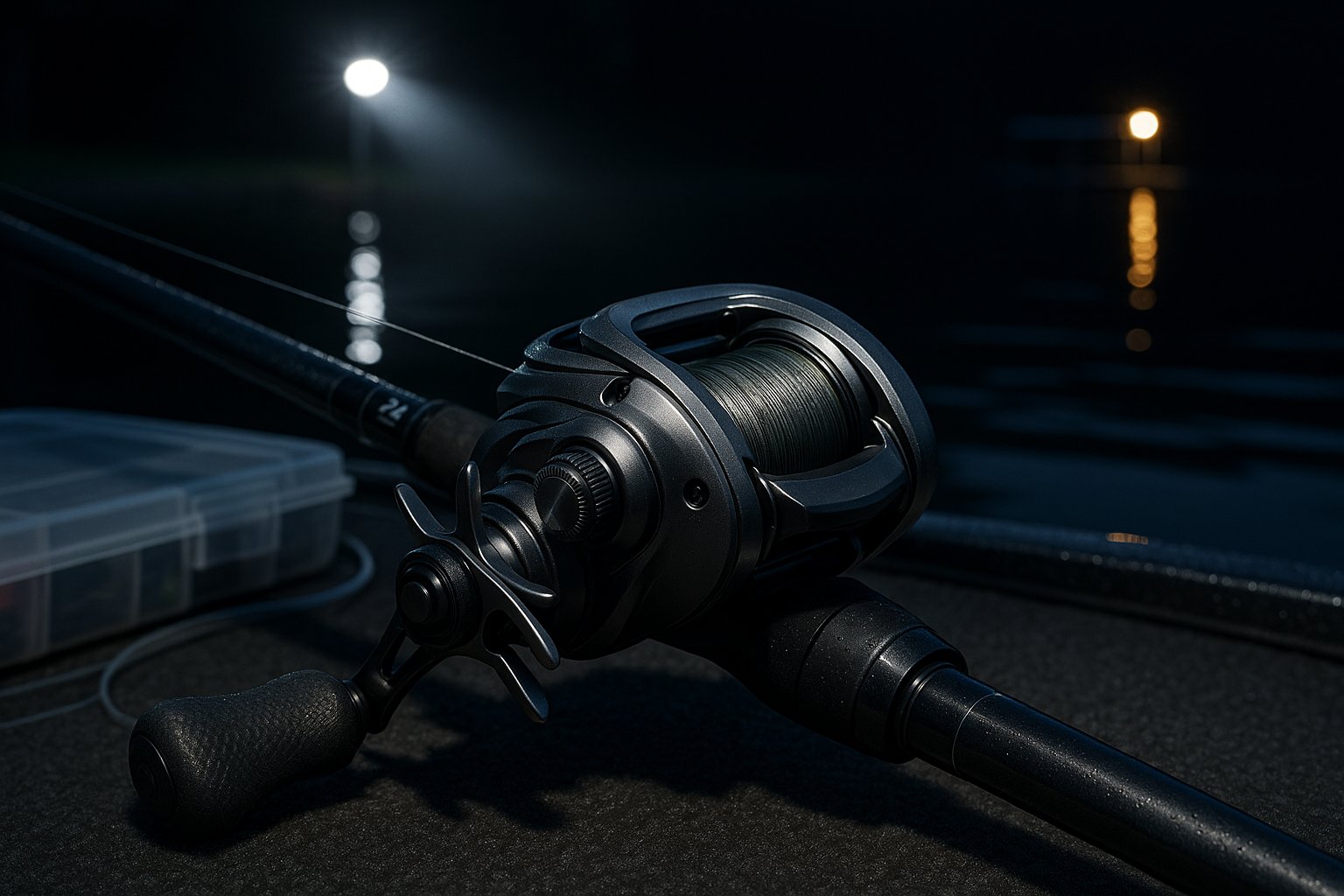
Night fishing changes everything. The fish may feed harder, boat traffic drops off, and the water feels calmer, but our margin for error gets a lot smaller. We can't rely on sight the same way we do during the day, which means every part of a night fishing reel setup has to work a little harder.
A reel that feels fine at noon can become frustrating in the dark if the drag stutters, the handle has too much play, or the line is hard to track under a headlamp. That's why dialing in the right setup matters more than many anglers realize. It's not just about buying the best reel for night fishing. It's about matching reel features, line choice, retrieve feel, and overall low light fishing gear so we stay in control when visibility drops.
In this guide, we'll break down the most important reel decisions for after-dark fishing, from visibility and noise to sensitivity and complete setup recommendations that actually make sense on the water.
Challenges of Night Fishing
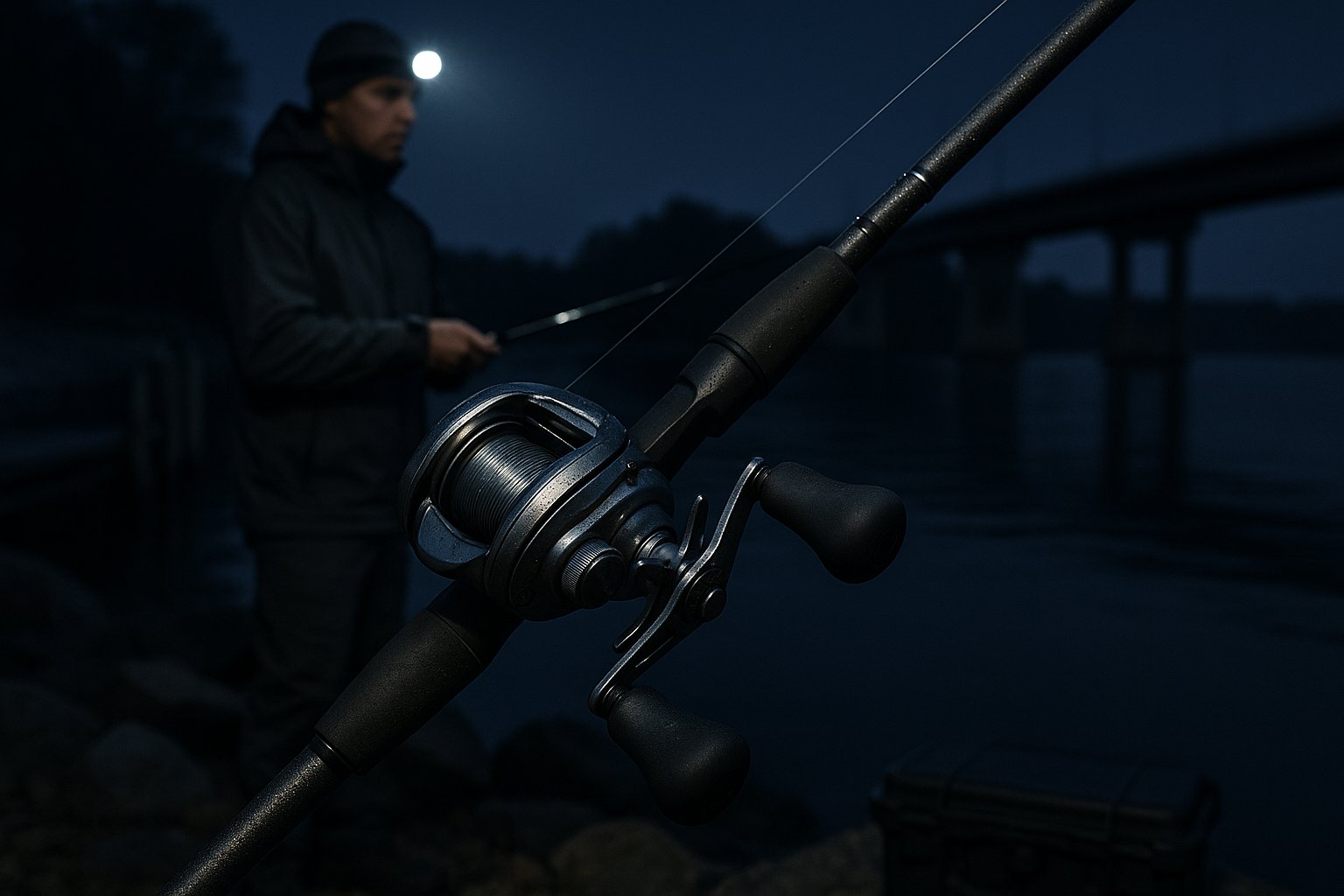
Night fishing rewards preparation, not guesswork. During the day, we can correct small mistakes almost instantly. We can see a loose loop forming on the spool, notice a bait tracking off-center, or spot a fish rolling near structure. At night, those visual cues mostly disappear.
The first challenge is reduced line management. If we're using spinning gear, line twist and wind knots become harder to catch early. On baitcasters, overruns can go from minor to ugly before we even realize what happened. A clean, predictable reel setup matters because we often have only feel and sound to tell us something is off.
The second issue is spatial awareness. Casting around docks, riprap, bridge pilings, grass lines, or current seams in the dark means our reel has to help us stay precise. A reel with sloppy startup inertia or inconsistent braking can cost us accuracy. Even a slightly awkward handle knob feels more noticeable after three hours of casting by touch.
Then there's fatigue. Night sessions often run long, and concentration drops when our body clock starts arguing with us. That's where dependable gear becomes a real advantage. We want a reel that feels intuitive, one that lets us engage the spool, adjust drag, and retrieve without fiddling around.
Moisture is another factor anglers sometimes underestimate. Night air often brings more condensation, and cooler temperatures can change how grease, line, and drag washers behave. A reel that performs smoothly in dry daylight conditions may feel different after midnight near dew-covered banks or misty water.
Finally, night fishing usually means fish are located through pattern, sound, and feel rather than sight. We may be slow-rolling a spinnerbait, dragging a worm, or working a swimbait across structure where the strike is more of a change in pressure than a dramatic hit. That puts extra pressure on our reel setup. When we talk about fishing gear low visibility conditions, we're really talking about reducing uncertainty. The less we have to think about the reel, the more attention we can give to the lure, the cover, and the bite.
Choosing the Right Reel Features
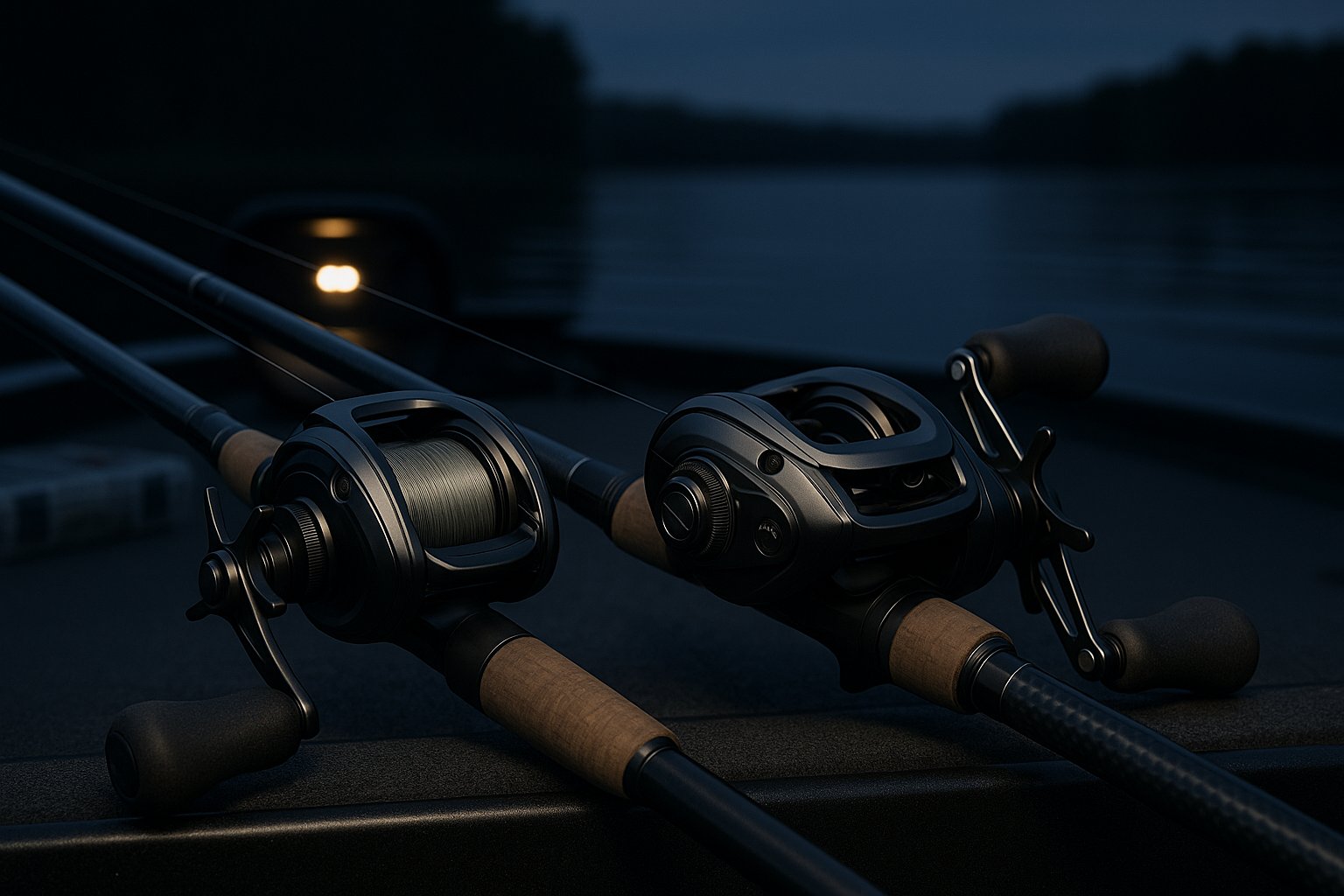
The best reel for night fishing is rarely the flashiest model on the shelf. What we need is consistency. That starts with a smooth drag, solid line lay, comfortable ergonomics, and a retrieve that stays predictable under load.
For spinning reels, line management should be near the top of the list. A quality spool design and good oscillation system help reduce loops and improve line lay, which matters a lot when we can't constantly inspect the spool visually. A rigid frame also helps keep the reel from feeling vague under pressure, especially when we're fishing deeper water or pulling fish from cover.
For baitcasters, braking matters more at night than many anglers admit. We generally lean toward reels with forgiving, adjustable braking systems rather than ultra-free spools that demand perfect thumb timing. In daylight, high-performance casting reels are fun. In darkness, control often beats max distance.
Gear ratio should match the technique. We usually prefer:
-
Moderate to fast ratios (6.3:1 to 7.5:1) for jigs, worms, spinnerbaits, and chatterbaits
-
Lower ratios (5.x:1 to 6.2:1) for deep cranking or heavy resistance baits
-
Faster spinning reels when we need to pick up slack quickly after subtle bites
Handle design matters too. Larger, tackier knobs are easier to index by feel. That sounds minor until we're making repeated casts in darkness with wet hands. A compact reel can save weight, but if the controls feel too small to use confidently, it's the wrong tool for the job.
Drag click and adjustability also deserve attention. We don't want a drag that jumps from too loose to too tight in tiny increments. Fine control helps when a fish surges near the boat and we're reacting mostly through touch and sound.
Durability is another overlooked feature in low light fishing gear. If we're fishing tidal areas, inshore lights, or freshwater around humidity and spray, sealing and corrosion resistance become more than marketing buzzwords. A reel that stays smooth after repeated damp night sessions is worth paying for.
In practical terms, our ideal night reel has three traits: it starts smoothly, stays controlled, and gives clear feedback through the handle. If a reel excels in those three areas, we can build the rest of the system around it with confidence.
Line Visibility and Control
Line choice can make or break a night fishing reel setup. We're balancing two competing needs: we want line we can manage confidently, but we also don't want to create unnecessary visibility issues in clear water.
For many night applications, braid is the easiest line to control. It has low stretch, strong hook-setting power, and excellent sensitivity. On spinning reels especially, braid in the 10- to 20-pound range handles beautifully and helps reduce memory-related problems that become annoying after dark. On baitcasters, braid can also be excellent around vegetation, wood, and docks.
But braid raises an obvious question: what color should we use? High-visibility braid can actually help us under a blacklight or headlamp, especially if we're watching for slight jumps or directional changes. In some freshwater bass situations, we'll use hi-vis braid with a fluorocarbon or mono leader so we get visual tracking without presenting a highly visible main line near the lure.
If we're not using braid, copolymer and monofilament still have a place. Mono is forgiving, manageable, and often a smart choice for moving baits at night because the stretch can keep fish pinned during close-range strikes. Fluorocarbon offers lower visibility underwater, but its memory can be less forgiving on some spinning setups, particularly in cooler nighttime conditions.
A few practical line-control decisions matter more at night than during the day:
-
Don't overfill the spool. A slightly conservative fill is often easier to manage after dark.
-
Retie more often. Frays are harder to see, so we should check by feel after contact with rock, dock cables, or shell.
-
Match line diameter to the lure. Heavy line can kill action: line that's too light can become a handling problem.
-
Use a leader when it solves a problem. Not because it's trendy.
For fishing gear low visibility situations, line markers and blacklights can be useful, but they're not universal solutions. A blacklight setup can make fluorescent line easy to track from the bank or boat, especially for catfish or bass anglers soaking baits or working slow presentations. On the other hand, if we're constantly moving and casting, a simpler system may be better.
Control is the real goal. We don't need to see every inch of line. We just need enough feedback to know where our bait is, whether we're in contact, and if something changed. That's the standard a good nighttime line system should meet.
Noise and Sensitivity Considerations
At night, sound carries differently, or maybe we just notice it more. Either way, reel noise becomes more important once the sun goes down. A reel doesn't need to be silent, but it should sound clean. Grinding, geary resistance, excessive rotor noise, or rough engagement become distracting fast, and those sounds can mask the subtle feedback we depend on.
There are really two sides to this: the noise our reel makes, and the information our reel transmits.
A tight, well-maintained reel helps on both fronts. If bearings are worn or the levelwind is dry, we may hear unnecessary chatter during retrieve. That may not spook every fish, but it absolutely makes it harder for us to detect lure vibration changes. And those changes matter. A spinnerbait blade that stops thumping, a swimbait that suddenly feels "light," or a jig that lands mushy instead of crisp, those are often the clues that lead to fish after dark.
Sensitivity isn't just a rod issue. The reel contributes through handle feedback, frame rigidity, and overall smoothness. A reel with flex or sloppy tolerances can blur information. By contrast, a solid reel lets us notice when a lure ticks grass, bumps rock, or gets inhaled on slack line.
We can improve nighttime sensitivity with a few habits:
Keep the reel maintained
Fresh line roller bearings, proper lubrication, and a clean spool shaft make a bigger difference than most upgrade parts. A neglected reel feels dull.
Reduce unnecessary mechanical noise
If a lure is supposed to thump steadily, we should be able to feel that cadence through the retrieve. Excess reel noise competes with that signal.
Pair the reel with the right rod and line
A high-end reel won't rescue a setup with too much stretch or a rod that doesn't fit the technique. Sensitivity is a system, not a single component.
Learn the "normal" feel of each bait
This is where experience matters. We should know how a spinnerbait pulses, how a Texas rig drags, and how a squarebill deflects. At night, bites often show up as interruption, not impact.
One more point: quieter operation also reduces mental fatigue. That sounds soft, but it's true. When our gear runs smoothly, we stay locked in longer. We're not distracted by every turn of the handle, wondering whether that roughness is the lure, the fish, or the reel asking for a service.
Recommended Night Fishing Setups
The best night fishing reel setup depends on species, cover, and presentation, but a few proven combinations cover most situations well. We're not chasing theory here, just dependable setups we'd actually fish.
1. All-around bass baitcasting setup
-
Rod: 7'0" to 7'3" medium-heavy, fast action
-
Reel: 6.8:1 to 7.3:1 baitcaster with adjustable braking
-
Line: 30- to 40-pound braid to 12- to 17-pound fluorocarbon leader, or straight 15-pound mono/fluoro depending on cover
-
Best for: Spinnerbaits, jigs, Texas rigs, chatterbaits around docks, rock, and weed edges
This is our default recommendation for most bass anglers. It gives enough speed to recover slack quickly, enough power for close-quarters hooksets, and enough control for repeated target casting in low light.
2. Finesse spinning setup for subtle bites
-
Rod: 6'10" to 7'2" medium-light or medium, fast action
-
Reel: 2500-size spinning reel with excellent line lay
-
Line: 10- to 15-pound hi-vis braid to 6- to 10-pound fluorocarbon leader
-
Best for: Ned rigs, shaky heads, wacky rigs, small swimbaits
This setup shines when fish are feeding but not crushing the bait. The braid helps us stay connected, and the leader keeps presentations natural in clearer water.
3. Power setup for heavy cover or big fish
-
Rod: 7'3" to 7'6" heavy, fast action
-
Reel: High-capacity baitcaster with strong drag
-
Line: 50- to 65-pound braid
-
Best for: Frogs, big worms, large spinnerbaits, stripers near structure, heavy vegetation
If we're around mats, timber, bridge shadows, or places where fish surge immediately into cover, this is where stronger gear earns its keep.
4. Catfish or bait-soaking setup
-
Rod: 7' to 8' medium-heavy to heavy
-
Reel: Large spinning reel or round baitcaster with smooth drag and solid clicker/alarm system
-
Line: 20- to 30-pound mono or 40- to 65-pound braid depending on current and cover
-
Best for: Bank fishing, anchored presentations, cut bait, live bait
For this style, line visibility aids like fluorescent mono under blacklight can be genuinely useful. We're often watching for movement rather than actively working a lure.
5. Inshore night setup around lights
-
Rod: 7' medium or medium-heavy fast action
-
Reel: 3000-size spinning reel or compact saltwater-rated baitcaster
-
Line: 15- to 20-pound braid to 15- to 25-pound leader
-
Best for: Snook, speckled trout, redfish around dock lights and current edges
This is where corrosion resistance and sealing matter. Salt spray, humidity, and repeated night use can punish a reel fast.
If we're trying to choose one best reel for night fishing across multiple techniques, we'd usually start with a dependable mid-speed baitcaster for power fishing or a 2500-size spinning reel for versatility. Neither is glamorous. Both work. And honestly, that's what we want from low light fishing gear, equipment that disappears into the background so we can focus on finding fish.
A simple final rule helps: at night, we should favor control over maximum performance. Slightly more braking. Slightly more forgiving line. Slightly more comfortable handles. That tradeoff usually pays for itself before the first hour is over.
Night Fishing Reel Setup FAQs
What makes a reel suitable for night fishing?
A night fishing reel should start smoothly, stay controlled, and provide clear feedback through the handle. It needs a smooth drag, solid line lay, comfortable ergonomics, and consistent retrieve performance to handle low visibility and moisture conditions effectively.
How does line choice affect night fishing reel setup?
Line choice balances control and visibility. Braided line offers low stretch and sensitivity but can be highly visible, so anglers often use hi-vis braid with a fluorocarbon leader. Monofilament and fluorocarbon remain options, chosen based on water clarity, bait action, and manageability in low light.
Why is braking system important on baitcasting reels for night fishing?
At night, adjustable and forgiving braking systems on baitcasters increase casting control and reduce overruns. This helps maintain accuracy in darkness where visual cues are limited, making controlled casts more valuable than maximum casting distance.
What reel gear ratios are best for night fishing techniques?
Moderate to fast gear ratios (6.3:1 to 7.5:1) suit jigs, spinnerbaits, and chatterbaits for quick slack line pickup. Lower ratios (5.x:1 to 6.2:1) work better for deep cranking or heavy resistance baits. Choosing the right speed improves lure control under low visibility.
How does moisture at night affect fishing reel performance?
Nighttime moisture can cause condensation on reels, affecting grease, drag washers, and line behavior. A corrosion-resistant reel with proper sealing maintains smooth operation despite dew or mist, preventing rough drag or sluggish retrieves during night sessions.
What is the best way to detect fish bites when night fishing with a reel?
Because visual cues are minimal, anglers rely on subtle changes in reel handle feedback and sound. A well-maintained, quiet reel transmits vibrations clearly, allowing anglers to feel interruptions in lure thump or changes in pressure, signaling bites more effectively in the dark.


