

Musky Fishing Setup: The Gear We Trust to Target Big Predators Successfully
Musky fishing demands specialized, heavy-duty gear to cast oversized lures, drive big hooks, and control powerful fish. An ideal all-around setup pairs an 8'6" to 9' heavy-power fast-action rod with a high-capacity baitcasting reel, 80 lb braid, and a 12-18" heavy fluorocarbon or wire leader. Core lure categories include bucktails, glide baits, crankbaits, and rubber baits. Proper handling tools—large rubber-coated net, long pliers, hook cutters—are essential for fish safety. Build a balanced system matching rod, reel, line, and leader to your primary lure sizes. Prioritize rod and reel quality, then line and leader. Responsible handling ensures strong releases.
Muskies have a reputation for a reason. They're powerful, temperamental, and fully capable of exposing weak tackle in a single strike. If we want to fish for them seriously, a generic bass setup usually won't cut it. A proper musky fishing setup is built for casting oversized lures, driving big hooks home, and controlling a fish that can turn a routine cast into a true test of gear.
In this guide, we'll break down the exact components that matter most, from rod power and reel strength to line choice, lure categories, and safe handling. Whether we're upgrading from pike tackle or building our first dedicated system for big game freshwater fishing, this article will help us put together a balanced, reliable setup. The goal is simple: fish harder, lose fewer lures, and handle muskies responsibly when they finally show up boatside.
Why Musky Fishing Requires Specialized Gear
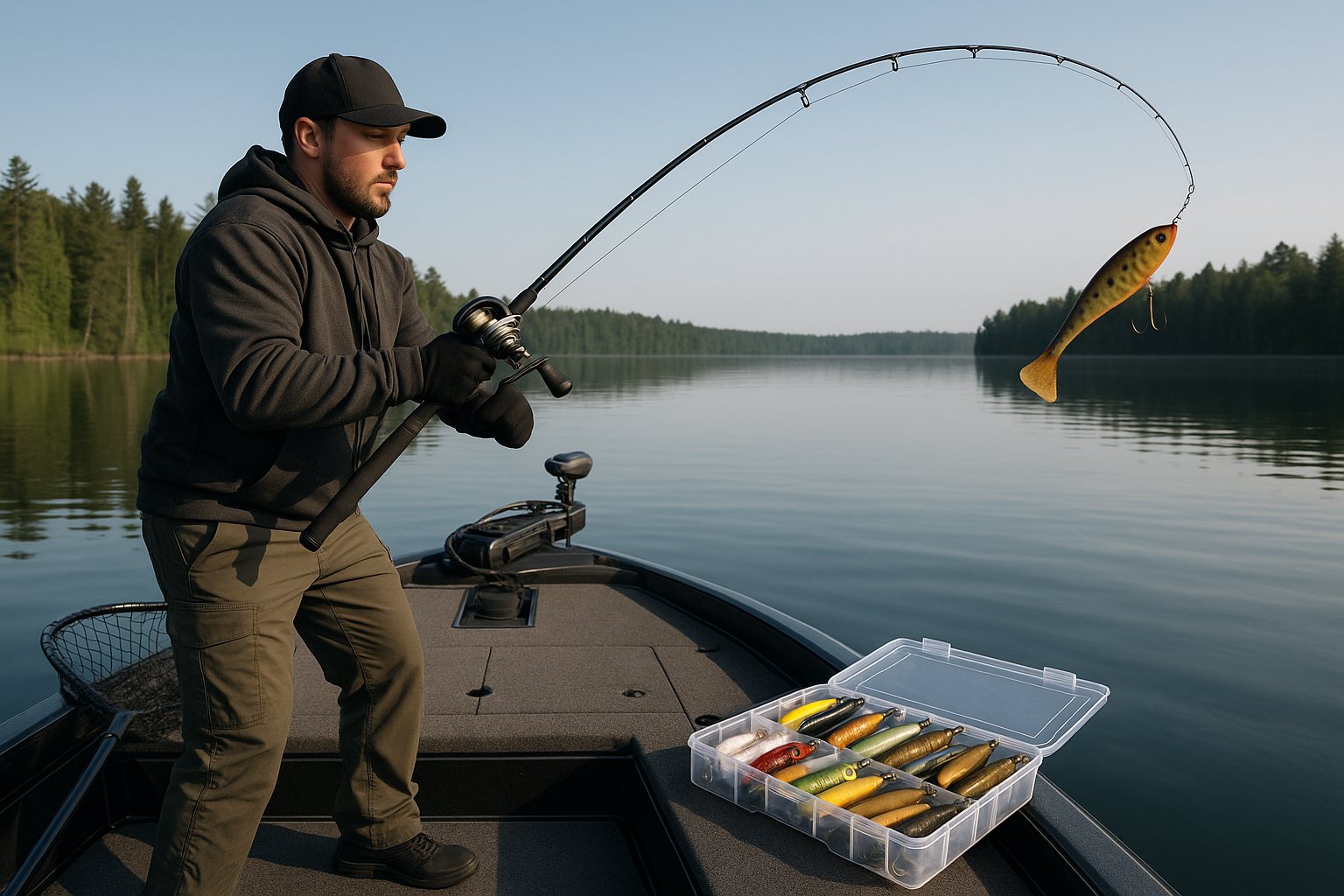
Musky fishing is gear-intensive because the fish itself demands it. A mature musky is not just bigger than most freshwater predators: it's also built to surge, twist, and throw leverage against our tackle. Add in giant lures, thick hooks, and long days of repetitive casting, and the need for specialized gear becomes obvious fast.
A standard freshwater combo often fails in three places:
-
Casting load: Musky lures are heavy. Bucktails, large crankbaits, glide baits, and rubber baits can weigh several ounces.
-
Hook-setting power: Big hooks require far more force than typical walleye or bass hooks.
-
Fish control: Once hooked, muskies can overpower underbuilt reels, weak drags, and light rods.
That's why a dedicated musky setup is really a system, not just a rod and reel. Every part has to match. If we pair a heavy bait with an undersized rod, casting becomes inefficient and even unsafe. If we use line that's too light, one hard run or a bad angle around the net can cost us the fish. If our leader is too weak or too short, those teeth become a serious problem.
There's also a practical reason to go specialized: endurance. Musky anglers often make hundreds of casts in a day. The right gear reduces fatigue, improves lure control, and lets us work presentations the way they were designed to be worked. That matters a lot when we're burning double blades, snapping a jerkbait, or slowly crawling a giant rubber bait over deep structure.
In other words, the best musky fishing gear is not about overkill. It's about efficiency, hook-up percentage, fish safety, and our own stamina. Good musky equipment helps us cast accurately, manage heavy lures, move fish quickly, and release them in strong condition. For a species famous as "the fish of 10,000 casts," any setup advantage is worth having.
Rod, Reel, and Line for Big Fish
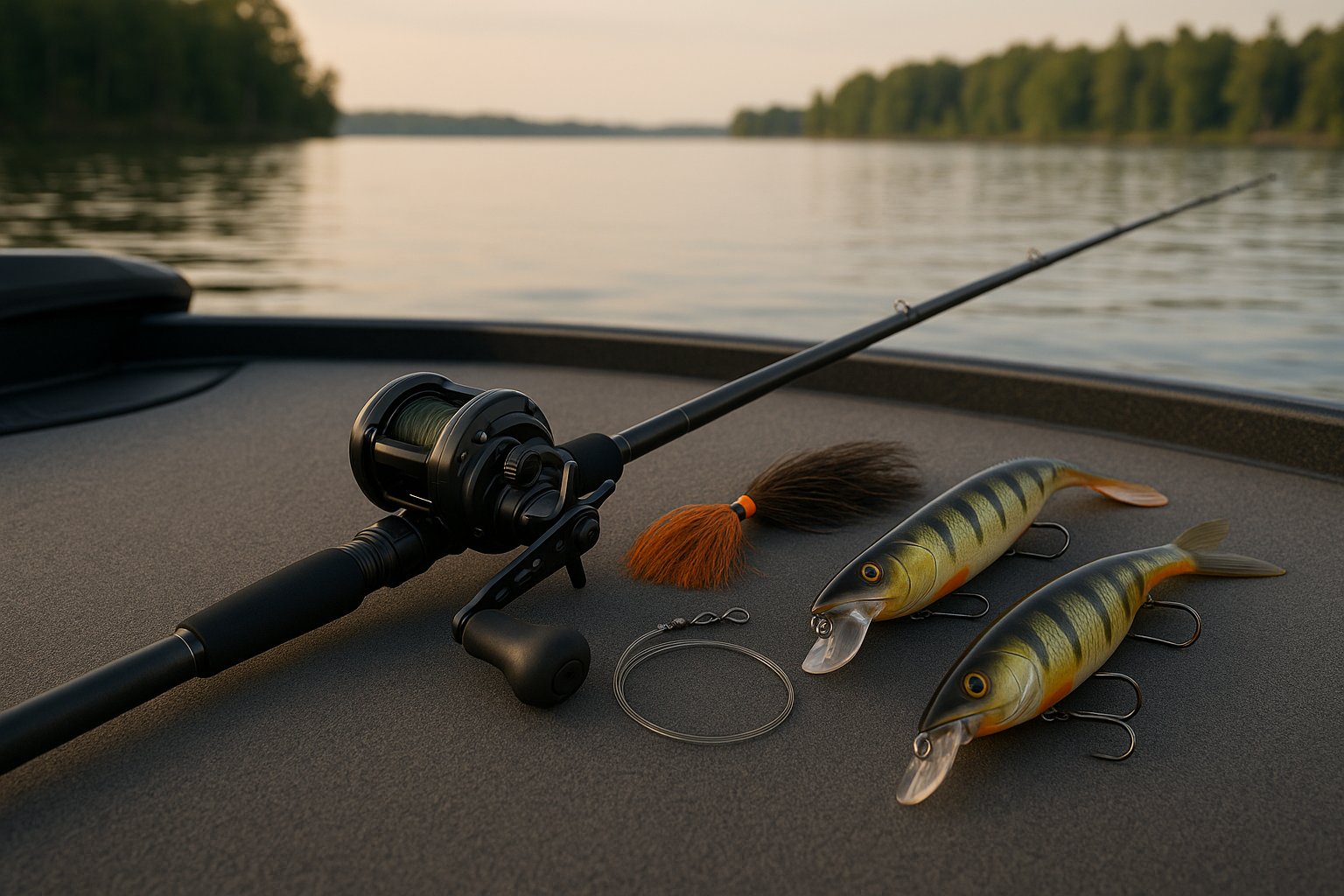
This is the core of any musky fishing setup, and balance matters more than brand names. We want a rod, reel, and line combination that matches the lures we throw most often, not a random pile of "heavy" gear.
Rod
For most anglers, a rod in the 8'6" to 9' range is the sweet spot. Longer rods cast farther, create better figure-eights at boatside, and help absorb shock during the fight. In most cases, we recommend:
-
Heavy power for medium-to-large bucktails, twitch baits, and many crankbaits
-
Extra-heavy power for giant rubber baits, magnum blades, and oversized hard baits
-
Fast or moderate-fast action for solid hooksets and lure control
A shorter rod can work in tight quarters, but modern musky fishing strongly favors longer rods because they improve both casting mechanics and fish conversion near the boat.
Reel
The reel has to do real work in musky fishing. We need strong gears, a dependable drag, and enough line capacity for heavy braid. Low-profile reels are popular for comfort, but many anglers still prefer round reels for durability and torque.
A good musky reel should offer:
-
A rigid frame
-
High line capacity
-
Strong handle and power knobs
-
Smooth, consistent drag
-
Gear ratio matched to technique
For example, a high-speed reel is excellent for burning bucktails, while a lower gear ratio helps when pulling high-resistance baits like giant spinnerbaits or big rubber. If we want one all-around choice, a mid-to-high gear reel with strong internals is usually the best compromise.
Line
Braid is the standard, and for good reason. It casts well, has excellent sensitivity, and delivers immediate hook-setting power. For most musky applications, 80-pound braid is the baseline. Some anglers use 65-pound for lighter presentations, while 100-pound is common with massive baits.
Here's a practical rule of thumb:
|
Technique |
Suggested line |
|---|---|
|
Smaller bucktails and twitch baits |
65–80 lb braid |
|
General musky use |
80 lb braid |
|
Giant rubber or magnum blades |
80–100 lb braid |
A proper leader is non-negotiable. We should use either a heavy fluorocarbon leader for certain presentations or a wire/solid leader where kink resistance and tooth protection matter most. This is especially important in big game freshwater fishing, where the terminal connection is often the weakest link if we cut corners.
When people search for a heavy rod reel musky combo, what they really need is a matched setup: long heavy-power rod, high-capacity reel, and heavy braid with a quality leader. That's the foundation.
Lure Selection for Musky
Lure selection can get expensive quickly, so it helps to build around categories instead of buying everything that looks intimidating. Muskies are famous for following without striking, and conditions can change hour to hour. A smart lure lineup gives us options for speed, depth, vibration, and profile.
Bucktails and inline spinners
These are among the most consistent musky producers ever made. They're straightforward to fish and cover water efficiently. Single and double-bladed bucktails shine when we want flash, vibration, and a steady retrieve.
They're especially useful for:
-
Covering shallow weeds
-
Triggering reaction bites
-
Fishing windy shorelines
-
Prospecting active fish fast
Burning blades can be brutally effective in warm water, but it also demands a reel and rod that can handle resistance all day.
Glide baits and jerkbaits
These excel when muskies are following but not committing. Their side-to-side action often converts fish that ignore faster straight-retrieve lures. They require more rod input, so they're best fished on a setup that feels responsive without being exhausting.
We like these when:
-
Fish are tracking behind the bait
-
Water is clear enough for visual follows
-
We need directional changes to trigger strikes
Crankbaits and twitch baits
Cranks let us target specific depths and maintain consistent action. Shallow runners are excellent over weeds, while deeper divers help us contact breaklines, rock edges, and suspended fish. Twitch baits add an erratic pause-and-dart presentation that often shines in colder water or on pressured fisheries.
Soft plastics and rubber baits
Big rubber catches big muskies, but it also demands some of the heaviest gear in the boat. These baits are ideal when we want hang time, depth control, and a large meal profile. They can be worked over deep structure, along ledges, or through open-water zones where fish are feeding on ciscoes or suckers.
Building a practical starter box
We don't need fifty lures. A strong musky lineup usually includes:
-
2–3 bucktails in different blade sizes
-
1 glide bait
-
1 jerkbait or twitch bait
-
2 crankbaits in different running depths
-
1–2 rubber baits
-
Natural and high-contrast colors for changing light and water clarity
The best musky fishing gear includes lures that match the water we fish most. If our lakes are shallow and weedy, bucktails and shallow cranks may do most of the heavy lifting. If we fish deep clear reservoirs, rubber, glide baits, and deeper cranks may play a larger role. A focused tackle selection usually outperforms a giant, disorganized one.
Safety and Handling Tips
Musky safety is about two things at once: protecting ourselves and protecting the fish. Because muskies are large, toothy, and usually hooked on oversized trebles, careless handling can go sideways quickly. A good musky setup always includes release tools, not just fishing tackle.
Before we make the first cast, we should have these essentials ready:
-
Large coated landing net
-
Long-nose pliers
-
Hook cutters capable of cutting heavy trebles
-
Jaw spreaders if needed, though not as a first tool in every situation
-
Gloves for better grip and protection
-
Measuring bump board if we plan to document fish length
Net first, organize second
A big rubber-coated net acts like an in-water holding pen. Once the fish is secure, we can leave it in the water while preparing tools. That reduces chaos and shortens air exposure. Trying to unhook a musky on the deck without a plan is one of the fastest ways to injure both the fish and ourselves.
Cut hooks when necessary
This is a major point. If hooks are buried or tangled badly, cutting them is often better than wrestling them out. Replacement hooks are cheap compared with a damaged fish, a punctured hand, or several extra minutes of handling stress.
Support the fish correctly
When lifting a musky for a quick photo or measurement, we should support it horizontally:
-
One hand under the head or gill plate area, carefully placed
-
One hand supporting the belly
We should never hang a large musky vertically for photos. That can stress the fish internally, especially bigger specimens.
Keep the release efficient
A healthy release should be deliberate but quick. We unhook the fish, measure if desired, take a fast photo, and return it to the water. Then we support it upright until it kicks away with strength. In warm water, this matters even more because recovery can take longer.
Musky anglers talk a lot about gear, but responsible handling is part of the setup too. In big game freshwater fishing, success isn't just getting the bite. It's making sure the fish swims away strong enough to be caught again.
Recommended Musky Fishing Setup
If we want one dependable all-around setup, we should build around versatility. Not every musky angler needs technique-specific combos right away. A single balanced outfit can throw a large percentage of common baits and handle most fish we'll encounter.
Here's a practical all-purpose recommendation:
|
Component |
Recommendation |
|---|---|
|
Rod |
8'6"–9' heavy power, fast action |
|
Reel |
High-capacity baitcasting reel with strong drag |
|
Line |
80 lb braided line |
|
Leader |
12"–18" heavy fluorocarbon or wire leader |
|
Net |
Large rubber-coated musky net |
|
Tools |
Long pliers, hook cutters, measuring board |
This setup works well for:
-
Medium and large bucktails
-
Glide baits
-
Many jerkbaits and twitch baits
-
Standard musky crankbaits
-
Moderate-size rubber baits
If we throw mostly giant pound-class rubber or oversized double-bladed lures, we should step up to an extra-heavy rod and potentially 100-pound braid. On the other hand, if our fisheries favor smaller presentations, a heavy rod remains the best general-purpose choice.
Our gear priorities in order
If we're building a setup piece by piece, this is where we'd spend first:
-
Rod, It determines casting comfort, lure range, and boatside control.
-
Reel, It needs to survive torque and repetitive casting.
-
Line and leader, Never the place to save a few dollars.
-
Net and release tools, Essential, not optional.
-
Core lure categories, Buy proven types before chasing niche baits.
That approach gives us a reliable path into musky fishing without wasting money on mismatched equipment. It also helps us avoid a common beginner mistake: buying a powerful reel but pairing it with a rod that can't cast the intended lure range effectively.
A sound musky fishing setup is one we can fish confidently all day. It should cast cleanly, handle heavy lures, drive hooks home, and let us release fish safely. Build for the baits we'll use most, keep the system balanced, and upgrade into specialized combos only after our fishing style becomes more defined.
Musky fishing has a steep learning curve, but gear doesn't have to be confusing. Start with a strong all-around setup, learn how each lure category behaves, and refine from there. That's usually the fastest route to more follows, more clean hook-ups, and more fish in the net.
Musky Fishing Setup FAQs
What is the ideal rod length and power for a musky fishing setup?
For musky fishing, rods between 8'6" and 9' long with heavy or extra-heavy power are ideal. They provide the strength to cast oversized lures and control big muskies, while fast action helps deliver solid hooksets and better lure control.
Why do I need specialized gear for musky fishing instead of a regular bass setup?
Musky fishing gear must handle heavy lures, powerful hook-setting force, and the fish's strong runs. Regular bass setups often lack the casting power, drag strength, and line capacity to manage muskies without losing lures or risking tackle failure.
What type and strength of fishing line should I use for musky fishing?
Braid is the preferred line type due to its sensitivity and strength. Typically, 80-pound braided line works well for most musky fishing, with 65-pound for smaller lures and up to 100-pound braid for very large baits.
How should I safely handle and release a musky after catching it?
Use a large rubber-coated net to keep the fish in water during unhooking. Support the musky horizontally with one hand under the head and one under the belly when lifting. Use long-nose pliers and hook cutters to safely remove hooks or cut if necessary, and release the fish quickly while supporting it upright until it swims away strongly.
What lures are most effective for musky fishing and how should I choose them?
Effective musky lures include bucktails, glide baits, jerkbaits, crankbaits, and large rubber baits. Choose lures based on water conditions and fish behavior—for example, bucktails for shallow or windy water, glide baits for clear water with following fish, and rubber baits for deep structure or larger prey patterns.
Can I use a high-speed reel for all musky fishing techniques?
A high-speed reel works well for fast retrieves like burning bucktails, but a lower gear ratio reel may be better for pulling heavy resistance baits like large spinnerbaits or rubber baits. A mid-to-high gear ratio reel with strong internals is a good all-around choice for versatility.
 Featured

