

If we had to pick one reason beginners struggle with bass fishing, it wouldn't be a lack of effort. It's usually a mismatched setup. A rod that's too stiff, line that's too heavy, lures that are hard to fish correctly, small gear mistakes make largemouth bass fishing feel harder than it needs to be.
The good news is that a solid largemouth bass fishing setup doesn't have to be complicated or expensive. We can cover a lot of water, learn faster, and catch more fish with a simple, well-balanced combo and a few proven lures. That matters because largemouth bass are opportunistic, but they're not careless. Their behavior changes with water temperature, cover, light, and fishing pressure, and our setup needs to match that reality.
In this guide, we'll break down the gear, lures, and beginner decisions that matter most so we can build a practical bass fishing gear setup without wasting money, or time on the water.
Understanding Largemouth Bass Behavior
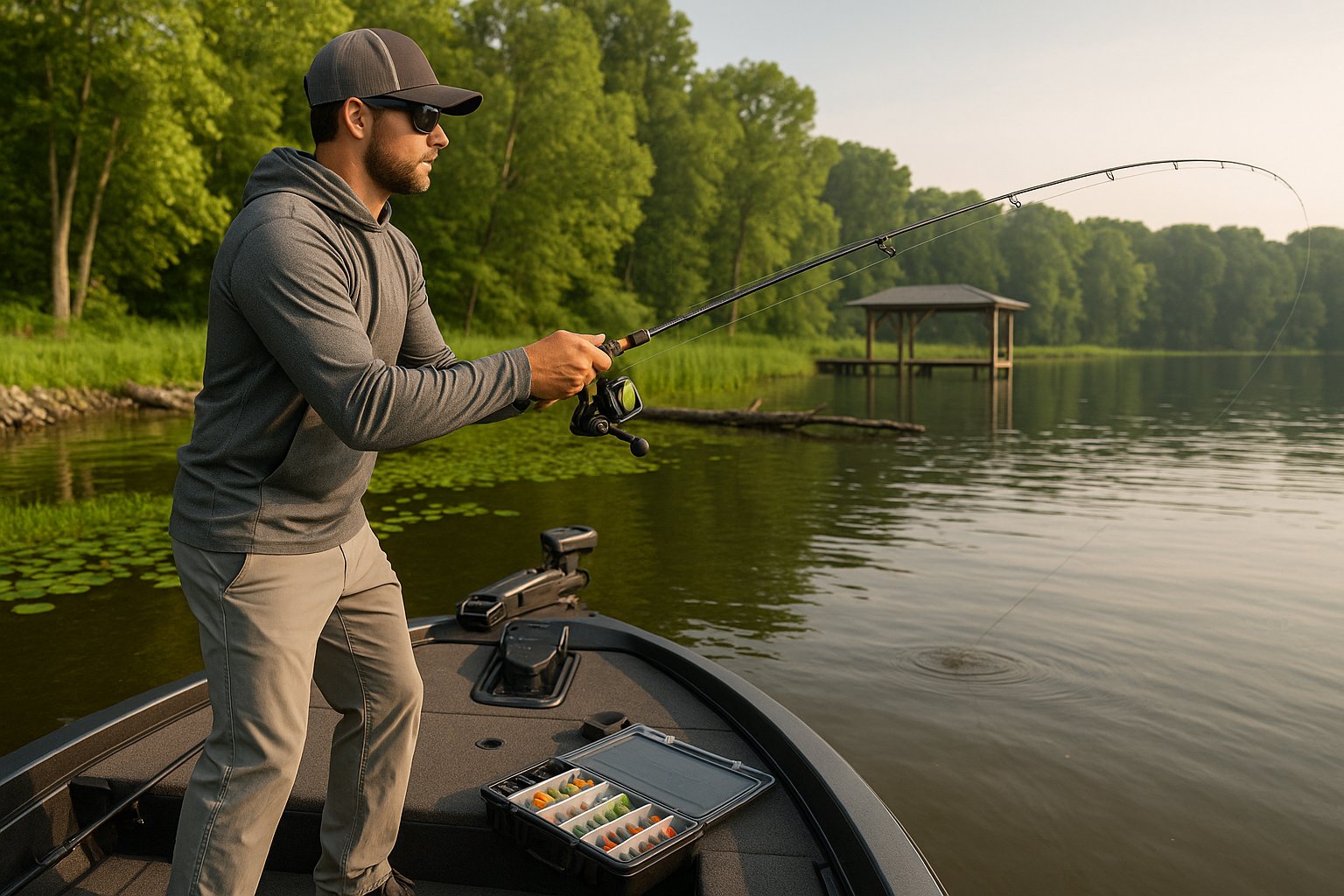
Largemouth bass aren't random feeders. They relate to cover, ambush angles, and comfort. Once we understand that, choosing the right freshwater bass gear gets much easier.
In most lakes, ponds, and slow-moving rivers, largemouth bass spend time around places that give them an advantage: weed edges, fallen timber, docks, brush piles, laydowns, riprap, and shade lines. They like spots where they can sit still, conserve energy, and explode on prey when it passes close enough. That's why a cast that lands inches from cover often gets bit while one that lands five feet away gets ignored.
Season matters too. In spring, bass move shallow to feed and spawn. This is when they're often easier to locate around flats, pockets, and protected banks. In summer, many stay near thick vegetation, docks, deeper shade, or offshore structure, especially during midday heat. Early morning and evening usually bring more active feeding in shallower water. Fall can be excellent because bass chase baitfish aggressively before winter. In winter, they typically slow down, hold deeper, and prefer more deliberate presentations.
Weather changes things, but not always in the way beginners expect. Bright bluebird skies can push fish tighter to cover or shade. Wind often helps more than it hurts because it breaks up light penetration and pushes bait into predictable areas. Slightly stained water can also improve the bite by making bass less wary.
So what does this mean for our largemouth bass fishing setup? Simple: we need gear that lets us cast accurately, work around cover, and handle fish that strike hard and try to bury themselves in weeds or wood. It also means we shouldn't assume bass are "not biting" until we've adjusted our location, retrieve speed, or lure style. A lot of beginner success comes from understanding that bass behavior drives tackle choices, not the other way around.
Best Rod, Reel, and Line Setup
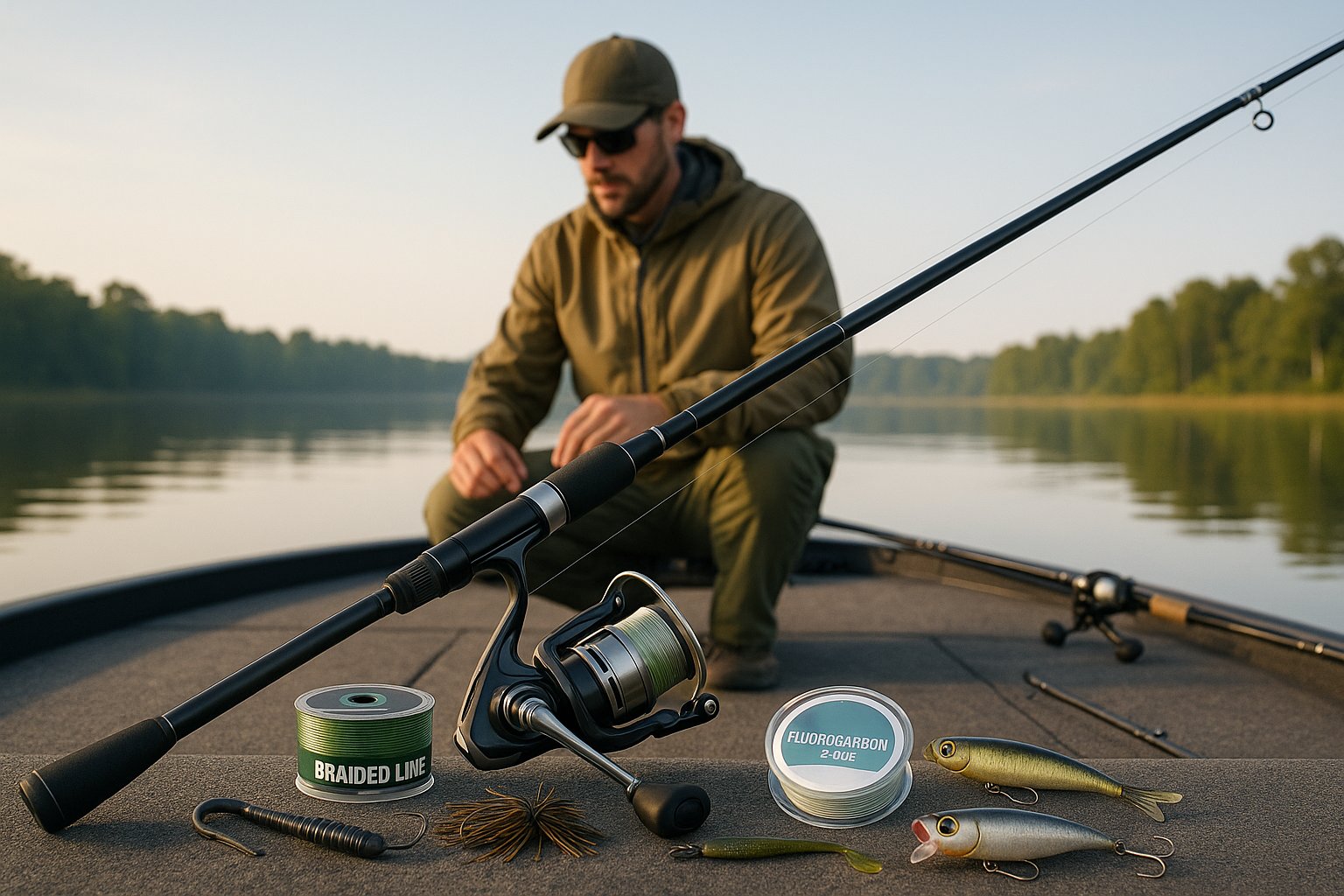
If we're building one all-around bass fishing rod reel setup for beginners, the sweet spot is pretty clear: a 7-foot medium-heavy fast-action spinning or baitcasting combo. That setup covers an enormous range of techniques without boxing us into one style.
For most beginners, a spinning combo is easier to manage. A 6'10" to 7' medium-heavy fast rod paired with a 2500 or 3000 size reel gives us enough backbone for Texas rigs, weightless worms, small jigs, paddletails, and even some topwater baits. Spinning gear also handles lighter lures better and reduces frustration with backlashes. If we're brand new, there's no shame in starting here. In fact, it's smart.
A baitcasting combo shines when we're throwing heavier lures, fishing around thick cover, or wanting more casting control and power. A 7' medium-heavy fast rod with a 7.1:1 gear ratio baitcaster is one of the most versatile setups in bass fishing. That ratio helps us pick up slack quickly, which matters because bass often hit on the fall and move toward us.
Line choice is where many setups go sideways. For a spinning reel, 15- to 20-pound braid with an 8- to 12-pound fluorocarbon leader is hard to beat. Braid casts well, lasts a long time, and improves sensitivity. The fluorocarbon leader adds abrasion resistance and lower visibility. For a baitcaster, 12- to 15-pound fluorocarbon is a great general-purpose option, or 30- to 40-pound braid if we're fishing heavy grass.
Here's a simple breakdown:
-
Best beginner spinning setup: 7' medium-heavy fast rod, 2500 reel, 15 lb braid to 10 lb fluorocarbon leader
-
Best beginner baitcasting setup: 7' medium-heavy fast rod, 7.1:1 reel, 12–15 lb fluorocarbon
-
Heavy cover option: 7' to 7'3" heavy rod, baitcaster, 40–50 lb braid
If we only buy one combo, we'd lean toward a spinning setup unless we already know how to use a baitcaster. It's the best setup for largemouth bass beginners because it's forgiving but still capable. And that's the real goal: a balanced bass fishing gear setup that helps us learn techniques instead of fighting our equipment.
Recommended Lures for Beginners
Beginner lure selection should be boring in the best possible way. We don't need twenty lure categories and a tackle bag that weighs more than a kayak battery. We need a few baits that catch bass in different conditions and teach us core skills.
The first must-have is a Texas-rigged soft plastic worm. A 5-inch stick worm or ribbon-tail worm covers a ton of situations. We can fish it weightless around shallow cover, or add a bullet weight to work deeper edges and brush. It's weed-friendly, affordable, and consistently productive. If we only had one bait for beginner largemouth bass fishing, this would be near the top.
Second, a spinnerbait is ideal when bass are active or the water has some stain. It's easy to fish: cast, retrieve, and vary speed until we find what they want. Spinnerbaits also come through cover better than many treble-hook lures, which saves money and frustration.
Third, a squarebill crankbait helps us cover water and find aggressive fish. It's especially good around shallow wood, rock, and grass edges. The wobble and deflection trigger reaction bites, and for beginners, that's useful because the lure does much of the work.
Fourth, a bladed jig is one of the most reliable search baits in modern bass fishing. It combines vibration, flash, and a clean profile, and it's deadly around grass and shallow cover. Pair it with a soft plastic trailer and keep the retrieve steady.
Fifth, add a topwater frog or popper, not because it's always the most efficient option, but because it teaches timing and makes bass fishing unforgettable. A frog excels over mats and slop. A popper works better in open water, around calm banks, or low-light periods.
A smart beginner lure lineup looks like this:
-
Texas-rigged worm or stick bait
-
Spinnerbait
-
Squarebill crankbait
-
Bladed jig
-
Topwater bait
Keep colors simple. In clear water, use green pumpkin, watermelon, shad, and white. In stained water, lean on black and blue, chartreuse, white, or darker silhouettes. We often overthink color when location and presentation matter more.
This approach gives us a practical freshwater bass gear kit without wasting money on niche lures we're not ready to fish well yet.
Common Mistakes New Anglers Make
Most beginners don't fail because bass fishing is too technical. They struggle because a handful of small mistakes stack up fast.
The first mistake is using the wrong rod for the lure. An ultralight rod with heavy bass lures feels sloppy and underpowered. A broomstick-heavy rod with light soft plastics makes casting miserable. Matching lure weight to rod rating matters more than many people realize.
The second is spooling the wrong line, or too much of it. Line twist on spinning reels, cheap monofilament memory, and overfilled spools all create headaches. If our reel keeps throwing loops, the problem may not be the fish, it may be our line management.
Third: retrieving too fast. This is probably the most common beginner habit. We get excited, so we move the lure before fish can commit. With worms, jigs, and many soft plastics, slower is often better. Not painfully slow all the time, but slower than our instincts tell us.
Another big one is fishing where it's easy instead of where bass live. Open water is comfortable to cast, sure, but largemouth bass usually relate to something: grass, shade, wood, docks, rock transitions, or depth changes. If we aren't occasionally near snaggy-looking cover, we may not be in the best zone.
Beginners also tend to change lures too often. A new bait every five minutes feels productive, but it usually prevents pattern recognition. We need enough time with one lure to learn whether the issue is the bait, the depth, the retrieve, or simply the location.
And then there's setting the hook poorly. On soft plastics, especially Texas rigs, we want to reel down, feel the fish, and deliver a firm hookset. Swinging wildly at the first tap can pull the lure away before the bass fully has it. On moving baits with treble hooks, a sweeping set is often better than a dramatic overhead haymaker.
One more subtle mistake: buying too much gear too soon. We've all seen it, five rods, three boxes of lures, and not much confidence. A tight, dependable bass fishing gear setup teaches more than a giant pile of tackle. Simplicity is underrated, especially early on.
Beginner-Friendly Bass Fishing Setup Recommendations
If we wanted to keep this extremely practical, we'd build around one core combo and one small lure kit. That's enough to catch bass in ponds, reservoirs, neighborhood lakes, and slow rivers across most of the country.
Our top recommendation for a beginner-friendly largemouth bass fishing setup is this:
-
Rod: 7' medium-heavy fast-action spinning rod
-
Reel: 2500 or 3000 size spinning reel
-
Main line: 15 lb braided line
-
Leader: 10 lb fluorocarbon leader
-
Hooks: 3/0 offset worm hooks
-
Weights: 1/8 oz and 3/16 oz bullet weights
-
Lures: 5-inch stick worms, spinnerbaits, squarebill crankbaits, bladed jigs, and one topwater bait
Why this setup? Because it's versatile. We can fish weightless plastics around shallow cover, drag worms along the bottom, skip under docks with some practice, throw reaction baits, and still have enough strength to land solid fish. It's a true all-purpose freshwater bass gear package.
If we're ready for a second setup later, this is the natural upgrade:
-
Rod: 7'2" heavy fast-action baitcasting rod
-
Reel: 7.1:1 baitcaster
-
Line: 40 lb braid
That second combo is ideal for frogs, heavier Texas rigs, and thick vegetation. But we don't need it on day one.
A realistic budget strategy is to spend more on the rod and reel than on a mountain of tackle. A good combo lasts years if we maintain it. Lures get lost. Line gets changed. Rod sensitivity and reel smoothness, though, affect every cast.
If we fish mostly small ponds with light cover, we can even step down slightly to a medium-power spinning rod. But for most people, the medium-heavy fast setup remains the safest recommendation. It's the closest thing to a universal bass fishing rod reel setup for learning the sport.
The bottom line is simple: start with gear that does many things well, then specialize later. That approach helps us become better anglers faster, and usually saves money too.
A good largemouth bass fishing setup doesn't have to be fancy. It has to be balanced, versatile, and easy to use with confidence. If we understand where bass hold, pair that knowledge with a 7-foot medium-heavy combo, and rely on a small set of proven lures, we'll be ahead of a lot of beginners.
That's really the key. Not owning more gear, using the right gear well. Start simple, fish around real cover, slow down when needed, and pay attention to what the bass are telling us. The fish tend to reward that kind of discipline.
Frequently Asked Questions About Largemouth Bass Fishing Setup
What is the best rod and reel setup for a beginner largemouth bass angler?
A 7-foot medium-heavy fast-action spinning rod paired with a 2500 or 3000 size spinning reel is ideal for beginners. This combo handles a wide range of lures and techniques, making it forgiving and versatile for learning bass fishing.
How should I choose line for largemouth bass fishing?
For spinning reels, using 15- to 20-pound braided line with an 8- to 12-pound fluorocarbon leader offers good casting, sensitivity, and abrasion resistance. For baitcasters, 12- to 15-pound fluorocarbon is versatile, or heavier braid (30-40 lb) can work in thick cover.
What are the best beginner lures for largemouth bass fishing?
Start with a simple lure kit: a Texas-rigged soft plastic worm, spinnerbait, squarebill crankbait, bladed jig, and a topwater bait like a frog or popper. These cover different conditions and help develop important fishing skills.
Why is understanding largemouth bass behavior important for setting up my gear?
Largemouth bass relate strongly to cover and change behavior by season, light, and water conditions. A good setup lets you cast accurately near cover and adjust lure presentation based on bass habits, increasing chances of success.
Can I use a baitcasting setup as a beginner for largemouth bass fishing?
While baitcasting gear offers more power and control, beginners often find spinning setups easier to manage. Start with spinning gear to build confidence, then upgrade to baitcasting once you’re comfortable with basic techniques.
How can I avoid common beginner mistakes in largemouth bass fishing setups?
Avoid mismatched rod and lure weights, use proper line to prevent twists and backlash, resist changing lures too often, fish near natural bass cover, retrieve lures at appropriate speeds, and focus on learning with a simple, balanced setup.


