

Lake Trout Fishing Setup: The Deep-Water System We Use to Find and Catch More Lakers
Lake trout demand a depth-focused setup. Their seasonal movement—deep in summer, shallower in spring and fall—requires gear that reaches fish efficiently. An ideal jigging combo pairs a 6'10" to 7'2" medium-heavy fast-action rod with a 3000–4000 reel, 20 lb braid, and a 12–15 lb fluorocarbon leader. Use ¾ to 1½ oz tube jigs, swimbaits, or blade baits. For trolling, use line-counter reels and downriggers to repeat productive depths. Quality electronics are essential for locating suspended fish and bait. Avoid underpowered rods and poor drags. Depth control, sensitivity, and reliable gear matter more than lure color.
Lake trout can make even experienced anglers feel underprepared. One day they're suspended over deep basins, the next they're pinned tight to structure, and if our setup isn't matched to that depth zone, we waste time guessing instead of catching. That's why building the right lake trout fishing setup matters so much.
In this guide, we'll break down how we approach lake trout in deep water, from understanding where fish hold to choosing rods, reels, line, lures, and electronics that actually work together. If we want to learn how to fish lake trout deep water effectively, we need more than a random tackle list, we need a system. By the end, we'll have a practical setup we can use for jigging, trolling, and controlled presentations in the depths where lake trout spend much of the season.
Understanding Lake Trout Depth Behavior
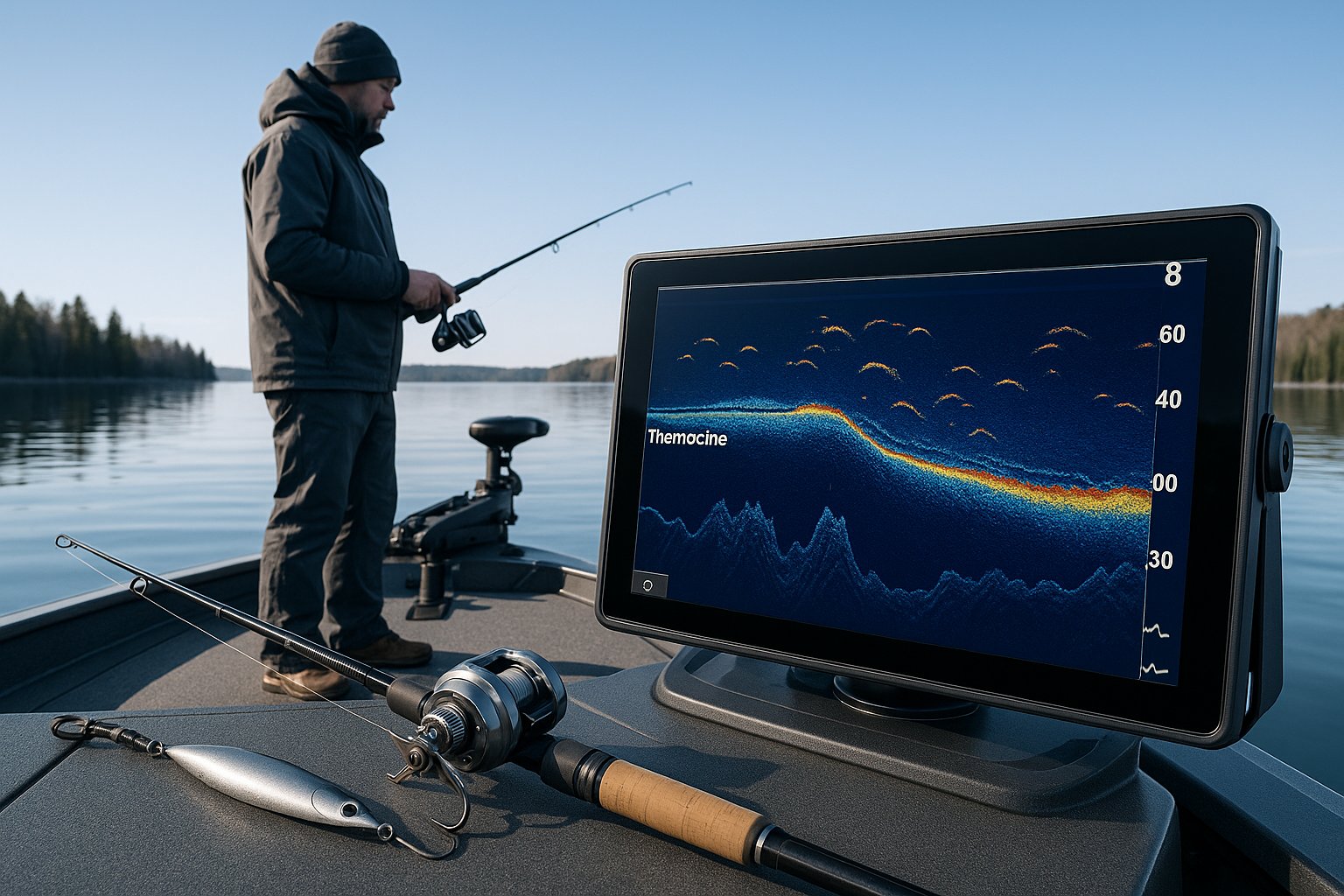
Lake trout are built for cold, oxygen-rich water, so depth is never random. If we want a productive lake trout fishing setup, we first need to understand why these fish move vertically and what that means for presentation.
In many lakes, lake trout spend much of the year in deeper water because that's where temperature and forage line up. During the warm months, they often relate to the thermocline area, deep humps, underwater points, steep breaklines, and bait schools suspended over basins. In spring, especially right after ice-out in northern waters, they may slide shallower because cold water is available throughout the water column. As summer stabilizes, they usually push deeper again.
That depth shift changes everything:
-
Rod power needs to handle heavy lures and deep hooksets.
-
Line choice affects how fast we reach fish.
-
Lure weight determines control at depth.
-
Electronics become essential, not optional.
A common mistake is assuming all deep fish are bottom fish. Lake trout often roam just off bottom or suspend under bait. If we blindly drag lures on the lake floor, we can pass under active fish and never know it. That's one reason anglers who invest in sonar and disciplined depth control consistently out-fish those relying on instinct alone.
Seasonal depth tendencies
While every fishery is different, a useful starting point looks like this:
|
Season |
Typical Depth Pattern |
What It Means for Setup |
|---|---|---|
|
Spring |
Shallow to mid-depth |
Lighter presentations may work |
|
Early Summer |
Transitioning deeper |
Need flexible rod and lure options |
|
Summer |
Deep structure and suspended basins |
True deep water fishing gear matters |
|
Fall |
Can move shallower again, especially near feeding areas |
Mixed-depth approach works best |
We should also pay attention to forage. In lakes with cisco, smelt, or whitefish, lake trout often position around those baitfish rather than around obvious structure alone. So when we ask how to fish lake trout deep water, the real answer starts with finding bait and matching the depth of the food source.
The takeaway is simple: depth behavior tells us what our setup must do. We need gear that gets down fast, stays in the strike zone, and gives us enough sensitivity to detect subtle bites 40, 60, or even 100 feet below the boat.
Gear Setup for Deep Water Fishing
When lake trout are deep, our equipment has to solve three problems: reach depth efficiently, maintain lure control, and deliver solid hooksets with a lot of line out. That's the core of good deep water fishing gear.
For rods, we usually want something in the medium-heavy to heavy range, depending on whether we're jigging or trolling. A rod around 6'6" to 7'6" covers most situations. For vertical jigging, a slightly shorter, faster rod helps us work heavy tubes, swimbaits, blade baits, and bucktail-style jigs with better precision. For trolling, a longer rod helps absorb surges and keeps pressure steady when fish roll or dive near the boat.
Action matters as much as power. A fast or moderate-fast action gives us enough backbone for deep hook penetration without feeling like a pool cue. Lake trout can hit hard, but in cold water they also sometimes load up with a soft, heavy bite. We need a blank sensitive enough to feel that difference.
Rod and reel matching
A balanced combo reduces fatigue, especially when we're jigging all day. For spinning setups, a 3000 to 4000 size reel is a versatile choice. For baitcasting or line-counter trolling applications, low-profile heavy-duty reels or compact conventional reels work well.
If we're specifically looking for the best reel for lake trout, we prioritize:
-
Smooth drag performance
-
Strong gearing under load
-
Good line capacity
-
Cold-weather reliability
-
A comfortable handle for repeated deep retrieves
For jigging, we lean toward a reel with a strong retrieve and minimal flex. For trolling, a line-counter reel can be a major advantage because it helps us repeat productive depths precisely.
What to avoid
Some setups fail before the first fish bites. We avoid:
-
Ultralight rods, which struggle with heavy lures and deep hooksets
-
Overly soft rods, which reduce lure control in current or wind
-
Tiny reels, which slow retrieve speed and limit line capacity
-
Cheap drags, which become obvious when a big laker surges under the boat
Deep presentations magnify small gear flaws. A setup that feels fine in 15 feet can feel terrible in 70.
As a practical baseline, we like this range:
-
Jigging rod: 6'8" to 7'2" medium-heavy fast
-
Jigging reel: 3000–4000 spinning reel
-
Trolling rod: 7' to 8' medium-heavy moderate-fast
-
Trolling reel: line-counter or high-capacity baitcaster/conventional reel
That combination gives us enough versatility to fish steep structure, basin fish, and roaming bait-related trout without rebuilding our entire system every trip.
Line and Lure Considerations
Line and lure choices determine whether our presentation gets to fish quickly, stays there, and moves in a way lake trout actually want to eat. This is where many otherwise solid setups lose efficiency.
For most deep presentations, we prefer braided main line because it has thin diameter, low stretch, and excellent sensitivity. In deep water, that sensitivity is a big deal. It helps us feel bottom contact, subtle follows, slack-line hits, and the difference between rock, bait, and a fish simply loading up on the lure. A main line in the 15- to 30-pound braid class covers most lake trout jigging situations.
We usually add a fluorocarbon leader, often in the 10- to 20-pound range depending on lure size, water clarity, and fish behavior. Fluorocarbon gives us abrasion resistance and a little stealth, while braid keeps the whole system responsive.
Braid vs. monofilament
Monofilament still has a place, especially in some trolling setups, because its stretch can cushion violent strikes. But for jigging deep fish, braid is usually the better tool. Less stretch means better hooksets at depth and more direct control over the lure.
Lure categories that work
When we think about how to fish lake trout deep water, lure weight and profile matter more than lure color debates. We want baits that get down efficiently and imitate common forage.
Top options include:
-
Tube jigs for bottom-related or structure-oriented fish
-
Paddle-tail swimbaits for suspended trout feeding on cisco or smelt
-
Bucktail jigs for active fish that respond to lift-drop action
-
Blade baits when we want a compact profile and fast sink rate
-
Spoons for both jigging and trolling applications
-
Deep-diving trolling plugs when fish are spread out and covering water matters
A good rule is to match lure weight to depth, drift, and boat control. In calm conditions, a 3/4-ounce lure may be enough. In wind, current, or 80-plus feet of water, we may need 1 to 2 ounces or more to stay vertical.
Practical lure selection tips
We keep the system simple:
-
Start natural colors when fish are feeding on baitfish
-
Go brighter in stained water or low light
-
Increase weight before changing everything else
-
Watch how fish react on sonar before switching styles
One of the biggest mistakes in a lake trout fishing setup is fishing too light. If the lure never stays in the strike zone, perfect color and action won't save us. Depth control beats theory almost every time.
Using Electronics and Depth Control
If we had to pick one factor that separates average lake trout anglers from consistently good ones, it would be electronics. Deep lake trout fishing is hard to do efficiently without seeing bait, structure, and fish position in real time.
A quality sonar unit helps us answer the questions that matter most:
-
Are fish on bottom or suspended?
-
Is bait present?
-
How deep is the active zone?
-
Are fish following but not committing?
-
Are we staying at the right depth during drifts or trolling passes?
Traditional 2D sonar remains very useful for tracking lure depth and identifying fish under the boat. Down imaging and side imaging add more detail around structure, bait schools, and edges. GPS mapping is equally important because lake trout often relate to subtle offshore features that are impossible to line up consistently by eye alone.
Vertical control while jigging
When jigging, our goal is usually to stay as vertical as possible. That means we monitor wind, drift speed, and line angle constantly. If the line scopes too far behind the boat, the lure rises out of the strike zone and sensitivity drops fast.
To correct that, we can:
-
Increase lure weight
-
Reposition the boat upwind
-
Use the trolling motor to slow drift
-
Shorten our line angle and re-drop
Forward-facing sonar can be helpful in some fisheries, but even standard sonar is enough if we use it well. We don't need every premium feature to become more effective: we do need discipline in reading depth and reacting to what the screen shows.
Depth control while trolling
Trolling requires repeatability. If fish are showing at 52 feet and we're consistently running 35 or 70, we're not really fishing for them. This is why line-counter reels, dive charts, weighted lines, snap weights, downriggers, or lead core systems can all be valuable depending on the lake and local style.
A simple process works:
-
Mark fish or bait depth on electronics.
-
Choose a presentation that can reliably reach that zone.
-
Track speed closely.
-
Repeat successful passes with precision.
Speed matters because lure action and running depth both change with boat speed. Small adjustments, say from 1.8 to 2.2 mph, can dramatically change results.
For anyone building deep water fishing gear, electronics should be viewed as part of the setup, not an accessory. They help us spend less time wondering and more time presenting lures where lake trout actually live.
Recommended Setup for Lake Trout
If we want one dependable recommended setup for lake trout that covers the majority of deep-water situations, we'd build it around sensitivity, control, and enough power to handle heavy fish and heavy lures without overdoing it.
Here's the setup we'd recommend for most anglers targeting lake trout in deep water:
Our go-to jigging setup
-
Rod: 6'10" to 7'2" medium-heavy fast-action spinning rod
-
Reel: 3000 or 4000 size spinning reel with smooth drag
-
Main line: 20-pound braid
-
Leader: 12- to 15-pound fluorocarbon, 6 to 10 feet long
-
Primary lures: 3/4- to 1 1/2-ounce tube jigs, swimbaits, blade baits, and spoons
Why it works: this setup is light enough to fish all day but strong enough for deep hooksets, fast drops, and fish that surge at boatside. It's also forgiving for anglers who are still learning how to fish lake trout deep water.
Our go-to trolling setup
-
Rod: 7' to 8' medium-heavy moderate-fast trolling rod
-
Reel: line-counter reel or high-capacity baitcaster/conventional reel
-
Main line: 20- to 30-pound braid or mono depending on system
-
Leader: fluorocarbon leader matched to lure type and water clarity
-
Presentation tools: deep-diving plugs, spoons, attractor rigs, snap weights, lead core, or downriggers
Why it works: this setup helps us repeat depth, cover water, and stay in the zone when fish are spread out over basins or long structure edges.
Simple buying priorities
If budget matters, we'd spend in this order:
-
Reliable electronics
-
A quality rod with the right power/action
-
A smooth, durable reel
-
Good braid and leader material
-
A focused lure selection instead of dozens of random baits
That order may surprise some anglers who obsess over lure color, but it reflects reality. A modest lure selection in the right depth catches more fish than a giant tackle bag paired with poor depth control.
Final setup checklist
Before launch, we want to know:
-
What depth range are fish likely using today?
-
Are we jigging, trolling, or both?
-
Can our lure stay in the strike zone?
-
Can our reel recover line efficiently from depth?
-
Can our electronics confirm fish position?
A good lake trout fishing setup is not just a list of gear. It's a matched system. When rod, reel, line, lure, and electronics all support the same depth-focused plan, our odds go up fast.
Lake trout reward precision. If we build for depth, maintain control, and let fish location drive our choices, we'll fish more efficiently, and catch more of the right fish in the water column.
In the end, the best setup is the one that helps us consistently reach active trout and present confidently once we get there. Start with a balanced deep-water combo, pair it with braid and proven lures, use electronics to stay honest, and refine from there. That approach works across a wide range of lakes, seasons, and skill levels, and it gives us a strong foundation every time we chase lakers.
Lake Trout Fishing Setup FAQs
What is the ideal rod and reel setup for deep water lake trout fishing?
A medium-heavy, fast-action spinning rod between 6'8" and 7'2", paired with a 3000–4000 size spinning reel with smooth drag, provides balance, sensitivity, and power needed for deep water lake trout jigging.
How does lake trout depth behavior affect fishing setup choices?
Lake trout shift depth seasonally, often staying deep in warm months and moving shallower in spring or fall. This affects rod power, lure weight, line choice, and electronics needed to reach and effectively fish the correct depth zones.
Why is braided line preferred over monofilament for lake trout deep water fishing?
Braided line has a thinner diameter, less stretch, and higher sensitivity than monofilament, helping anglers feel subtle bites and maintain better lure control when fishing deep where detecting strikes is crucial.
How do electronics improve the effectiveness of a lake trout fishing setup?
Electronics like sonar and GPS mapping help identify fish depth, bait presence, and underwater structure, allowing precise lure placement and depth control that greatly increase catch success for deep water lake trout.
What are the best lure types for deep water lake trout fishing?
Effective lures include 3/4 to 1 1/2-ounce tube jigs, paddle-tail swimbaits, blade baits, bucktail jigs, spoons, and deep-diving trolling plugs, chosen to match forage and conditions for efficient depth control and fish attraction.
How should I control lure depth while jigging and trolling for lake trout?
While jigging, maintain vertical lure position by managing line angle, drift speed, and lure weight. When trolling, use line counters, downriggers, or weighted lines combined with electronics to repeatedly fish precise depths where trout are detected.
Reel Type Comparison
Use this overview to understand broad differences between reel types. Individual product specifications and intended uses vary by model.
| Reel Type | Best For | Control | Learning Curve |
|---|---|---|---|
| Spinning | Versatile casting | Easy handling | Approachable |
| Baitcasting | Precise lure placement | Direct spool control | More practice |
| Round Baitcasting | Trolling and offshore setups | Controlled line retrieval | Technique dependent |
 Featured

