

Fishing Reel Gear Ratios, Demystified: How to Pick the Right Speed for Every Technique
What does gear ratio mean on a fishing reel? Learn fast vs slow ratios, which gear ratio works best for bass fishing, crankbaits, jigs, and frogs, and why inches per turn (IPT) matters more than the number on the box.
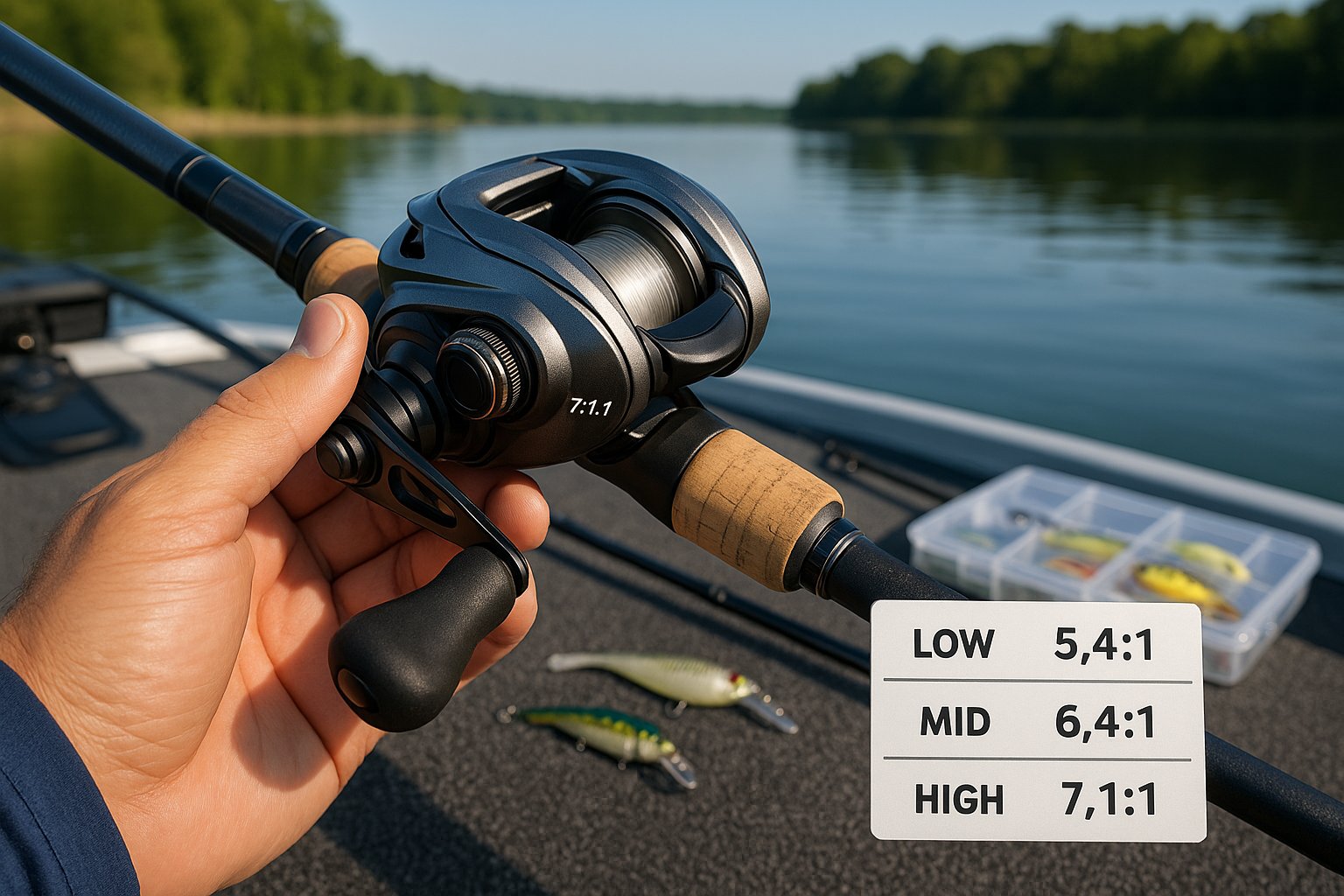
Choosing a fishing reel sounds simple until we hit the spec sheet and see numbers like 5.4:1, 7.1:1, or 8.3:1. That's where many anglers pause, and where the wrong choice can make a favorite technique feel awkward, tiring, or just less effective. If we've ever wondered whether a faster reel will help us catch more fish, or whether a slower one gives us better power, the answer starts with understanding gear ratio fishing reel basics.
In this guide, we'll break down what gear ratio means, compare fast vs slow reel gear ratio options, and match common ratios to real fishing techniques. We'll also look at how gear ratio affects retrieval speed and control, because the number on the reel doesn't tell the whole story. By the end, we'll know what gear ratio for different fishing techniques makes the most sense, and how to choose a reel with confidence.
What Does Gear Ratio Mean in Fishing Reels?
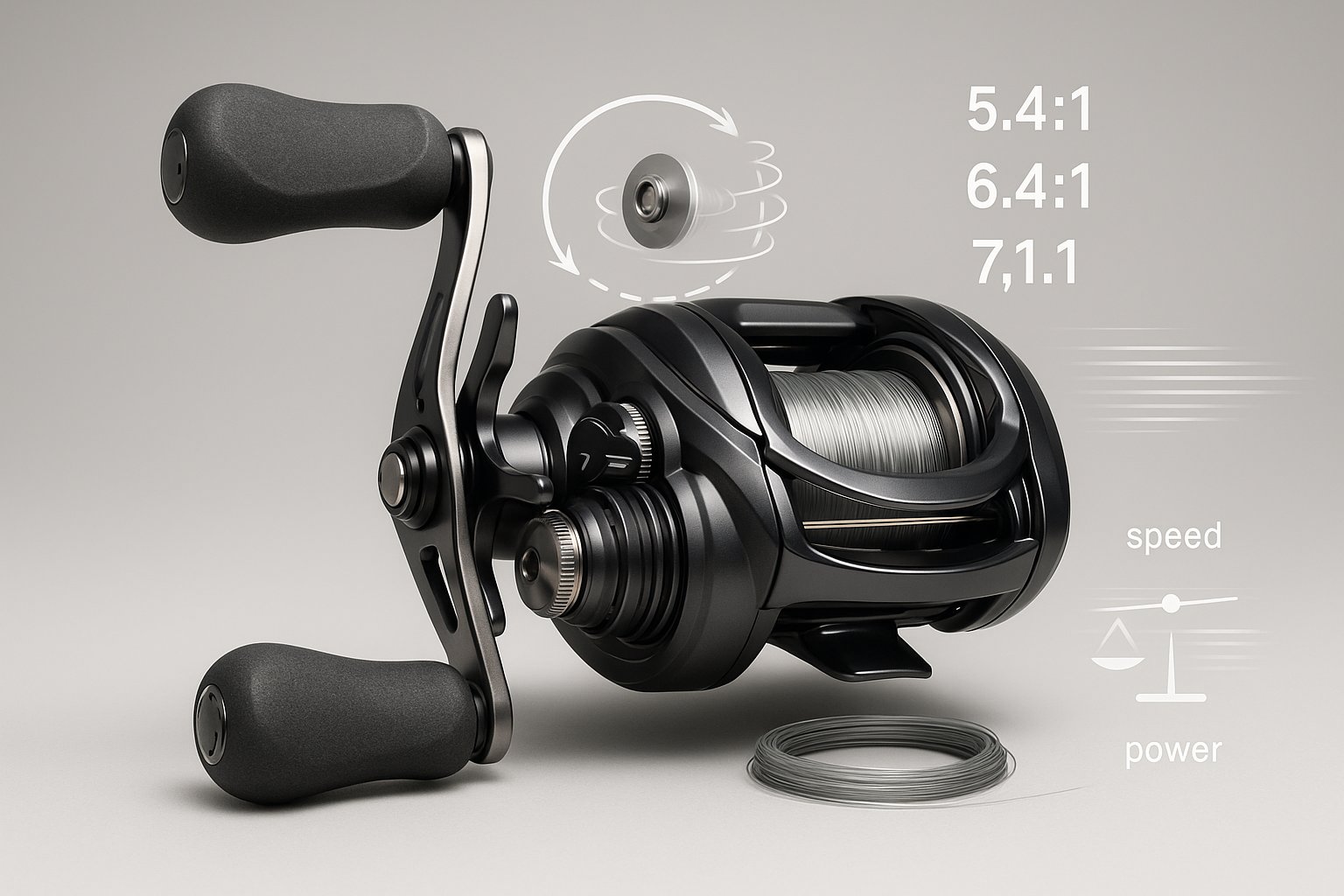
A reel's gear ratio tells us how many times the spool turns with one full turn of the handle. So if a reel has a 6.4:1 gear ratio, the spool rotates 6.4 times every time we crank the handle once.
That's the core of gear ratio explained in the simplest terms: it's a measurement of mechanical relationship between the handle and the spool. Higher numbers generally mean a faster reel. Lower numbers generally mean a slower, more powerful reel.
But there's an important nuance. Gear ratio is not exactly the same thing as inches per turn (IPT). IPT tells us how much line the reel actually picks up with one handle turn. Two reels can have similar gear ratios but different spool sizes, which can change real-world retrieval speed. That's why experienced anglers often look at both.
Here's a quick way to think about common ranges:
-
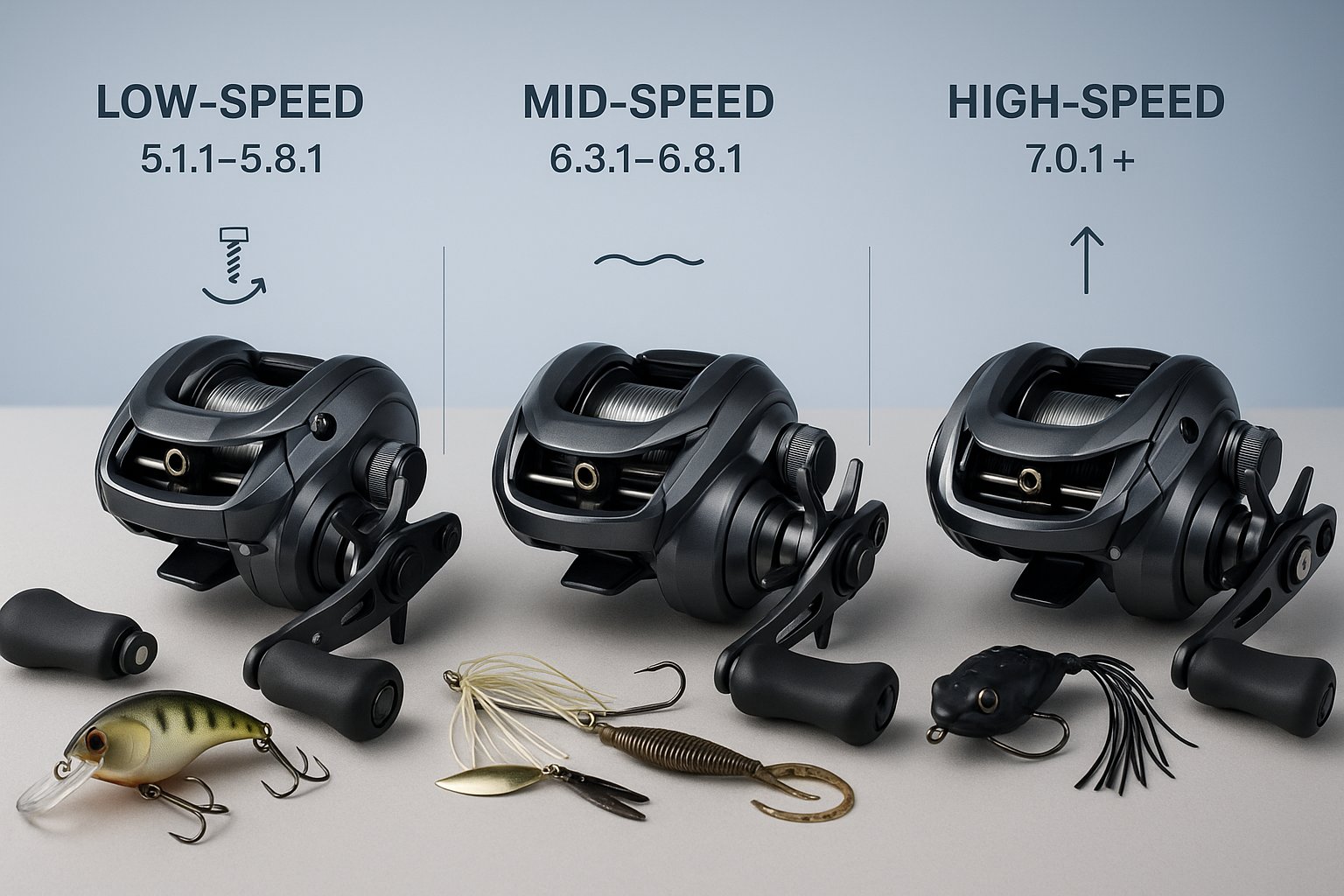
Low gear ratio: around 5.1:1 to 5.8:1
-
Mid gear ratio: around 6.0:1 to 6.8:1
-
High gear ratio: around 7.0:1 and above
Each range has a job.
A lower ratio gives us more torque. That helps when we're pulling resistance-heavy lures like deep-diving crankbaits or fighting fish with steady pressure. A higher ratio gives us more speed, which helps when we need to pick up slack line quickly or make repeated casts efficiently.
For example, if we're working a frog over matted vegetation, we may want a faster reel so we can catch up to a fish that blows up and runs toward us. On the other hand, if we're grinding a big crankbait all day, a slower reel can reduce fatigue and keep the lure in its ideal action zone.
So when we talk about a gear ratio fishing reel, we're really talking about how the reel balances speed, power, and lure control. It's not about one ratio being universally better. It's about choosing the one that matches how we fish most often.
Fast vs Slow Gear Ratios Explained
The easiest way to compare fast vs slow reel gear ratio choices is to ask one question: do we need speed or cranking power?
Fast gear ratios, usually 7.0:1 and higher, pick up line quickly. That makes them ideal for presentations where we need to move line in a hurry, recover from slack, or make lots of casts in a short time. They shine in situations where lure speed is important, but even more so when line management matters.
A fast reel is useful for:
-
Frogging
-
Pitching and flipping
-
Jigs and soft plastics
-
Buzzbaits and some spinnerbait applications
-
Techniques where fish often strike and run toward us
The downside? Fast reels can make it easier to overwork a lure. If we're not careful, we may retrieve too quickly, especially with moving baits that perform best at a controlled pace.
Slow gear ratios, usually 5.1:1 to 5.8:1, do the opposite. They trade speed for torque and rhythm. That helps us keep a steady retrieve and reduces strain when pulling baits with lots of water resistance.
Slow reels are often better for:
-
Deep-diving crankbaits
-
Large bladed lures
-
Umbrella rigs
-
Some swimbait applications
-
Presentations where consistency matters more than speed
The main drawback is that slower reels can feel limiting when we need to catch up quickly. If a fish charges the boat or swims straight at us, line pickup can become an issue.
Then there's the middle ground. Mid-speed reels, roughly 6.3:1 to 6.8:1, are the all-arounders. If we want one reel to handle multiple techniques, this range is often the safest bet. It offers enough reel speed fishing versatility for spinnerbaits, chatterbaits, Texas rigs, swim jigs, and more.
A practical way to frame it is this:
|
Gear ratio range |
General feel |
Best use |
|---|---|---|
|
5.1:1–5.8:1 |
Powerful, controlled |
Resistance baits |
|
6.0:1–6.8:1 |
Balanced, versatile |
Multi-technique setups |
|
7.0:1+ |
Quick, responsive |
Slack-line and reaction control |
In short, fast reels help us recover line and stay aggressive. Slow reels help us stay smooth and efficient. Neither is "better" on its own: the best choice depends on how the lure works and how fish are likely to strike.
Best Gear Ratios for Different Fishing Techniques
If we want to know what gear ratio for different fishing techniques makes sense, the best approach is to match the reel to the lure's job in the water, not just the species we're targeting.
Crankbaits
For shallow to deep crankbaits, a 5.1:1 to 6.2:1 reel is usually ideal. Cranks create drag, especially deep divers, and slower gearing helps us maintain a steady retrieve without burning ourselves out. It also keeps us from unintentionally speeding up the bait.
Spinnerbaits and Chatterbaits
A 6.3:1 to 7.1:1 reel works well here. We want enough speed to adjust cadence, burn the bait when needed, and recover line after deflections or missed strikes. For heavier blades or slow-rolling, leaning slightly slower can help.
Jigs and Texas Rigs
For bottom-contact lures, a 7.1:1 or faster reel is a common choice. Why? We're often not using the reel to move the bait much. We're moving the rod, then using the reel to pick up slack quickly and stay connected. That extra speed can make hooksets cleaner and presentations more efficient.
Frogs and Heavy Cover Fishing
This is classic high-speed territory: 7.1:1 to 8.5:1. When a fish explodes in grass and heads our way, or deeper into cover, we need fast line pickup and immediate control.
Topwater Walking Baits
A 6.3:1 to 7.3:1 reel is a strong fit. We usually work the bait with the rod tip, but a moderately fast reel helps us gather slack after each twitch without making the bait race unnaturally.
Swimbaits
This depends on size and style. Smaller paddle tails often do well with 6.3:1 to 7.1:1. Bigger, high-resistance swimbaits may feel better on a 5.8:1 to 6.3:1 reel that offers more power.
Best gear ratio for bass fishing
If we had to name the most versatile best gear ratio for bass fishing, it would usually be around 6.8:1 to 7.1:1 for general use. Bass anglers often need a mix of casting efficiency, slack pickup, and enough control for several lure categories.
A useful shortcut:
-
Moving baits with resistance: go slower
-
Bottom-contact and slack-line techniques: go faster
-
One-rod versatility: stay in the middle
That simple rule won't cover every scenario, but it gets us very close in the real world.
How Gear Ratio Affects Retrieval Speed and Control
Gear ratio affects more than raw speed. It changes how a reel feels under load, how precisely we can present a lure, and how efficiently we respond after a strike.
Retrieval speed isn't just the number on the reel
As mentioned earlier, a high ratio doesn't tell the whole story. Inches per turn (IPT) matters too. A larger spool collects more line per rotation than a smaller one. So when we compare reels for reel speed fishing, we should look beyond the ratio label and check actual line pickup.
This matters most when we're choosing between reels that look similar on paper. A 7.1:1 reel with lower IPT may not feel dramatically faster than another model with slightly different spool dimensions.
Faster reels improve slack-line management
Techniques like worm fishing, jig fishing, frogging, and some topwater presentations create slack line by design. In these cases, the reel's job is often to recover line quickly, not drag the bait continuously. That's where a faster ratio helps us stay tight, detect bites sooner, and hit fish before they throw the lure.
Slower reels improve consistency and reduce fatigue
With crankbaits, oversized spinnerbaits, and other pull-heavy lures, a slower reel helps us stay in rhythm. We don't have to fight the reel as much, and our hands, wrists, and forearms notice the difference after a full day.
It also gives us a little built-in speed control. That sounds minor, but it's a big advantage when fish want a very specific pace.
Control depends on the technique
A fast reel can actually give us more control when the presentation is driven by rod movement and line management. But for steady-moving lures, that same fast reel can reduce control if it tempts us to retrieve too quickly.
So the right question isn't, "Which gear ratio is fastest?" It's, "Which gear ratio gives us the best control for this lure?"
A few common mistakes to avoid:
-
Choosing the fastest reel for every setup
-
Ignoring IPT and spool size
-
Using low gear ratios for techniques that require rapid slack pickup
-
Assuming gear ratio alone determines casting performance
Done right, the correct ratio makes everything feel easier: better cadence, cleaner hooksets, less fatigue, and more confidence. And confidence catches fish, maybe not on a spec sheet, but definitely on the water.
Recommended Reel Gear Ratios for Different Anglers
The best reel ratio also depends on who we are as anglers. Experience level, target species, and how specialized our setups are all matter.
For beginners
If we're newer to baitcasters or trying to build a versatile setup, a 6.3:1 to 7.1:1 reel is usually the smartest place to start. It covers the widest range of techniques without forcing us into a niche. We can fish spinnerbaits, worms, jigs, swim jigs, chatterbaits, and light topwater effectively enough while we learn what styles we prefer.
If we want one answer for "gear ratio fishing reel for beginners," this is it: go mid-range.
For bass anglers building multiple combos
Once we're technique-specific, it makes sense to spread ratios across the lineup:
-
5.4:1 to 6.2:1 for crankbaits and other high-resistance moving baits
-
6.3:1 to 6.8:1 for all-purpose moving bait setups
-
7.1:1 to 8.3:1 for jigs, frogs, flipping, and pitching
This setup gives us better specialization without overcomplicating buying decisions.
For freshwater multi-species anglers
If we fish bass, pike, walleye, and inshore-style freshwater techniques with the same general gear, a 6.2:1 to 6.8:1 reel is often the best compromise. It balances speed, control, and comfort across a broad mix of presentations.
For power-fishing anglers
If our style is aggressive, covering water fast, making repeated casts, and fishing reaction baits or heavy cover, a 7.1:1+ reel will probably suit us. It helps maximize efficiency, especially when every second counts during a hot bite window.
For finesse and pace-focused anglers
If we prefer deliberate retrieves, deep cranking, or slower-moving presentations where cadence is everything, lower ratios can improve feel and consistency. We may simply fish better when the reel naturally slows us down.
Here's a simple recommendation table:
|
Angler type |
Recommended ratio |
|---|---|
|
Beginner |
6.3:1–7.1:1 |
|
One-reel generalist |
6.3:1–6.8:1 |
|
Crankbait specialist |
5.1:1–6.2:1 |
|
Jig / frog angler |
7.1:1–8.5:1 |
|
Multi-technique bass angler |
3-reel spread across low, mid, high |
If we're unsure, we don't need to overthink it. Start with a versatile mid-speed reel, fish it for a season, and pay attention to when it feels too fast or too slow. That feedback will tell us more than any spec chart.
Frequently Asked Questions About Gear Ratio Fishing Reels
What does gear ratio mean in a fishing reel?
Gear ratio in a fishing reel indicates how many times the spool rotates with one full turn of the handle. For example, a 6.4:1 gear ratio means the spool turns 6.4 times per handle turn, affecting how fast or powerful the retrieval is.
How does gear ratio affect fishing reel speed and power?
Lower gear ratios (around 5.1:1 to 5.8:1) provide more torque and power, ideal for pulling heavy lures. Higher gear ratios (7.0:1 and above) offer faster line retrieval, better for techniques requiring quick line pickup and slack management.
What gear ratio is best for bass fishing?
A versatile gear ratio for bass fishing typically ranges between 6.8:1 and 7.1:1. This mid to high range balances casting efficiency, line retrieval speed, and control suitable for various bass fishing techniques.
Which gear ratio should beginners choose for a fishing reel?
Beginners are advised to start with a mid-range gear ratio between 6.3:1 and 7.1:1. This range supports a wide variety of fishing techniques, making it easier to learn and adapt to different conditions.
Why is inches per turn (IPT) important alongside gear ratio?
IPT measures how much line a reel retrieves with each handle turn and depends on spool size. Two reels with the same gear ratio can feel different because a larger spool picks up more line, impacting real-world retrieval speed.
Can a fast gear ratio reel reduce lure control?
Yes, faster gear ratios can sometimes lead to over-retrieving, especially with lures that work best at a steady pace, reducing control. Choosing the right gear ratio depends on the lure type and desired presentation speed.
 Featured

