

Drag Setting for Big Fish: The Practical Guide to More Hookups and Fewer Break-Offs
Setting drag properly is the difference between landing a trophy fish and watching it snap your line. The basic formula: start at 25% to 33% of your line's breaking strength—about 7.5 to 10 pounds for 30-pound line. Use a spring scale for accuracy, then adjust during the fight. Tighten slightly when the fish tires or heads for structure; loosen during sudden surges or near the boat. Avoid common mistakes like setting drag too tight from the start or clamping down in panic. Smooth, consistent pressure wins fights. For serious applications, choose reels with carbon fiber drags, rigid frames, and good heat dissipation.
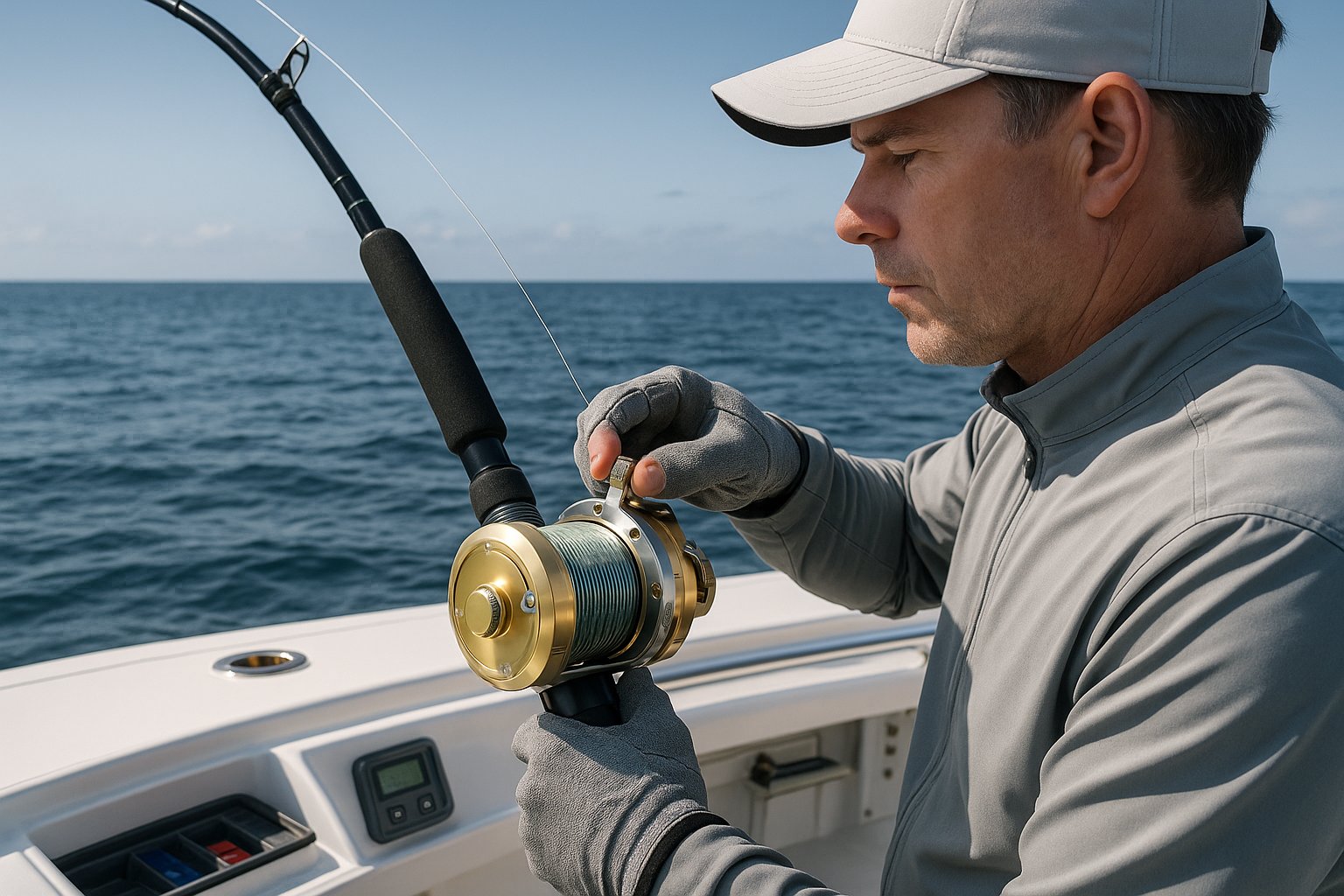
Hooking a powerful fish is only half the battle. The moment it surges, dives, or turns broadside in current, our drag setting becomes the difference between a clean landing and the sickening snap of a broken line. Too tight, and we pop leaders, bend hooks, or pull trebles. Too loose, and we give up control, let fish reach structure, and waste precious pressure.
In this guide, we'll break down drag setting big fish in practical terms. We'll cover why drag matters, the basic formula most anglers use, how to make smart adjustments during the fight, the common mistakes that lead to line break, and what to look for in reels built for serious pressure. Whether we're targeting tuna, catfish, muskie, striped bass, or giant carp, the goal is the same: apply maximum safe pressure without crossing the line, literally.
Why Drag Is Critical for Big Fish
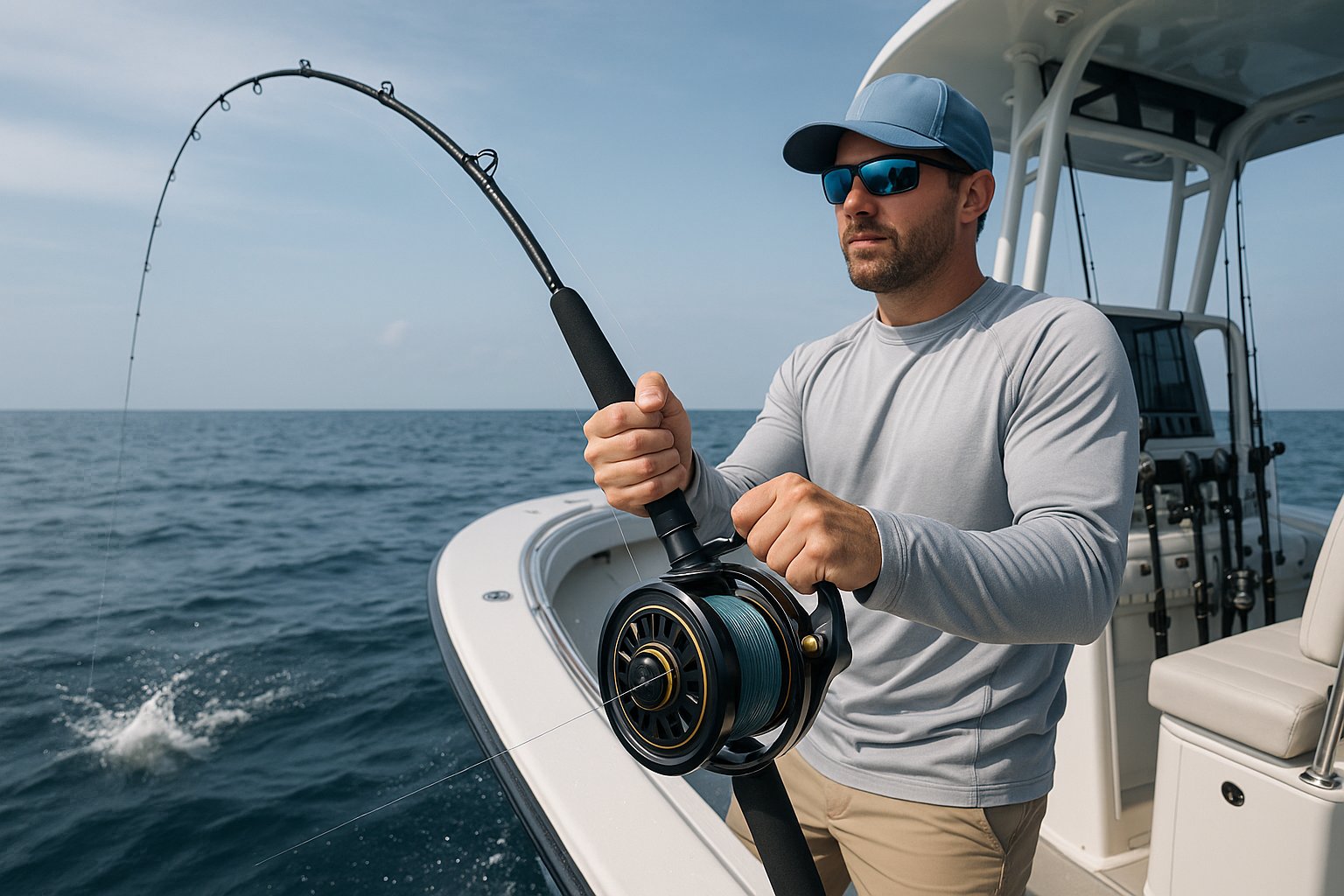
When we hook a large fish, drag is the reel system that manages force between the fish and our line. It lets line leave the spool under controlled tension instead of forcing the rod, knot, leader, or hook to absorb every violent run at once. That control is why drag matters so much when fighting heavy, fast, or stubborn fish.
A big fish doesn't pull with a steady, predictable load. It surges. It changes angle. It uses current, depth, and structure. Even a fish that weighs less than our line rating can create sharp pressure spikes high enough to break line if the drag is locked down too hard. Good drag smooths those spikes out.
Here's what proper drag helps us do:
-
Protect line and leader from sudden shock loads
-
Keep steady pressure on the fish without overloading tackle
-
Reduce pulled hooks, especially with treble-hook lures or light-wire hooks
-
Prevent the fish from gaining too much slack during erratic runs
-
Wear the fish down efficiently instead of fighting it randomly
This is especially important in strong drag fishing situations, where we need real stopping power but still want a smooth release under load. Think of amberjack near wrecks, salmon in current, or big catfish around timber. In those fights, the best drag isn't just powerful, it's consistent.
A lot of anglers focus on rod power and line strength first. Fair enough. But even heavy braid doesn't save us if the drag sticks, surges, or starts too tight. In fact, braid makes proper drag even more important because it has so little stretch. With monofilament, the line itself can absorb some shock. With braid, the reel and rod do far more of that work.
We also need to remember that a reel's maximum drag number isn't the same as a useful fishing setting. A reel advertised with 30 pounds of drag doesn't mean we should fish 30 pounds of drag. Real-world performance depends on smooth startup inertia, heat resistance, spool fill, and how well the drag stays consistent during a long run.
In simple terms: drag is our shock absorber and pressure governor. If we want to know how to set drag for large fish, we need to think less about the biggest number on the box and more about controlled, repeatable pressure that matches our line, rod, hooks, and target species.
Basic Drag Setting Formula
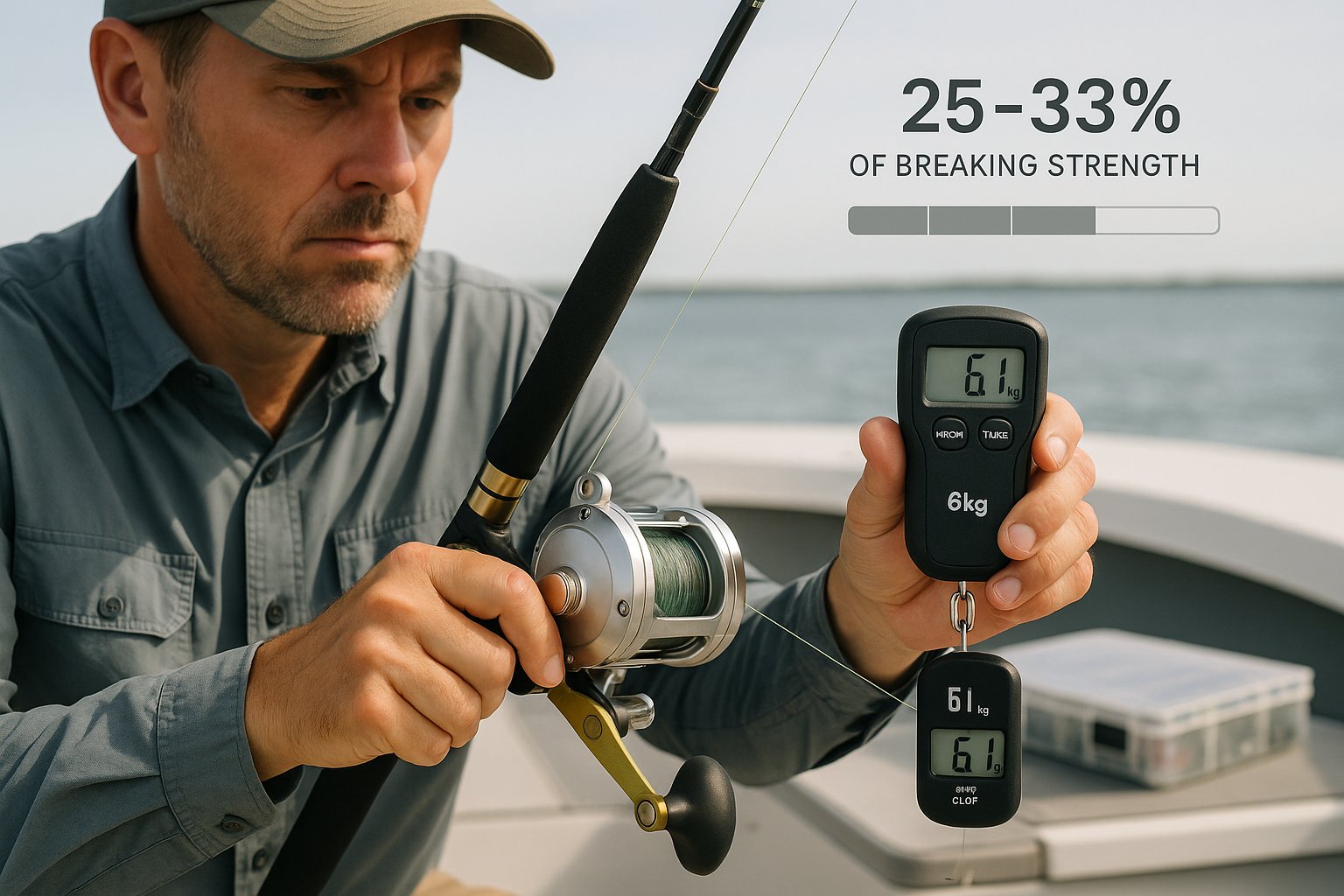
The standard starting point for drag setting big fish is simple: set drag to about 25% to 33% of the line's breaking strength. That rule gives us enough pressure to tire fish efficiently while leaving a safety margin for sudden runs, weak knots, line wear, and rod angle changes.
The quick formula
-
Light starting point: 25% of line strength
-
Common general range: 25%–30%
-
Heavier max starting point for strong setups: about 33%
Examples:
|
Line rating |
Conservative drag |
Common drag range |
|---|---|---|
|
10 lb |
2.5 lb |
2.5–3.3 lb |
|
20 lb |
5 lb |
5–6.6 lb |
|
30 lb |
7.5 lb |
7.5–10 lb |
|
50 lb |
12.5 lb |
12.5–16.5 lb |
|
80 lb |
20 lb |
20–26 lb |
That said, the line label is only part of the story. Knots reduce actual breaking strength. Abrasion weakens line. Fluorocarbon leaders behave differently from braid. Rod action changes how much shock the system absorbs. So we should treat the formula as a baseline, not gospel.
How we actually set it
The most accurate method is using a spring scale or digital luggage scale:
-
Rig the rod and reel exactly as we'll fish it.
-
Run line through the guides and tie it to the scale.
-
Hold the rod at a realistic fighting angle.
-
Pull steadily until the drag slips.
-
Adjust until it slips at our target pressure.
If we're fishing 30-pound line and want 25%, we aim for about 7.5 pounds of pull before line starts coming off.
Without a scale, we can still get close, but it's guesswork. Hand-pulling line off the reel tells us very little unless we've done it often with known loads. For expensive trips or powerful fish, a scale is worth carrying.
Species and setup matter
We should go toward the lower end of the range when:
-
Using treble hooks
-
Fishing light-wire hooks
-
Using rods with softer actions
-
Fighting fish prone to sudden runs
-
Fishing around inexperienced crew or bank-side obstacles
We can go a bit higher when:
-
Using strong single hooks
-
Fishing heavy braid with a short, stout rod
-
Targeting fish that must be turned quickly from structure
-
Using reels known for smooth, heat-stable drags
One more thing many anglers miss: drag pressure changes as the spool empties. As line peels off, spool diameter shrinks, and effective drag pressure often increases. So the drag that felt perfect at the start of the fight may become much stronger during a long run. That's one reason conservative initial settings are often smarter than heroic ones.
If we want reliable fishing drag adjustment tips, this is the core principle: start with a measured baseline, then let the fight tell us whether we need more or less pressure.
Adjusting During the Fight
Even a perfect starting drag won't stay perfect through the entire fight. Fish change depth, direction, and leverage. Our line angle changes. The amount of line left on the spool changes too. So part of landing big fish consistently is knowing when to leave the drag alone, and when to make a controlled adjustment.
When to tighten the drag
We can increase drag slightly when:
-
The fish has stopped making explosive runs
-
We need to turn it away from rocks, timber, bridge pilings, or motors
-
It's circling under the boat and we need more lift and control
-
The initial setting is clearly too light and we're gaining no line
The key word is slightly. Big drag jumps break line. We want small changes, then a short evaluation. A quarter-turn can be a lot on some reels.
When to loosen the drag
We should back it off when:
-
The fish makes a sudden boatside surge
-
We see the rod heavily overloaded at a steep angle
-
We're using light leader or suspect abrasion damage
-
Hook hold seems marginal
-
The drag starts feeling sticky or jerky under load
This is especially important near the landing stage. Plenty of fish are lost in the last few seconds because adrenaline takes over and we clamp down when the fish is most likely to lunge.
Best practices during the fight
A few habits make real-world drag management much better:
-
Set before the fight whenever possible. We don't want to guess under stress.
-
Use the rod and reel together. Pump and recover line smoothly instead of winching nonstop.
-
Avoid palming the spool carelessly. Extra hand pressure can instantly exceed safe drag.
-
Keep line angle clean. Side pressure is useful, but extreme angles plus high drag create problems fast.
-
Communicate on a boat. If someone is changing boat position, they need to tell the angler.
Star drag vs lever drag adjustments
With star drag reels, adjustments are usually more incremental and sometimes harder to judge during chaos. We should make tiny changes only.
With lever drag reels, it's easier to move between a preset strike setting and either lighter or heavier pressure. That's a major reason offshore anglers like them for large, powerful species. They're predictable.
A simple in-fight approach
A practical system works well:
-
Start at a measured baseline before the hookup.
-
Fight from that setting through the fish's strongest first run.
-
Add pressure only if needed to gain control or stop structure.
-
Back off slightly near the boat or bank when last-second surges are likely.
In other words, we don't "set and forget" drag, but we also don't fiddle with it every 20 seconds. Calm, intentional adjustments beat constant tweaking. That's the sweet spot for how to set drag for large fish in real conditions.
Mistakes That Lead to Line Break
Most break-offs blamed on "bad luck" are really drag or pressure-management mistakes. The line usually tells the truth later, frayed near structure, popped at the knot, or snapped during a surge that the system should have absorbed.
Setting drag too tight from the start
This is the classic error. We want to stop a big fish instantly, so we crank down hard. Then the first run hits, the drag hesitates for a fraction of a second, and something gives. Usually the weakest point in the system gives first:
-
The knot fails
-
The leader breaks
-
A hook tears out
-
A light rod is overloaded
Heavy drag has its place, but only when the entire setup is built for it.
Ignoring knot and leader reality
A "30-pound setup" rarely means every part of the system truly holds 30 pounds. Knots often reduce strength. So does abrasion. So does UV-aged mono. If we calculate drag from perfect lab-rated line but fish with a nicked leader, we're living on borrowed time.
A good habit is to re-tie after hard fights, lure snags, or any contact with rock, shell, timber, or teeth. It sounds basic because it is basic, and it saves fish.
High-sticking the rod
Even with a reasonable drag, lifting the rod too high can concentrate stress badly. High-sticking reduces the rod's ability to distribute load and can lead to rod failure or sudden line shock. Keeping a smart fighting angle is part of drag management.
Clamping down during panic moments
We've all seen it. The fish nears the net, makes one violent run, and someone tightens the drag or thumbs the spool. Snap.
Late-fight surges are exactly when steady pressure matters most. If anything, we should often ease pressure slightly in those final moments.
Forgetting spool-change effects
As more line leaves the spool, drag can feel stronger. That means a fish 80 yards into a run may be facing more resistance than it was at 20 yards, even if we haven't touched the knob or lever. Ignoring that effect leads to surprise break-offs on long runs.
Using jerky or poorly maintained drags
Dirty drag washers, old grease, water intrusion, or cheap components can make drag startup sticky. That "stiction" creates a dangerous burst of resistance before the spool begins turning. The line experiences a shock load instead of smooth release.
If the drag pulses, grabs, or feels inconsistent, it needs service.
Quick checklist to avoid line break
Before targeting big fish, we should check:
-
Measured drag setting with a scale
-
Fresh knots tied and tested
-
Leader condition free from nicks and abrasion
-
Rod angle discipline during the fight
-
Smooth drag performance under steady pull
-
A landing plan so we don't panic at the end
These aren't glamorous details, but they're the difference between fish stories and fish in hand. Solid fishing drag adjustment tips matter most when things get chaotic, because chaos is when weak systems fail.
Best Reels for High Drag Performance
When we're choosing reels for large, hard-running fish, raw max-drag numbers only tell part of the story. The best reels for high drag performance combine power, smooth startup, heat management, frame rigidity, and reliability over time. A reel that claims huge drag but binds under load or loses smoothness after one season isn't a true big-fish reel.
What to look for
Here are the features that matter most:
-
Smooth drag washers: Carbon fiber systems are the standard for serious pressure.
-
Rigid frame and side plates: Flex under load hurts gear alignment and drag consistency.
-
Good heat dissipation: Long runs create heat, and heat affects drag stability.
-
Strong gearing and handle design: High drag is useless if the reel is miserable to crank.
-
Line capacity: Big fish plus long runs demand margin.
-
Reliable sealing or corrosion resistance: Critical in saltwater and surf use.
Lever drag vs star drag reels
Lever drag reels are often the top choice offshore because they make repeatable drag settings easier. We can preset strike drag, back off when needed, and push higher only when conditions demand it. They're excellent for tuna, billfish, amberjack, and other species where strong drag fishing is normal.
Star drag reels can still be outstanding, especially for casting applications, bottom fishing, and some inshore or freshwater big-fish setups. Many are compact, durable, and powerful. But they generally require a little more feel and experience to adjust precisely mid-fight.
Spinning vs conventional for big fish
Modern spinning reels have become extremely capable. Large saltwater spinners now offer impressive drag and are great when long casts, quick presentations, or live-bait flexibility matter.
Conventional reels still shine when maximum control, cranking power, and repeatable drag management are priorities. For truly heavy applications, many anglers still prefer them.
Strong reel categories to consider
Rather than forcing one "best" model for every angler, we can choose by use case:
-
Offshore lever drag conventional reels for tuna, grouper, and amberjack
-
Heavy-duty star drag baitcasters for large catfish, muskie, stripers, and swimbait work
-
Large saltwater spinning reels for tarpon, giant trevally, big jacks, and surf species
-
Carp and big-pit reels for long runs and smooth sustained pressure in freshwater
Signs a reel is truly big-fish ready
A reel is a good candidate if it:
-
Maintains smooth drag under sustained pressure
-
Doesn't flex or grind when heavily loaded
-
Recovers predictably after long runs
-
Has a service reputation and available parts
-
Matches the rod, line, and species we actually fish
The best reel is the one that fits the entire system. If we're chasing giant fish around structure, we want controlled power. If we're fishing open water, we may prioritize line capacity and heat-stable smoothness. Either way, a trustworthy reel makes every other drag decision easier.
In short, when comparing reels for drag setting big fish, we should prioritize smooth usable drag over marketing numbers. Real performance shows up under pressure, not on packaging.
Frequently Asked Questions About Drag Setting for Big Fish
Why is drag setting important when fishing for big fish?
Drag controls the tension between the fish and your line, absorbing sudden runs or surges to prevent line break, pulled hooks, and overloading tackle. Proper drag lets you apply steady pressure, keeping control while protecting your gear during unpredictable fights.
How do I calculate the right drag setting for large fish?
A good starting point is setting drag at 25% to 33% of your line's breaking strength. For example, with a 30-pound line, set drag between 7.5 and 10 pounds to balance pressure and safety, allowing the fish to run without snapping your line.
When should I adjust drag during a fish fight?
Tighten drag slightly when the fish stops explosive runs or needs to be turned away from obstacles. Loosen drag during sudden surges, heavy rod overload, or when near landing to avoid break-offs. Make calm, small adjustments rather than constant tweaking.
What are common drag mistakes that lead to losing big fish?
Setting drag too tight initially, ignoring weakened knots or leaders, high-sticking the rod, panicking near landing by tightening drag, and neglecting drag changes as spool empties often cause line break and lost fish.
What features should I look for in reels designed for high drag performance?
Choose reels with smooth carbon fiber drag washers, rigid frames, good heat dissipation, strong gears and handles, adequate line capacity, and corrosion resistance. Lever drag reels offer precise repeatable settings ideal for large, powerful fish.
Can spinning reels be used effectively for big fish drag settings?
Yes, modern large spinning reels provide strong, smooth drag suitable for long casts and quick presentations. However, conventional reels still offer superior cranking power and control for the heaviest drag fishing applications.
Reel Type Comparison
Use this overview to understand broad differences between reel types. Individual product specifications and intended uses vary by model.
| Reel Type | Best For | Control | Learning Curve |
|---|---|---|---|
| Spinning | Versatile casting | Easy handling | Approachable |
| Baitcasting | Precise lure placement | Direct spool control | More practice |
| Round Baitcasting | Trolling and offshore setups | Controlled line retrieval | Technique dependent |
 Featured

