

Drag Setting for Bass: How to Dial In the Right Tension Without Guesswork
Most bass anglers ignore drag until a fish snaps them off. Here's how to set it right: 25-33% of line strength, plus technique tweaks for finesse, treble hooks, jigs, and frogs.
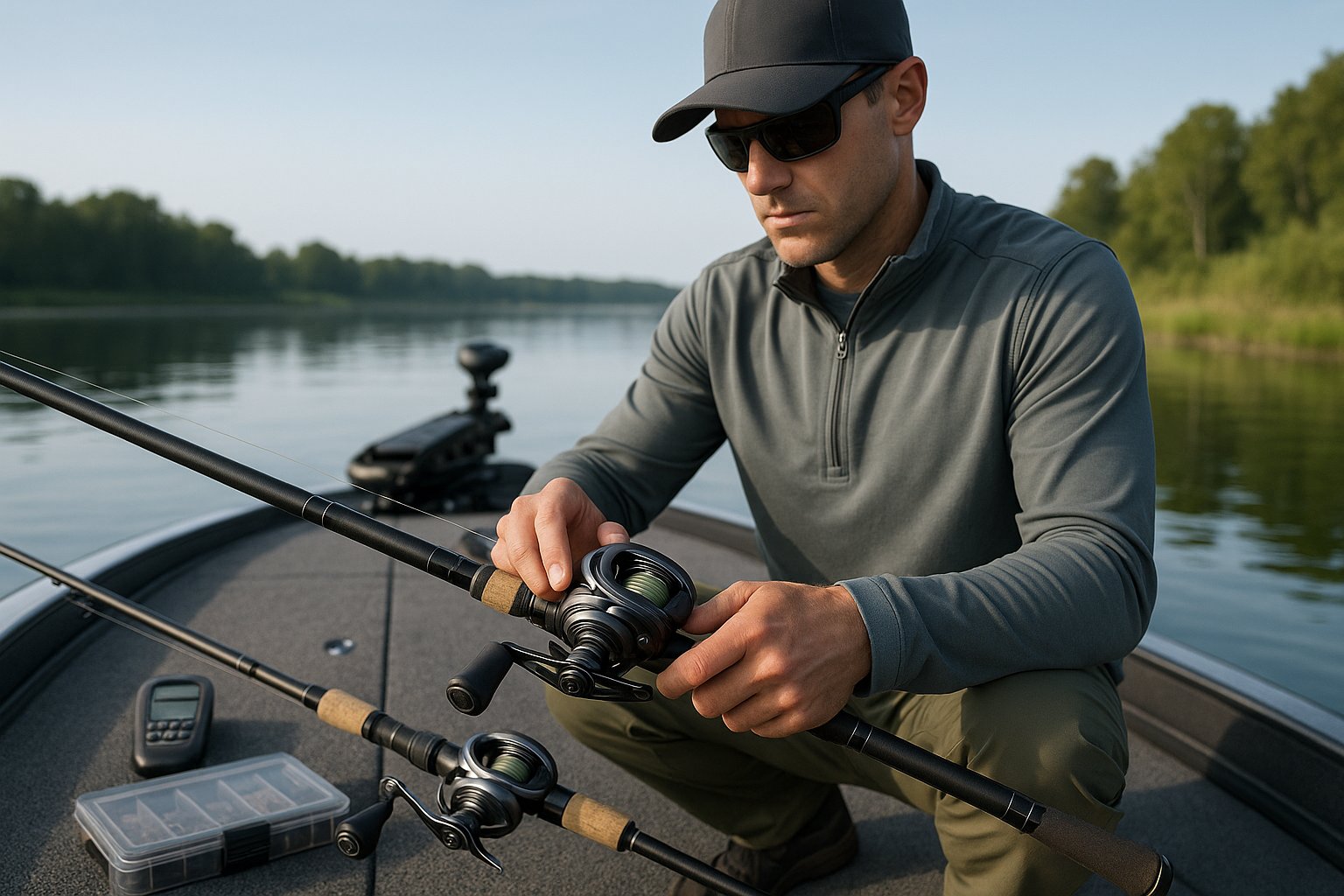
A lot of bass anglers obsess over rod power, lure color, and gear ratio, then leave drag almost as an afterthought. That's a mistake. A poorly set drag can cost us fish in ways that are easy to miss: bent-out hooks, snapped line, bad hooksets, or bass that surge at the boat and come unpinned. And because bass fishing covers everything from finesse drop shots to heavy-cover frog fishing, there isn't one drag number that fits every setup.
The good news is that getting the right drag setting for bass isn't complicated once we understand the basics. We don't need lab-level precision, but we do need a repeatable approach. In this guide, we'll break down how drag works, the general percentage rule based on line strength, how to adjust for specific bass techniques, the most common mistakes anglers make, and what a smart reel setup looks like overall. If we want a more consistent bass fishing reel drag setup, and a better shot at landing more fish, this is where to start.
Why Drag Setting Matters for Bass
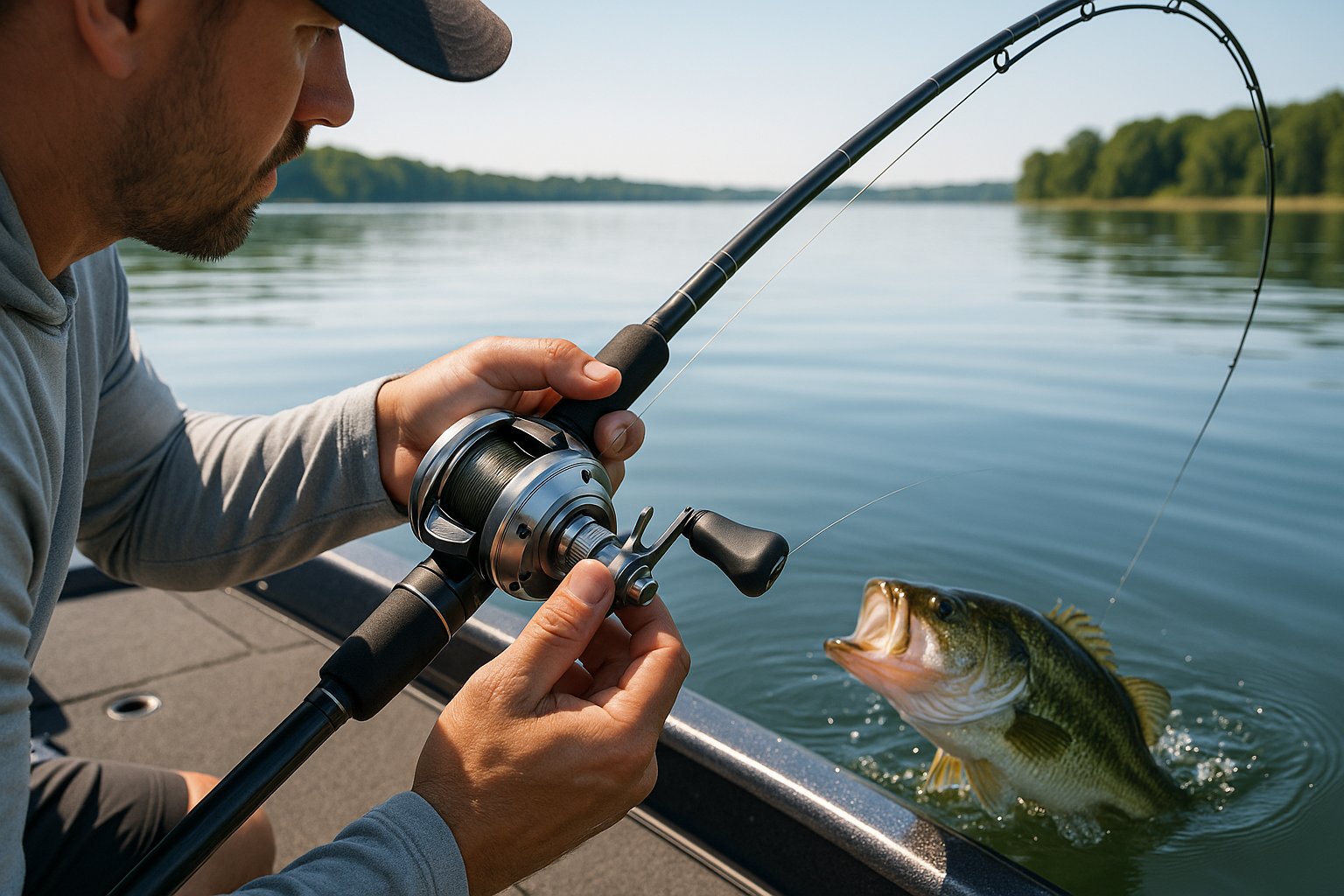
When a bass makes a hard run, surges under the boat, or shakes at close range, drag is the system that decides whether pressure stays controlled or something fails first. That "something" might be our knot, our line, the hook hold, or even the rod if things go really wrong.
In simple terms, drag is the slipping resistance built into the reel. When enough force is applied, the spool gives line instead of locking down completely. That matters because bass don't fight with the long, blistering runs of some saltwater species, but they do fight explosively. Short bursts are exactly where drag becomes important.
A proper drag setting for bass helps us do three things well:
-
Protect the line from sudden shock loads
-
Maintain steady pressure during the fight
-
Match pressure to technique so we don't tear hooks out or miss solid hook penetration
This is where many anglers get tripped up. They assume bass are relatively small compared with other game fish, so drag doesn't matter much. But bass are often hooked on light-wire finesse hooks, treble hooks, or heavy single hooks in cover, three very different situations. The right drag for one can be completely wrong for another.
For example, with treble-hook moving baits, a slightly lighter drag can keep us from ripping small hooks free during boatside headshakes. On the other hand, when flipping heavy grass with braided line, we usually need much tighter drag because we're trying to move fish immediately, not politely negotiate with them.
The rod also plays a role. A moderate-action crankbait rod absorbs surges differently than a fast heavy flipping rod. So drag isn't operating alone: it works as part of the entire fish-fighting system.
If we want the best drag tension for bass fishing, we should think beyond "tight" or "loose." What we really want is controlled pressure, enough to land the fish efficiently, but not so much that a sudden jump turns into a heartbreak story.
General Drag Rule (Line Strength %)
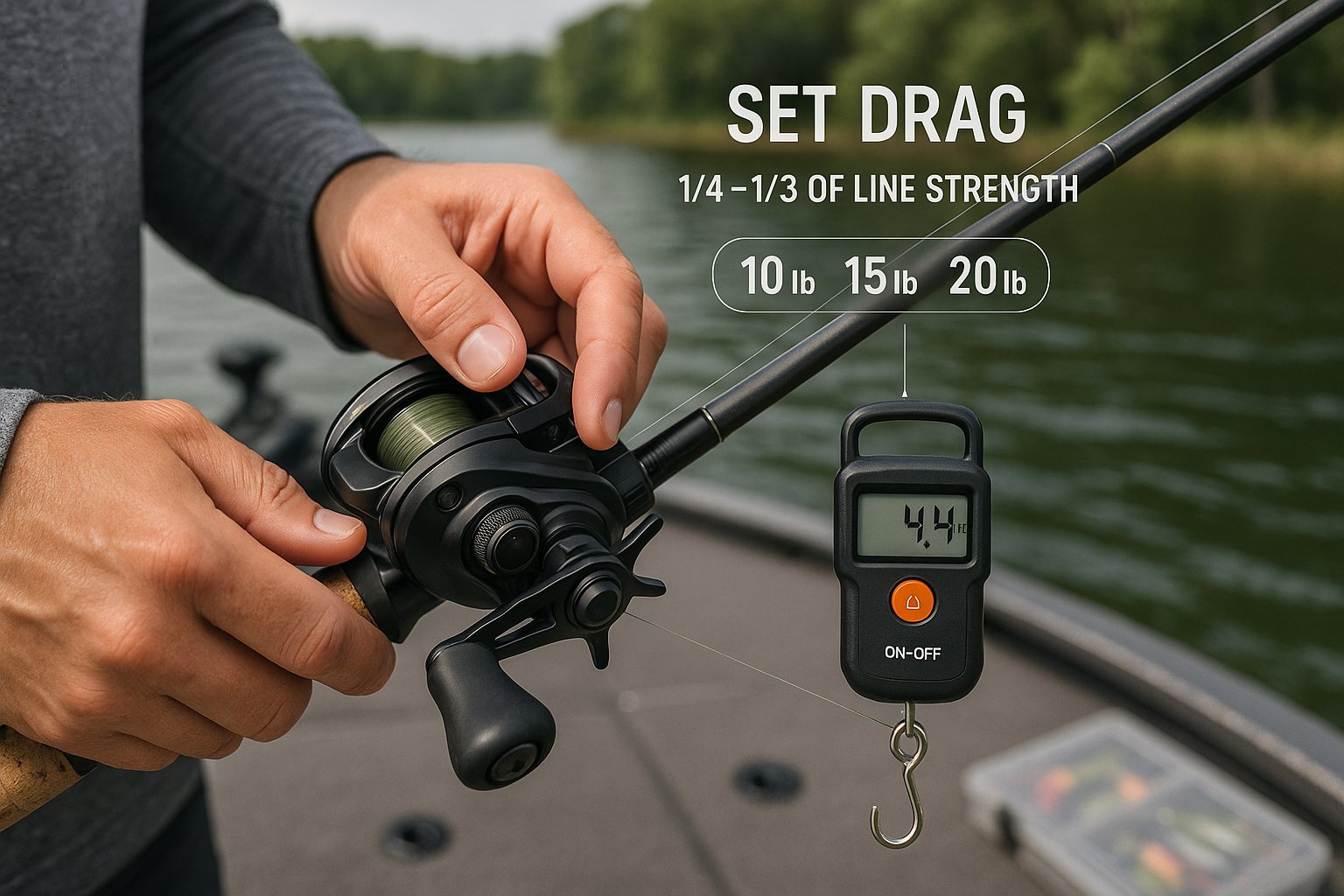
The most widely used baseline is simple: set drag to roughly 25% to 33% of line strength. It's not a law, but it's a very practical starting point.
So if we're using:
-
10-pound line, drag starts around 2.5 to 3.3 pounds
-
15-pound line, drag starts around 3.75 to 5 pounds
-
20-pound line, drag starts around 5 to 6.5 pounds
That guideline exists because line rarely breaks exactly at the number on the box in real fishing conditions. Knots reduce strength. Abrasion weakens line. Shock loads spike pressure fast. A drag set at around one-quarter to one-third of line test gives us a buffer.
Why this rule works
At that range, the reel slips before sudden force reaches the breaking point of the line. It gives us enough resistance to control the fish, but enough forgiveness to survive hard lunges. For most average bass applications, this is the sweet spot.
Still, line type matters.
-
Monofilament stretches the most, so we can often run a little more drag safely.
-
Fluorocarbon has less stretch and can be less forgiving under shock, especially with lighter tests.
-
Braided line has very little stretch, so even with high pound-test ratings, the effective pressure on hooks and fish can feel more immediate.
That's why the percentage rule is the start, not the finish.
How to measure drag without overcomplicating it
The most accurate method is using a handheld scale. Tie the line to the scale, hold the rod at a normal fighting angle, and pull. Note the pressure where the drag starts to slip. Adjust the star drag or front drag until you hit your target range.
No scale? We can still get close by feel, though it's less precise. Pull line off firmly with the rod loaded slightly. The drag should release smoothly, not jerk or stick.
One important caveat for bass
Because bass fishing often involves structure, vegetation, and close-quarters fights, many anglers set drag slightly above the standard 25% rule in heavy-cover applications. That can work, but only when the rest of the setup supports it.
As a general rule, if we're unsure, it's better to start a bit lighter and tighten gradually than begin with an almost locked-down reel. For day-to-day bass fishing reel drag setup, the line-strength percentage rule remains the most reliable baseline we have.
Adjusting Drag for Different Techniques
Technique changes everything. The best drag tension for bass fishing depends heavily on hook style, line type, rod action, and how quickly we need to move the fish.
Finesse techniques
For drop shot, shaky head, Ned rig, and wacky rig presentations, we usually fish lighter line, smaller hooks, and more forgiving pressure. That means a lighter drag setting for bass is usually the right call.
With 6- to 10-pound line, we want enough drag to steer fish, but not so much that a surge snaps fluorocarbon or opens a thin-wire hook. A smooth slip is critical here. If the drag sticks, then suddenly releases, we lose one of the main advantages of finesse tackle.
Treble-hook moving baits
Crankbaits, jerkbaits, and some topwaters call for moderation. Trebles penetrate easily, but they also tear out easily if we apply too much force. In these setups, we usually prefer a medium-light to moderate drag setting, especially if we're using braid or a stiffer rod.
A common problem is setting drag too tight because the fish "is only a three-pounder." Then it jumps next to the boat, the rod unloads slightly, and one hook point pulls free. A little slip can save that fish.
Texas rigs, jigs, and single-hook bottom baits
This is where many of us tighten things up. With a Texas rig or jig, we often need a stronger hookset to drive a single hook through plastic and into the fish. If the drag slips too easily during the hookset, penetration suffers.
That doesn't mean full lockdown in every case. Around sparse cover or with fluorocarbon in open water, a firm but not maxed-out drag is usually enough. In moderate cover, we may tighten a bit more to gain control early in the fight.
Frogging and punching heavy cover
This is the extreme end. In matted vegetation, hyacinth, reeds, or thick pads, we often use heavy braid and a nearly locked drag. The goal is to move the fish now, before it buries deeper. Letting line slip in that moment can mean losing both bass and bait in the salad.
But "locked down" should still mean functional. The reel should be tight, smooth, and dependable, not cranked so aggressively that the drag becomes erratic or the reel is stressed unnecessarily.
Swimbaits and larger moving presentations
With bigger baits, especially those using large treble hooks or heavy-wire single hooks, drag should reflect the whole package. Heavy rods and stout line can handle more pressure, but fish pinned on trebles still benefit from some give.
The takeaway is straightforward: don't use one drag setting all day just because it worked on the first rod. Technique-specific adjustments are one of the simplest upgrades we can make.
Common Drag Setting Mistakes
Most drag issues aren't dramatic. They show up as little failures that add up: missed hooksets, fish lost near the boat, unexplained break-offs, or bass that come off in cover. Usually, the problem isn't bad luck. It's setup.
Setting drag by pure guesswork
Plenty of anglers tighten the drag until it "feels about right" and never test it under load. The problem is that "about right" changes wildly from one reel, line size, and technique to the next. A quick check with a scale, or at least a controlled pull test, can save us from being way off.
Forgetting to adjust for line type
Ten-pound braid and ten-pound fluorocarbon do not behave the same way. Braid's low stretch makes pressure feel more immediate, while fluorocarbon demands more caution on sudden surges, especially in lighter diameters. Using the same drag mindset for both is a common mistake.
Running drag too tight with treble hooks
This one costs fish constantly. Trebles usually don't need brute-force pressure to stay pinned. In fact, too much pressure is often the reason they don't stay pinned. If fish are coming off during jumps or boatside headshakes, an overly tight drag is one of the first things we should suspect.
Running drag too loose for heavy-cover hooksets
The opposite problem happens with frogs, jigs, and Texas rigs in vegetation or wood. If the drag slips during the hookset, we lose power exactly when we need it most. Then we blame the hook, the rod, the fish, the moon phase, anything except the obvious.
Ignoring drag smoothness
A drag can be "correct" in poundage and still perform badly if it starts and stops in a jerky way. Smoothness matters as much as tension. High-quality carbon drag washers generally perform better than cheap or worn systems, especially under repeated load.
Not checking drag during the day
Drag can change. It gets bumped in storage, adjusted accidentally during transport, or altered after fighting fish. Even temperature and moisture can affect feel a bit. A quick test before the first cast and after any major tackle change is just smart fishing.
Using drag to fix other tackle mismatches
Sometimes the issue isn't drag at all. It's the wrong rod action, poor knot tying, old fluorocarbon, or a hook that doesn't match the technique. Drag can compensate only so much. We still need a balanced system.
Recommended Reel Setup for Bass Fishing
A good drag setting works best as part of a complete reel and line setup. We can't talk seriously about bass fishing reel drag without looking at reel type, line choice, and how each combo is meant to fish.
For most bass anglers, the setup falls into two broad categories: baitcasting and spinning.
Baitcasting setup
For jigs, Texas rigs, frogs, spinnerbaits, chatterbaits, and many moving baits, a low-profile baitcaster is the standard. A quality baitcaster with a smooth, consistent drag, preferably with carbon drag washers, is worth it. Not because bass peel huge amounts of line, but because startup smoothness matters when fish surge unexpectedly.
A practical range for many baitcasting applications is:
-
12- to 17-pound fluorocarbon for jigs, worms, and open-water contact baits
-
30- to 65-pound braid for frogs, punching, and heavy vegetation
-
10- to 15-pound mono or fluoro for some treble-hook moving baits, depending on rod and lure size
Gear ratio matters too, but it doesn't replace drag. Faster reels help us pick up slack: drag manages force once the fish is on.
Spinning setup
Spinning reels dominate finesse bass fishing for a reason. They handle light line better and usually offer easy micro-adjustments to front drag systems. That's especially useful with drop shots, shaky heads, and neko rigs.
A strong finesse setup often includes:
-
2500-size spinning reel
-
10- to 15-pound braid main line
-
6- to 10-pound fluorocarbon leader
This combination gives excellent line management and sensitivity, but it also makes proper drag essential. Since braid has little stretch, the leader becomes the weak link. We need the drag set to protect it.
What to look for in a reel's drag system
When choosing a reel for bass, we should prioritize:
-
Smooth startup inertia
-
Consistent pressure through the fight
-
Easy adjustability
-
Reliable construction under repeated use
Maximum drag numbers on the box can be misleading. Bass anglers rarely need absurdly high drag ratings. We need usable drag, not just impressive marketing.
A simple real-world recommendation
If we want one rule that works across most setups, start with the line-strength percentage guideline, then fine-tune based on technique. Keep spinning drag lighter and more protective with finesse tackle. Keep baitcaster drag firmer for single-hook presentations. Tighten hard only when heavy cover truly demands it.
That approach is more effective than chasing one universal number, because there isn't one.
Bass Fishing Drag Setting FAQs
What is the ideal drag setting for bass fishing based on line strength?
A good starting point for bass fishing drag is about 25% to 33% of your line's pound-test. For instance, with 10-pound line, set drag around 2.5 to 3.3 pounds. This helps protect line from shock loads and maintains steady pressure during the fight.
How should drag be adjusted for different bass fishing techniques?
Drag settings vary by technique: lighter drag for finesse tactics like drop shots to avoid breaking thin hooks; moderate drag for treble-hook baits to prevent tearing hooks; firmer drag for heavy-cover frogs or jigs to quickly control fish in vegetation.
Why is setting drag correctly important when bass are hooked?
Proper drag prevents lost fish by reducing the chance of bent hooks, snapped line, or poor hooksets. It allows the reel to slip line under high pressure, protecting knots and enabling steady control during sudden explosive bass runs.
How can I test and measure my reel's drag setting accurately?
Use a handheld scale by tying your line to it, holding the rod at a fighting angle, then pulling until the drag slips. Adjust the drag until it falls within your target range. Without a scale, pull line under rod load to feel for a smooth, non-jerky slip.
Can the type of fishing line affect my drag setting for bass?
Yes, line type affects drag: monofilament stretches more, allowing slightly tighter drag; fluorocarbon stretches less and needs gentler drag; braided line has minimal stretch, so drag should be lighter to avoid sudden pressure spikes that can break hooks or line.
What common mistakes should I avoid when setting drag for bass fishing?
Avoid guessing your drag without testing, applying the same drag for all line types and techniques, setting drag too tight with treble hooks, or too loose in heavy cover. Also, ensure your drag is smooth, check it regularly, and don’t use drag to compensate for poor tackle choices.
 Featured

