

Casting Accuracy With a Baitcaster: 5 Practical Ways We Hit Tighter Targets Every Time
Accuracy separates good anglers from great ones, and with a baitcaster, it’s the difference between catching fish and just casting near them. This guide explains why precise lure placement matters more than distance, breaking down the key factors that affect control—from rod path and thumb timing to spool tension and brake settings. Learn how to master sidearm, roll, and pitch casts, avoid common mistakes, and use advanced feathering techniques to skip under docks and thread tight grass lanes. Whether you're a beginner learning how to cast accurately or a tournament angler sharpening your edge, these baitcaster technique tips will help you deliver repeatable, high-percentage casts on purpose, not by luck.
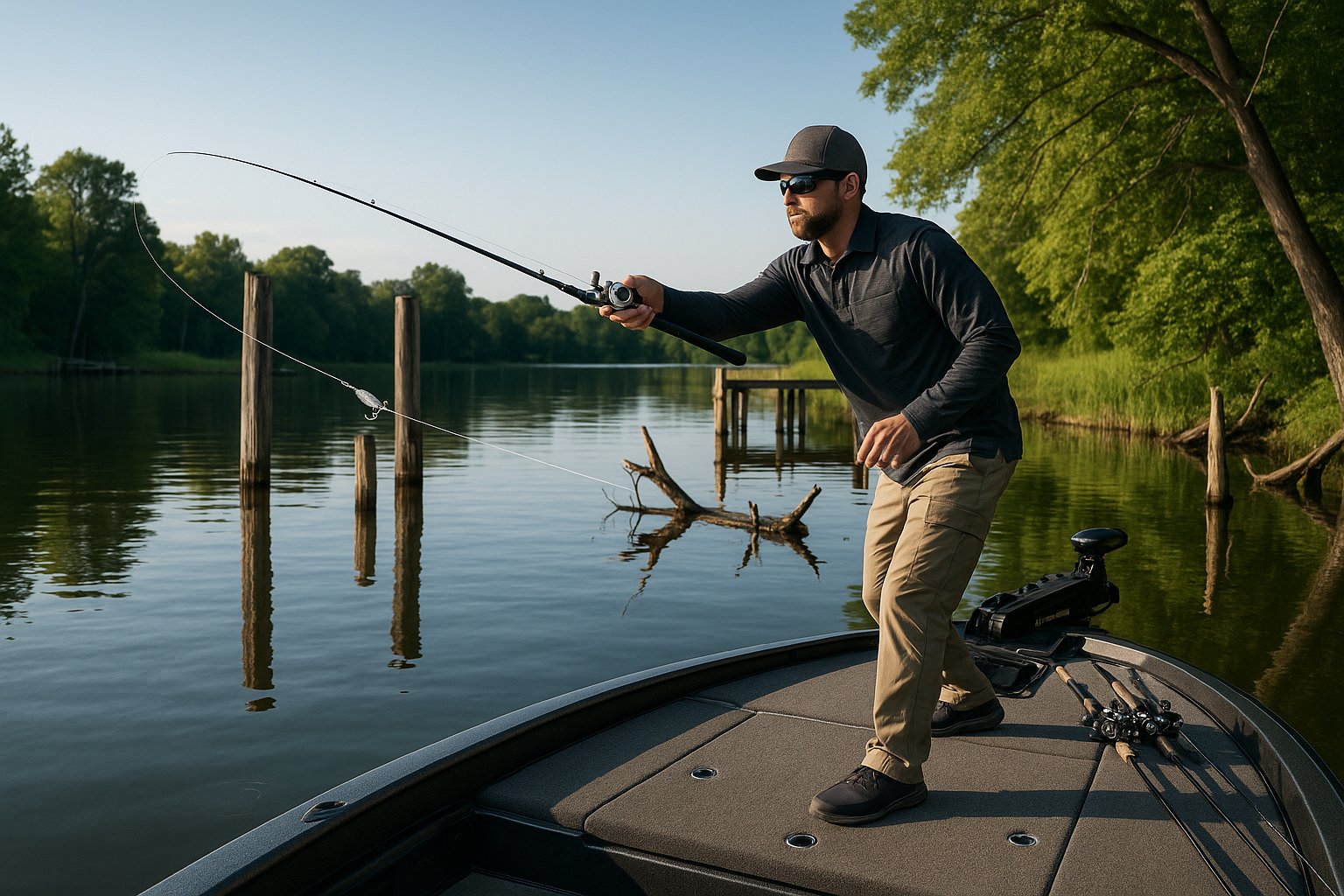
If we can't put a bait where fish actually live, the rest of our setup matters a lot less. Casting accuracy baitcaster anglers rely on isn't just about looking smooth on the water, it's about skipping under docks, landing beside laydowns, threading casts through grass lanes, and making repeated presentations without blowing up a spot. The good news is that accuracy is trainable.
In this guide, we'll break down what really affects precision, from rod path and thumb timing to spool tension and brake settings. We'll also cover baitcaster control, common mistakes, and a few advanced adjustments that help us cast tighter, quieter, and with more consistency. Whether we're learning how to cast accurately baitcaster style for the first time or trying to sharpen tournament-level placement, these baitcaster technique tips will help us make more precise casts on purpose, not by luck.
Why Accuracy Matters in Fishing
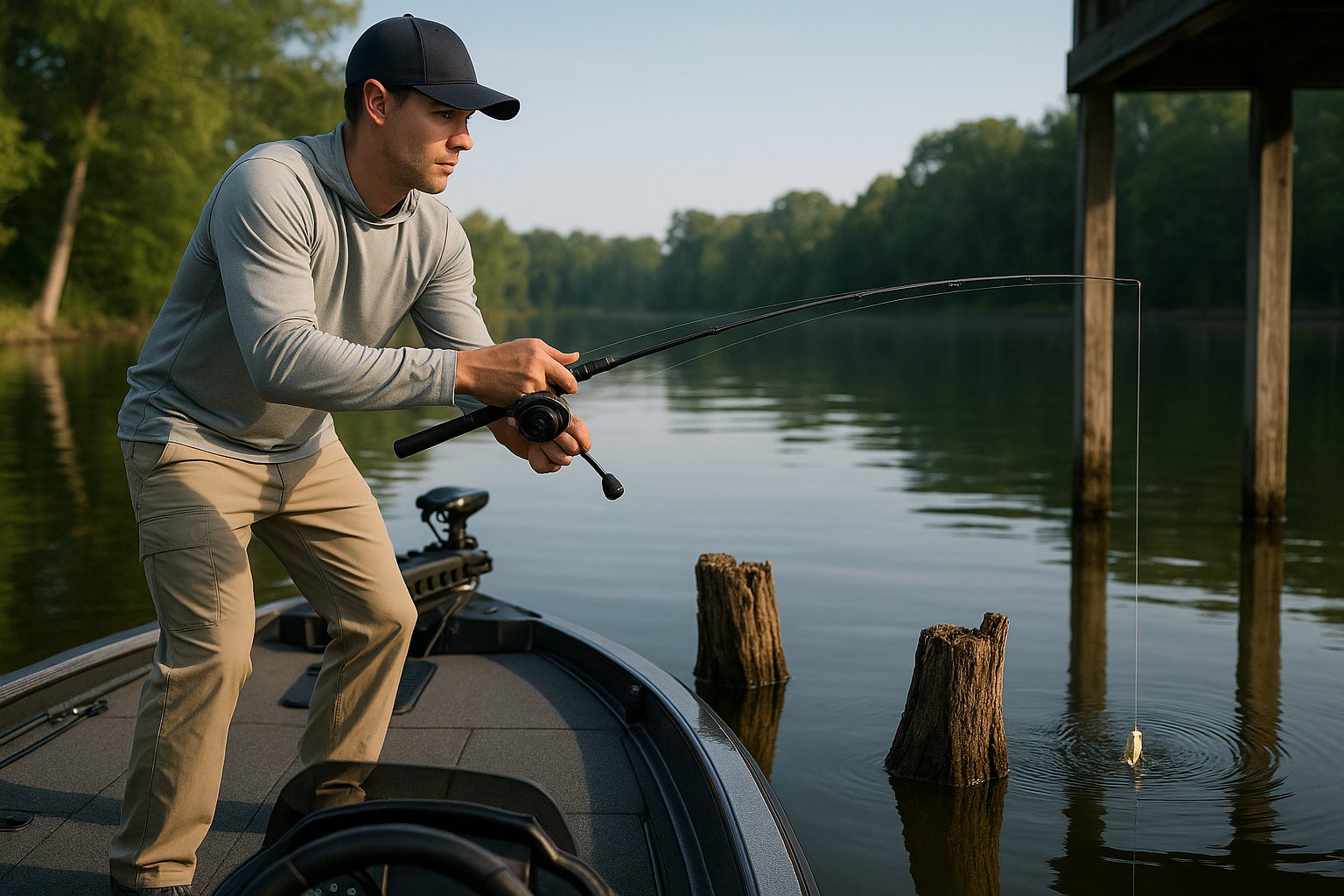
Accuracy changes outcomes. That sounds obvious, but with a baitcaster it's especially true because we usually choose this setup when we want control, speed, and precision around cover.
When we land a lure next to a stump, that's decent. When we land it on the shady side of the stump, six inches from the trunk, that's a high-percentage cast. Fish often hold in very specific positions based on shade, current break, ambush angle, and boat pressure. A precise cast lets us present the bait where the strike window actually is.
There's also a stealth benefit. The more accurate we are, the fewer wasted casts we make. Fewer bad casts mean less hull repositioning, less trolling motor correction, and less lure splash in dead water. Over a full day, that adds up.
Accuracy also improves efficiency. We can:
-
Cover targets faster
-
Repeat productive angles
-
Fish tight cover with more confidence
-
Reduce snags and backlashes caused by rushed corrections
For many of us, accuracy is what separates "good enough" casting from true baitcaster control. Distance gets attention, but placement catches fish.
A simple example: if we're pitching to dock posts, every foot off target changes line angle, sink path, and lure time in the strike zone. The same bait, same color, same retrieve can produce very different results based purely on where it lands.
So before we worry about hero casts, we should think in terms of repeatable precision. The goal isn't one perfect shot. It's making the same quality cast over and over, even when the wind shifts or the target gets smaller.
Key Factors Affecting Accuracy
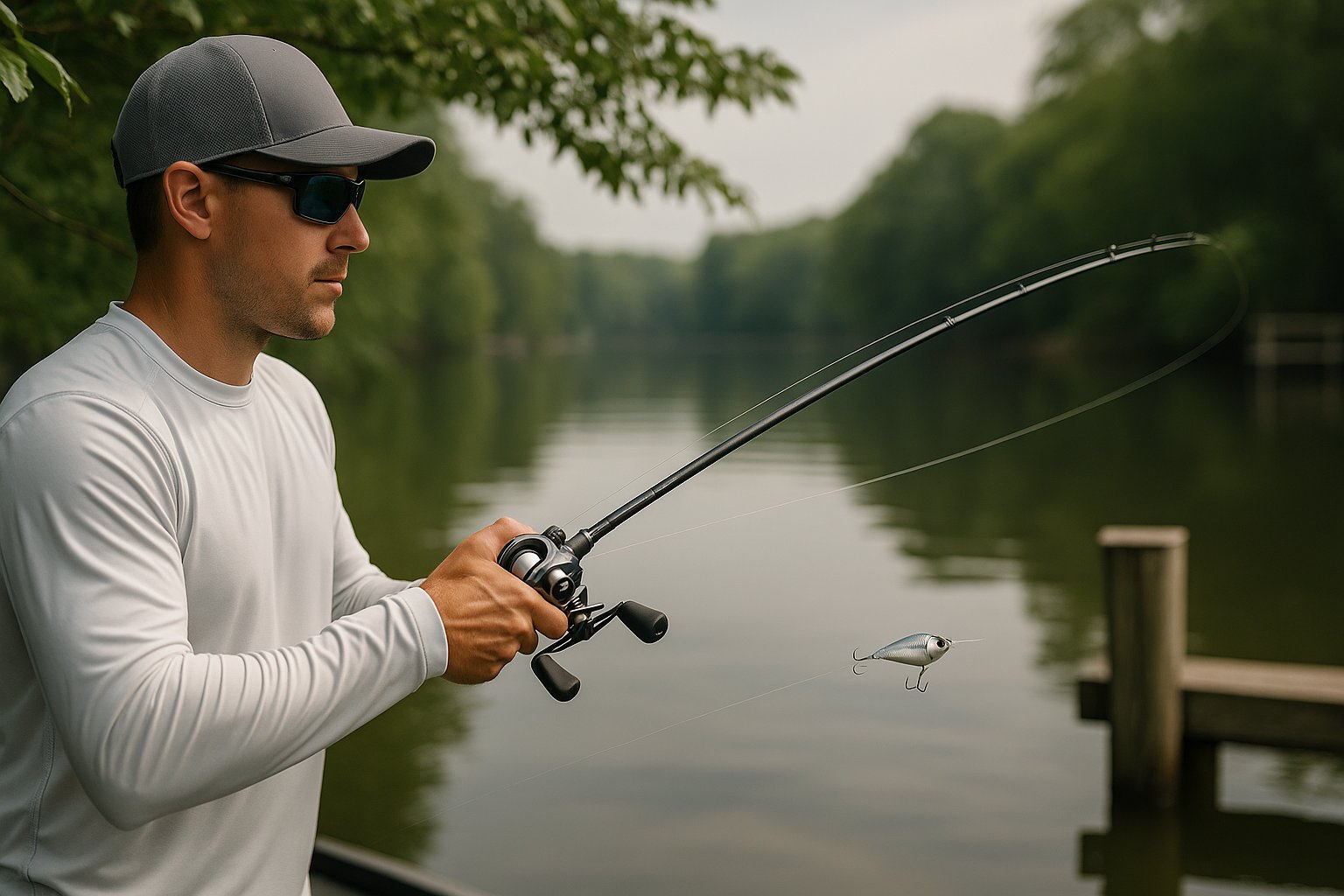
Several variables decide whether a bait lands exactly where we want it or drifts wide. Most misses come from a combination of mechanics and setup, not from lack of talent.
Rod, reel, and lure match
A baitcaster is most accurate when the rod loads properly for the lure weight. If the bait is too light for the rod, we tend to force the cast. If it's too heavy, timing gets sloppy and trajectory flattens out too fast. Matching lure weight to the rod's sweet spot gives us cleaner energy transfer and better directional control.
A shorter rod often feels more accurate at close range, especially for roll casts, pitches, and target work around cover. Longer rods can help with line control and distance, but they may feel less surgical in tight quarters.
Spool speed and thumb timing
The spool is where many accurate casts are won or lost. The bait travels on one path, while the spool wants to keep spinning. Our thumb is the traffic cop.
Good thumb timing does three things:
-
Feathers the spool during flight
-
Prevents overrun at splashdown
-
Fine-tunes trajectory mid-cast
That last point matters. Subtle thumb pressure can keep a cast low under branches or stop it from sailing high in the wind.
Body alignment and casting path
Accuracy starts before the rod moves. If our shoulders, hips, and feet aren't aligned with the target, the rod often compensates in a curve. That creates inconsistency.
We get better results when we:
-
Pick a precise spot, not a general area
-
Square our body or intentionally open our stance
-
Keep the rod tip on a clean path toward the target
-
Finish with a controlled follow-through
Wind, line, and lure aerodynamics
Wind magnifies small mistakes. Compact baits usually cast more accurately than bulky, high-drag lures. Line matters too. A line that's too springy, too thick, or poorly managed can affect spool startup and lure flight.
When we're learning how to cast accurately baitcaster style, it helps to simplify variables: use a well-balanced setup, a moderate wind-resistant lure, and conditions that let us focus on mechanics first.
Technique Improvements You Can Practice
The fastest way to improve accuracy is to practice a small set of repeatable casts instead of trying everything at once. We don't need flashy mechanics. We need clean, controlled movements.
Start with short-range target practice
Close targets teach control faster than long bombs. We can set out cups, hula hoops, or small markers at 15, 20, and 30 feet. Start where success is easy, then tighten the target.
A useful drill is simple:
-
Make 10 casts to one target
-
Count only true hits or very close misses
-
Adjust one variable at a time
-
Repeat until the grouping tightens
This trains consistency, not random luck.
Use the rod to load, not muscle the cast
One of the biggest accuracy killers is overpowering the cast. When we jerk the rod too hard, the lure path gets jumpy and the spool outruns the bait. Instead, we should let the rod load and unload smoothly.
Think "compact and crisp," not "hard and fast." That applies to overhead casts, sidearm casts, roll casts, and pitches.
Improve release timing
Release timing controls direction. Too early and the bait climbs high or pulls off line. Too late and it drives low or into the water. The fix is repetition with feedback.
We can improve timing by watching:
-
Launch angle
-
Entry point relative to target
-
Whether misses are consistently left, right, high, or low
Patterns tell us what to correct.
Practice the three high-value casts
For most target fishing, three casts do the heavy lifting:
-
Sidearm cast: great for low trajectories and wind control
-
Roll cast: excellent around cover and changing angles quickly
-
Pitch: best for quiet, short-range placement
If we build confidence in those three, our practical on-the-water accuracy improves fast.
Slow down on purpose
A rushed cast usually becomes an inaccurate cast. Before each presentation, we should identify the exact landing zone, make one clean motion, and finish under control. That tiny pause before the cast often improves baitcaster control more than any gear change.
These are the baitcaster technique tips that transfer directly to real fishing: smaller targets, smoother motion, and enough repetition that our hands know what to do without overthinking it.
Reel Settings That Improve Control
Good baitcasting reel settings won't replace technique, but they absolutely make accuracy easier. When a baitcaster is tuned for control, we can focus on the target instead of fighting spool behavior.
Set spool tension for manageable startup
A common starting point is to tighten spool tension until side-to-side spool play disappears, then make small adjustments from there. For beginners or when accuracy matters more than distance, slightly tighter tension can help calm startup.
That said, too much tension makes us work harder and can hurt consistency. We want control, not a choked spool.
Adjust brakes to match the lure and conditions
Brake systems help manage spool speed, especially early in the cast. If we're skipping, pitching into the wind, or using lighter lures, more braking usually makes sense. If the cast feels overly restricted, we can back it off gradually.
A practical rule:
-
Increase brakes when backlash risk rises
-
Decrease brakes when the reel feels overly stiff
-
Re-test after changing lure weight or profile
Small changes matter. One click can be enough.
Dial settings for the cast type
Different presentations benefit from different setups.
|
Cast type |
Best general setup tendency |
|---|---|
|
Pitching |
Slightly higher control settings |
|
Roll casting |
Moderate brakes, smooth startup |
|
Sidearm target cast |
Balanced settings with strong thumb feathering |
|
Longer accurate cast |
Slightly freer spool if timing is solid |
The point isn't to chase a magic number. It's to tune the reel so the spool behaves predictably for the cast we're making most.
Don't ignore line fill and maintenance
An overfilled spool is touchy. An underfilled spool changes casting feel and distance. Keeping line at a sensible fill level improves consistency.
Also, a dirty or poorly maintained reel can feel erratic. If braking surfaces, spool bearings, or the levelwind system aren't running smoothly, accuracy suffers because our timing has to compensate.
When we're working on casting accuracy baitcaster setups demand, the best reel setting is usually the one that gives us confidence. Controlled, predictable, and repeatable beats maximum distance every time.
Advanced Tips for Precision Casting
Once the basics are solid, a few advanced habits can tighten our casting even more. These aren't gimmicks. They're small refinements that stack up.
Aim at a tiny target, not the object
Instead of casting "to the dock," pick the dark corner under the third crossbeam. Instead of casting "to the grass," pick the inside edge of one pocket. Smaller aiming points sharpen motor control and improve repeatability.
Control trajectory deliberately
Great casters don't just choose direction, they choose flight shape. A low, flat cast is useful under limbs and in wind. A slightly higher cast can drop vertically beside isolated cover. Thinking in trajectories helps us place a bait according to the target, not just throw near it.
Use feathering throughout the cast
Many anglers think of the thumb only as the brake at splashdown. Advanced baitcaster control uses the thumb the whole time. Light feathering can trim distance, flatten flight, and keep the spool synced with the bait. That's a major part of how to cast accurately baitcaster anglers with strong touch seem to make difficult casts look easy.
Practice from awkward angles
Real fishing rarely gives us a perfect platform. We cast kneeling, seated, off-balance, around electronics, under wind pressure, or with a branch over our shoulder. Practicing from imperfect positions builds useful adaptability.
Try drills that include:
-
Casting around one obstacle to a second target
-
Shortening the backcast space
-
Changing body angle without changing target
-
Landing softly, not just accurately
Build a pre-cast routine
A reliable routine reduces random errors. Ours can be simple:
-
Pick the exact target point
-
Check line and lure position
-
Match the cast type to the opening
-
Make one committed motion
-
Stop the spool before splashdown
That routine creates consistency under pressure, especially when fish are active and adrenaline tries to speed us up.
In the end, precision casting is less about talent than calibration. Better mechanics, smarter reel settings, and intentional practice turn close misses into exact presentations.
Casting Accuracy FAQ for Baitcaster Anglers
Why is casting accuracy important when using a baitcaster?
Casting accuracy with a baitcaster is crucial because precise lure placement increases catch rates, reduces wasted casts, minimizes snags, and allows fishing tight cover with confidence. It helps present the bait exactly where fish hold, improving stealth and efficiency on the water.
How does spool tension affect casting accuracy on a baitcaster?
Spool tension controls the spool's startup speed. Proper tension eliminates side-to-side play and prevents backlash, enabling smoother, more controlled casts. Slightly tighter tension improves accuracy for beginners by calming spool behavior without choking the cast.
What are the key body alignment tips to improve baitcaster casting precision?
To improve accuracy, align feet, hips, and shoulders directly with the target, select a precise aiming point, keep the rod tip on a clean path, and finish with a controlled follow-through. Proper alignment prevents the rod from compensating and causing inconsistent casts.
How can practicing specific cast types enhance baitcaster accuracy?
Focusing practice on sidearm casts, roll casts, and pitch casts builds confidence and control. Each cast suits different conditions: sidearm for low trajectories, roll for quick angle changes, and pitch for quiet, short-range placement—mastering these boosts precise and repeatable casting.
What advanced techniques can help refine accuracy when casting a baitcaster?
Advanced techniques include aiming at small precise targets rather than general areas, controlling cast trajectory intentionally, using thumb feathering throughout the cast to adjust spool speed, practicing from awkward angles, and developing a consistent pre-cast routine to maintain focus under pressure.
How do reel brake adjustments impact casting accuracy on a baitcaster?
Brakes manage spool speed early in the cast; increasing brake settings reduces backlash risk during light or windy casts, while decreasing brakes allows freer spool for longer, smoother casts. Adjusting brakes to match lure weight and conditions improves predictable spool behavior for better accuracy.
 Featured

