

Baitcaster Bird Nesting Explained: How We Stop Backlash Fast and Cast Clean in 2026
Baitcaster bird nesting got you frustrated? Learn what causes backlash, how to fix it fast, and which beginner-friendly reels help prevent tangles. Master spool tension, brakes, and thumb control for smoother casts.
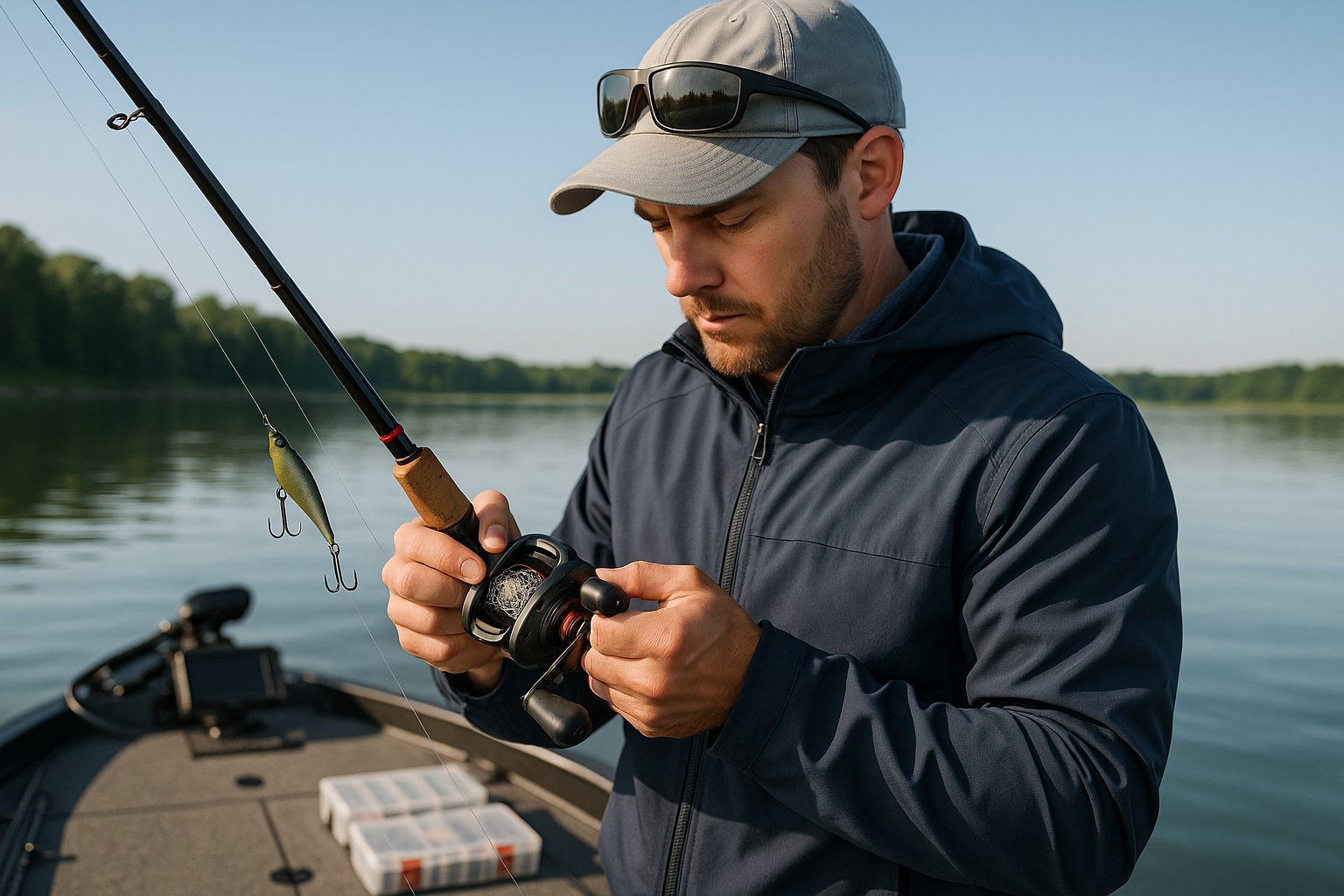
Few things kill the mood on the water faster than a baitcaster bird nesting in the middle of a good bite. One cast feels smooth, the next looks like a squirrel built a home in your spool. If you've dealt with baitcaster backlash, you already know the mix of frustration and wasted time that comes with it.
The good news: bird nesting usually isn't random, and it definitely isn't just a "bad reel" problem. Most fishing reel tangles come from a handful of setup errors, timing mistakes, or trying to cast beyond what the reel is adjusted to handle. Once we understand what's happening, it gets much easier to fix and prevent.
In this guide, we'll break down what bird nesting in a baitcaster actually is, the top reasons it happens, how to fix baitcaster backlash quickly, and the beginner-friendly reels that make the learning curve a lot less steep.
What Is Bird Nesting in a Baitcaster?
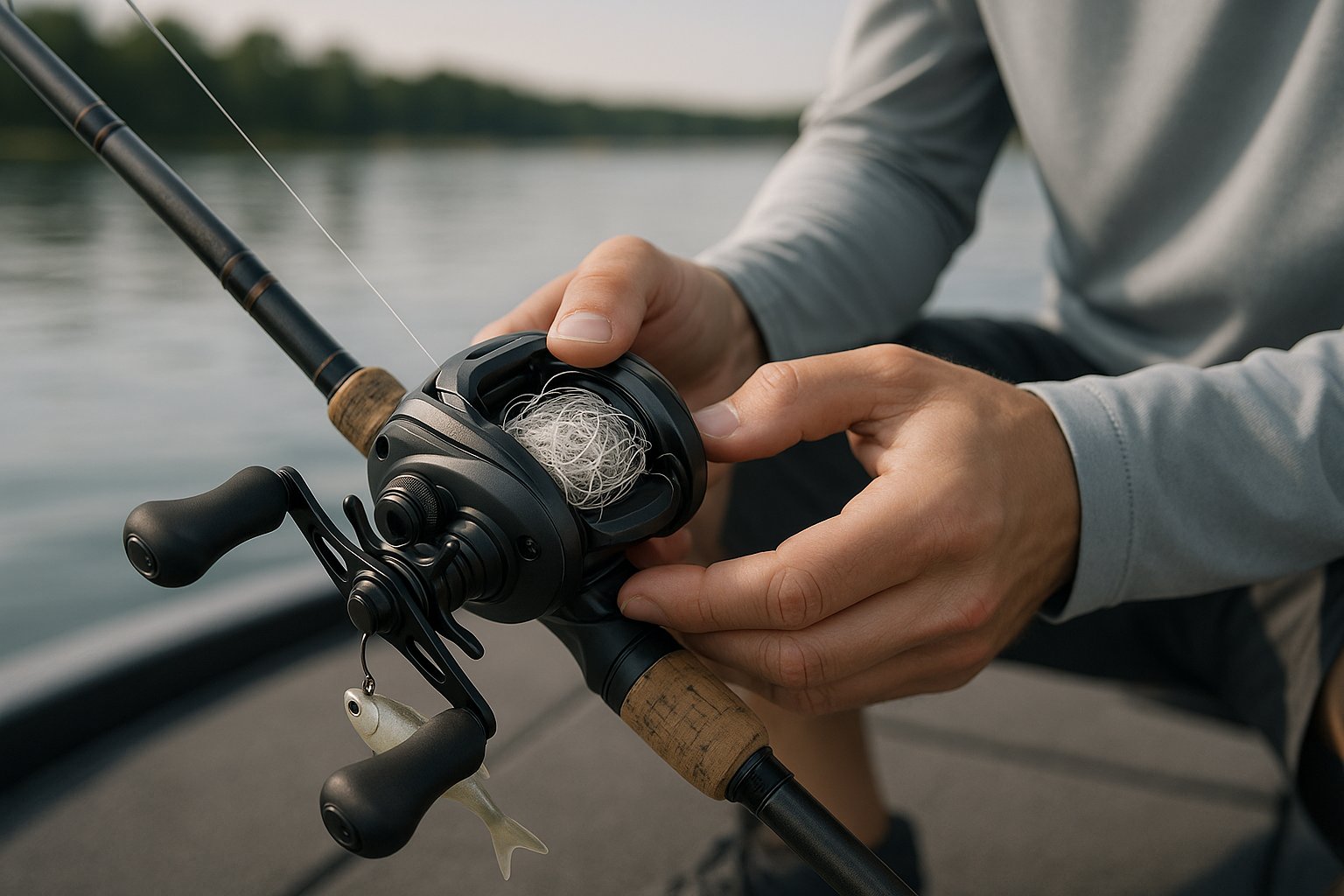
Bird nesting is the messy spool overrun that happens when a baitcaster releases line faster than the lure can pull it away. The extra line has nowhere to go, so it piles up, loops over itself, and creates the classic backlash knot anglers love to hate.
If you're new to baitcasters, here's the simple version: the spool on a baitcasting reel spins during the cast. That spinning spool has momentum. If the lure slows down in flight because of wind, a bad cast angle, a lure that's too light, or even because it hits the water sooner than expected, the spool may keep spinning anyway. That's when line starts bunching and tangling.
Why do people call it a bird nest? Because the line often looks like a chaotic ball of loops stuffed into the reel, kind of like twigs jammed into a nest. Not exactly poetic when you're standing on the deck trying to re-tie.
A little backlash is common while learning. Severe bird nesting, though, usually points to one of three things:
-
The reel isn't adjusted properly
-
Our thumb timing is off
-
The lure and rod setup don't match the reel settings
It's also worth separating light fluffing from a true tangle. A small loose loop on the spool might clear with a thumb press and a crank or two. A full-on baitcaster backlash can dig several layers deep into the line and take real work to undo.
The key takeaway is that bird nesting isn't some mysterious flaw unique to one reel. It's a line control problem. Once we treat it that way, we can solve it systematically instead of just blaming the reel or assuming baitcasters are too hard to use.
Top Causes of Baitcaster Backlash
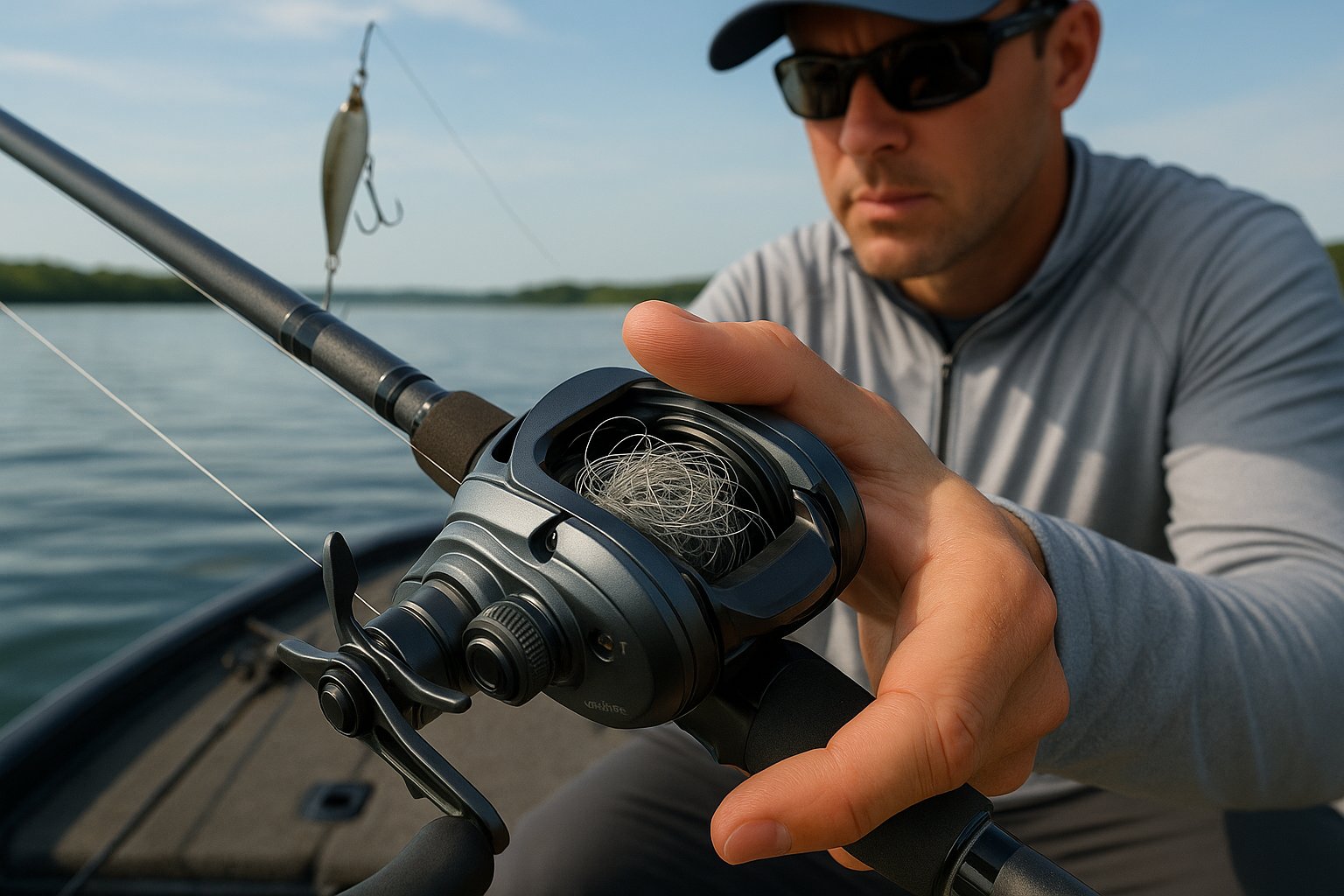
Most anglers asking why a baitcaster keeps tangling are dealing with a short list of repeat offenders. And honestly, that's good news, because repeat offenders are easier to fix.
1. Poor spool tension adjustment
Spool tension controls how freely the spool starts and spins. If it's too loose for the lure weight, the spool can jump into overdrive the moment we begin the cast. Beginners often back it off too much because they want distance. Then the reel punishes that ambition immediately.
2. Brake settings that are too low
Magnetic or centrifugal brakes help slow spool rotation, especially early and mid-cast. When brakes are set too light, we get more speed than control. Experienced casters can run lower brake settings. Newer anglers usually need more braking, not less.
3. Thumb timing errors
This is one of the biggest baitcaster beginner mistakes. With a spinning reel, line peels off naturally. With a baitcaster, our thumb is part of the braking system. If we lift too aggressively at launch or fail to feather the spool during the cast, backlash becomes much more likely. And if we don't stop the spool just before splashdown, we can get an ugly overrun right at the end.
4. Casting the wrong lure weight
Every reel and rod setup has a sweet spot. A lure that's too light may not pull line consistently enough to keep up with spool speed. On the other hand, a heavy lure launched with aggressive force can also create issues if the reel is too loose.
5. Casting into wind
Wind is sneaky. A lure flying into a headwind slows down faster than we expect, but the spool doesn't know that. It keeps spinning, and line stacks up. This is a classic reason for sudden baitcaster backlash even when the last few casts were clean.
6. Jerky or overpowering casting motion
A baitcaster rewards smoothness more than violence. Trying to bomb a cast with all arm and no rhythm often makes the spool accelerate faster than the lure can stabilize. Smooth is far better than hard.
7. Bad line condition or overfilled spool
Old fluorocarbon with memory, cheap mono that coils badly, or a spool filled too close to the lip can all increase fishing reel tangles. Fresh line, properly spooled, makes a bigger difference than many anglers realize.
In practice, backlash usually isn't caused by one huge mistake. It's a stack of smaller ones: slightly low brakes, slightly too much force, slightly wrong lure, and a thumb that reacts a half-second late.
How to Fix a Bird Nest Quickly
When backlash happens, the worst thing we can do is panic and yank. That usually drives loops deeper into the spool and turns a two-minute fix into a cut-the-line situation.
Here's the fastest reliable way to handle it.
Step 1: Stop reeling immediately
The moment we notice the overrun, stop. Reeling against a baitcaster backlash tightens the mess and buries loops under tension.
Step 2: Press the thumb bar and control the spool
Engage free spool and place firm thumb pressure on the line stack. We want to keep things from loosening into even bigger loops.
Step 3: Pull line out gently
With light pressure, pull line from the reel by hand. Often, the first few feet come off easily. If the tangle is mild, this alone may clear it.
Step 4: Find the buried loop
When line stops pulling freely, don't jerk. Look closely for the loop that's trapping the rest. Usually there's one main crossover causing the jam. Use a fingernail, pick tool, or the tip of a hook cover, carefully, to lift that loop without damaging the line.
Step 5: Thumb the spool and pull again
After lifting the trapped loop, press the spool with your thumb and pull line once more. Many backlashes release in stages, not all at once. Clear one loop, then another, then the whole thing suddenly gives way.
Step 6: Check for line damage
This part gets skipped too often. If the line is badly kinked, frayed, or cinched tight, cut back the damaged section. Keeping compromised line on the reel is how we turn a backlash problem into a lost-fish problem.
Step 7: Re-adjust before the next cast
If we fix the tangle but make the exact same cast with the exact same settings, guess what happens next. Tighten spool tension slightly, add more brake, and make a shorter, smoother cast.
If you're wondering how to fix baitcaster backlash when it's truly awful, here's the honest answer: sometimes we can't save all of it. Deep, repeated overruns can pinch the line so badly that cutting is faster and smarter. It stings, sure, but not as much as wasting 20 minutes on line that's already compromised.
A quick field rule we use: if a backlash isn't improving after a couple of patient attempts, stop forcing it. Reset, cut if needed, and get back to fishing.
How to Prevent Backlash with Proper Setup
Prevention is where baitcasters become fun instead of irritating. A clean setup covers most of the problem before we ever make the first cast.
Start with correct spool tension
Tie on the lure you plan to use, hold the rod level, and disengage the spool. Tighten the spool tension knob until the lure drops slowly and the spool stops without overrunning when the lure hits the ground or water. Is this the most advanced setup? No. Is it one of the best learning setups? Absolutely.
Use more brake than you think you need
For magnetic brakes, start high, often around the upper half of the dial. For centrifugal brakes, engage more pins than you think you'll need. As we gain control, we can back off and chase more distance. Starting too loose is one of the classic baitcaster beginner mistakes.
Match lure weight to rod and reel
Baitcasters cast best when the lure loads the rod properly and pulls line consistently. If we're learning, medium or medium-heavy setups with lures in the comfortable middle of the rod's rating are much easier than trying to skip finesse baits on day one.
Don't overfill the spool
Leave a little margin. A spool packed to the brim is more likely to erupt into loops. Filling to roughly one-eighth inch below the spool lip is a safer starting point.
Practice thumb control on purpose
Thumb control doesn't just appear after 100 random casts. We can train it. Feather the spool lightly through the cast, especially in the middle and final third. Then stop the spool just before the lure lands. That last touch is huge.
Smooth out the cast
A sidearm or easy overhead cast with controlled acceleration beats a hard snap every time. Think of loading the rod and letting it do the work. We're not trying to throw the lure through the horizon.
Adjust for conditions
Headwind? Increase brakes. Lighter lure? Increase brakes. Skipping under docks? Definitely increase brakes. As conditions get less forgiving, our settings should get more conservative.
Keep your line in good shape
Line matters. Fluorocarbon can be more temperamental on a baitcaster, especially in heavier memory-prone sizes. Braid is often easier for beginners because it has less memory and tends to pick out more easily after a tangle. Whatever line we use, replace damaged sections and avoid cheap, stiff line if possible.
The big idea is simple: setup first, hero casting later. Once the reel is forgiving, we learn faster and spend far less time dealing with baitcaster backlash.
Best Beginner-Friendly Baitcasters to Avoid Backlash
No reel can completely erase bad mechanics, but some baitcasters are definitely easier to learn on than others. The best beginner models usually share a few traits: consistent braking, easy adjustability, comfortable ergonomics, and a spool that doesn't feel twitchy.
Here's what we look for first:
-
A dependable magnetic or dual-brake system
-
A forgiving spool startup
-
Clear, simple external adjustments
-
Solid line lay and smooth retrieve
-
Good performance in the mid-price range
A few beginner-friendly categories stand out in 2026.
Shimano SLX series
The SLX lineup remains a common starting point for good reason. These reels are sturdy, intuitive, and generally less finicky than bargain-bin options. Models with refined braking systems give new anglers room to learn without feeling like every cast is a test.
Daiwa Tatula series
Daiwa reels with T-Wing and strong braking control have a reputation for being manageable even when our technique isn't perfect. They're not magic, but they tend to feel composed, which matters a lot when we're learning spool control.
Abu Garcia Revo X and Max series
Some Abu Garcia reels are especially popular with new baitcaster users because they're widely available, comfortable in hand, and easy to adjust. The better midrange models are usually more forgiving than the ultra-cheap ones.
Lew's Speed Spool lineup
Lew's has long been a gateway brand for anglers moving into baitcasters. Many Speed Spool models are easy to palm, straightforward to tune, and well-suited for all-around bass techniques.
KastKing and other budget-friendly options
Budget reels can work, and some offer solid value. But this is where we'd be cautious. Extremely cheap baitcasters often create more problems than they solve because braking and spool consistency just aren't as refined. Saving a little upfront can mean fighting more fishing reel tangles later.
If we had to give one buying tip above all others, it would be this: buy the most reliable braking system you can afford, not the reel with the flashiest handle knobs or the highest bearing count. Bearings look good in marketing. Brakes keep us fishing.
And if you're just starting, pair that reel with a sensible rod and a practice lure in the 3/8- to 1/2-ounce range. That setup forgives a lot. It's not glamorous, but it works.
The right beginner baitcaster won't eliminate the learning curve. It simply makes the curve less steep, less expensive, and a lot less annoying.
Bird nesting is part of learning a baitcaster, but it doesn't have to define the experience. Once we understand why baitcaster keeps tangling, dial in spool tension and brakes, and practice smoother thumb control, the problem becomes much more manageable. Fix tangles patiently, make smart setup adjustments, and choose a reel that helps rather than fights us. Do that, and baitcaster backlash turns from a constant headache into an occasional, fixable mistake, which is exactly where it belongs.
FAQs About Baitcaster Bird Nesting
What is bird nesting in a baitcaster reel?
Bird nesting occurs when the spool releases line faster than the lure can pull it away, causing tangled loops of line resembling a messy nest on the reel spool.
Why does my baitcaster keep tangling with bird nests?
Common causes include improper spool tension, low brake settings, poor thumb timing, casting the wrong lure weight, windy conditions, jerky casting motions, and overfilled or bad condition line.
How can I quickly fix a baitcaster bird nest when it happens?
Stop reeling immediately, press the thumb bar to control the spool, gently pull out the line, find and loosen the main tangled loop, then pull the line again. Cut damaged line sections before recasting with adjusted settings.
What are the best ways to prevent baitcaster backlash and bird nesting?
Proper setup is key: adjust spool tension with the lure tied on, use more brake than you think you need, match lure weight to rod and reel, avoid overfilling the spool, practice smooth thumb control, and keep fishing line in good condition.
Which beginner-friendly baitcaster reels help reduce bird nesting?
Models like Shimano SLX, Daiwa Tatula, Abu Garcia Revo X and Max, and Lew's Speed Spool offer consistent braking and easy adjustability ideal for beginners to minimize backlash.
How does thumb control affect baitcaster bird nesting?
Thumb acts as a brake on the spool. Poor timing—lifting too aggressively or failing to feather the spool—can cause the spool to spin too fast, increasing the chance of bird nests during the cast.
 Featured

